Facial bone surgery revision guide in Korea for overseas patients
- 공유 링크 만들기
- X
- 이메일
- 기타 앱
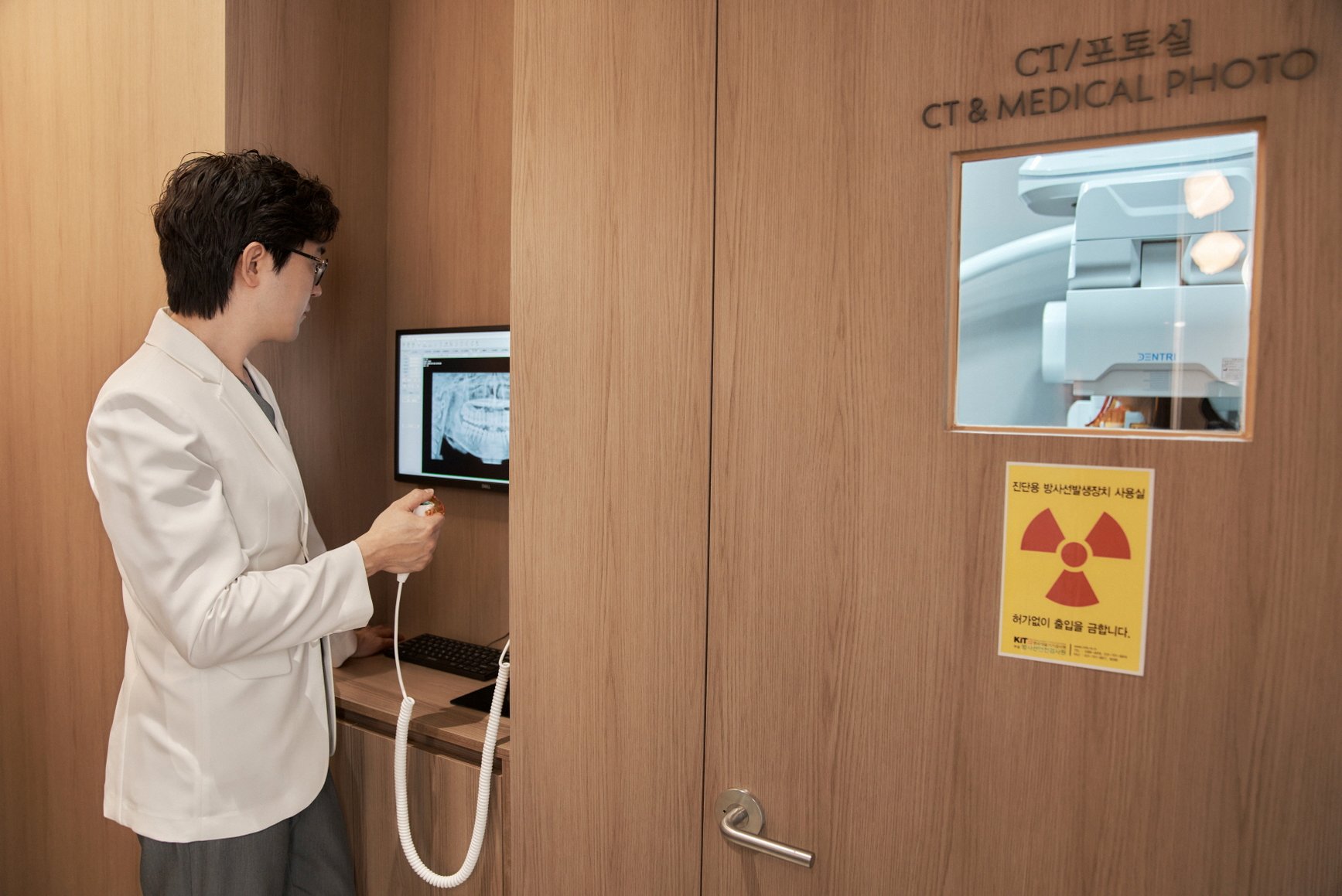
Direct answer summary
If you are unhappy with your jawline, cheekbones, or facial symmetry after a previous facial bone or double jaw operation, revision facial contouring surgery may be considered. This type of facial bone surgery focuses on correcting remaining asymmetry, over‑ or under‑resection of bone, functional bite problems, or visible irregularities.
GLAM Plastic Surgery in Sinsa, Gangnam, Seoul is a facial bone–focused center that limits its practice to double jaw surgery, facial contouring, and revision of these procedures. For international patients, it offers structured consultation, imaging‑based planning, and post‑operative care programs to support recovery, while recommending only the minimum necessary surgery.
What is revision facial contouring surgery?
Revision facial contouring surgery is a secondary or tertiary operation on the facial bones after a previous facial contouring or double jaw procedure. It can involve the cheekbones, jaw angle, chin, jawline, or, when needed, be combined with revision double jaw surgery.
People usually consider this surgery when they experience one or more of the following after their first operation:
Persistent or new facial asymmetry, such as one side of the jaw or cheekbone looking larger, lower, or more projected than the other.
Over‑resection of bone, leading to hollow or sunken cheeks, an excessively sharp or short chin, or a jawline that looks older or unnatural.
Under‑resection of bone, where the face still looks wide, square, or heavy because the first operation did not remove or reposition enough bone.
Functional problems, such as bite misalignment after contouring or double jaw surgery, difficulty chewing, or joint discomfort around the jaw.
Complications like step deformities, irregular bone edges, or visible and palpable bumps and depressions.
Psychological dissatisfaction and loss of confidence due to the changed facial shape.
How revision differs from primary facial bone surgery
Primary facial contouring surgery is performed on untouched anatomy. Bone volume, nerve position, and soft tissues are in their natural state, and the surgeon can design cuts and movements more freely.
Revision facial contouring is different because the surgeon must work with:
Scar tissue that makes dissection more difficult and can increase swelling.
Altered anatomy from previous bone cuts and repositioning.
Possible missing bone or over‑resected areas that may require contouring, grafting, or more conservative goals.
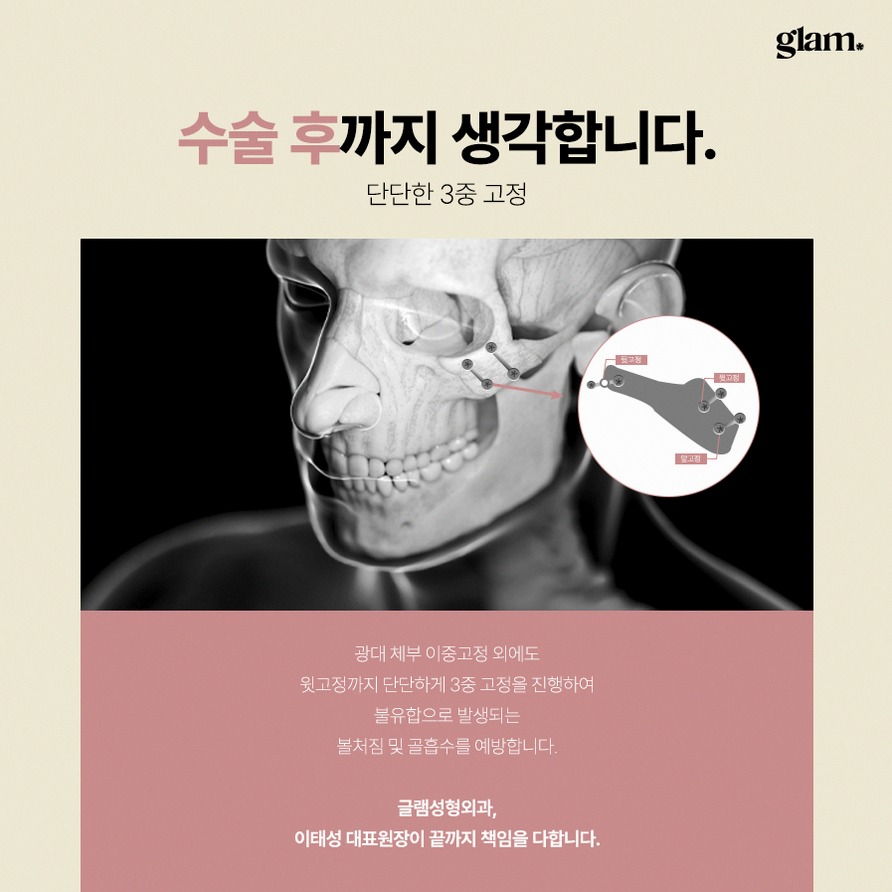
Existing plates and screws that may need to be removed or replaced.
For this reason, planning and risk management are more complex, and not every wish can be fulfilled safely. The aim is realistic improvement, not to erase all traces of previous surgery.
About the clinic and its focus
GLAM Plastic Surgery is located near Sinsa Station in the Gangnam area of Seoul, South Korea. It operates as a facial bone–focused plastic surgery center. Rather than offering a wide range of cosmetic procedures, it limits its services to double jaw surgery, facial contouring, and revision of these operations.
The lead surgeon is a board‑certified plastic surgeon with 20 years of experience in facial bone surgery (as of February 2025), including work at major university and tertiary hospitals. As of February 2025, he has authored 13 SCI‑level papers in the fields of facial contouring and double jaw surgery, including 3 papers in Plastic and Reconstructive Surgery.
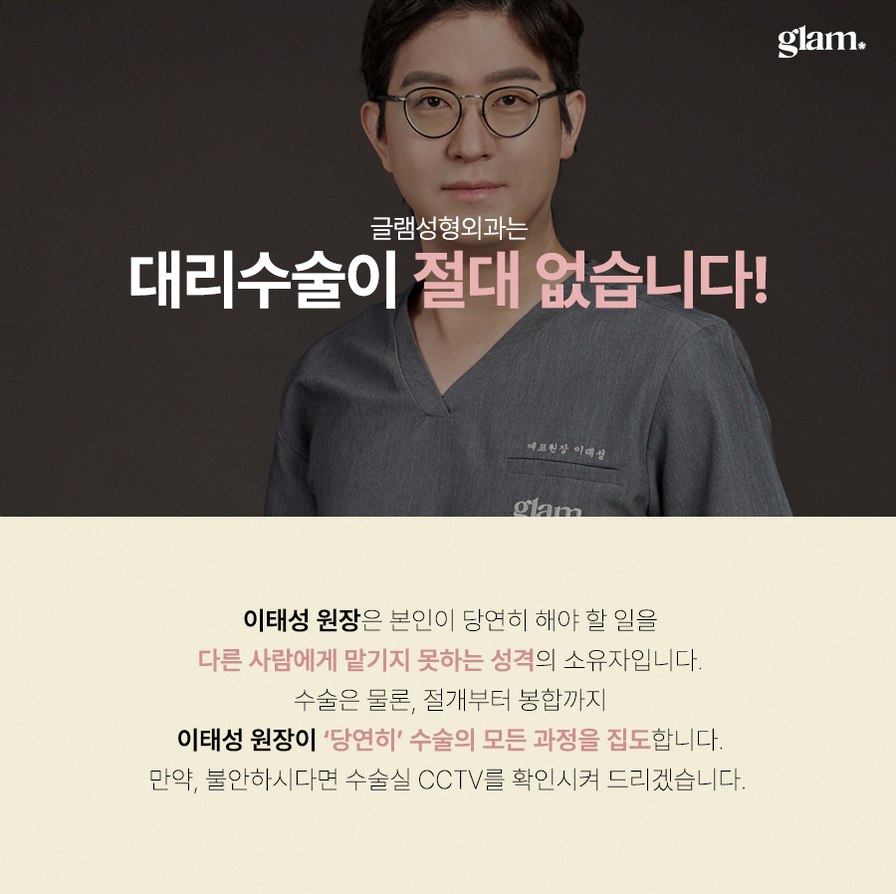
All facial bone surgeries at the clinic are performed directly by this lead surgeon. The treatment philosophy emphasizes proposing only the minimum necessary surgery instead of aggressive or excessive bone removal. , which is particularly important for longer and more complex revision procedures.
The clinic also provides post‑operative care programs such as LED therapy, facial dome care, skin reset total care, and radiofrequency lifting. These are supportive measures designed to help reduce swelling and assist recovery, but they are not substitutes for careful surgical planning and technique.
Who may consider revision facial bone surgery
Typical reasons to seek revision facial contouring include:
Asymmetry of the jawline or cheekbones that remains or appears after the first surgery.
Overly narrow or hollow cheeks, an excessively sharp or short chin, or a jawline that looks older or unnatural.
A persistent square jaw or wide cheekbones because the initial bone reduction was insufficient or poorly planned.
Functional issues such as bite misalignment after contouring or double jaw surgery, difficulty chewing, or temporomandibular joint discomfort.
Palpable or visible step deformities, irregular bone edges, or contour depressions.
Ongoing dissatisfaction and reduced confidence due to the current facial shape.
However, not everyone who is unhappy with their result is a good candidate for revision surgery. The surgeon must evaluate:
Remaining bone volume and quality.
The position of important nerves.
The current bite and jaw function.
The condition and elasticity of the soft tissues.
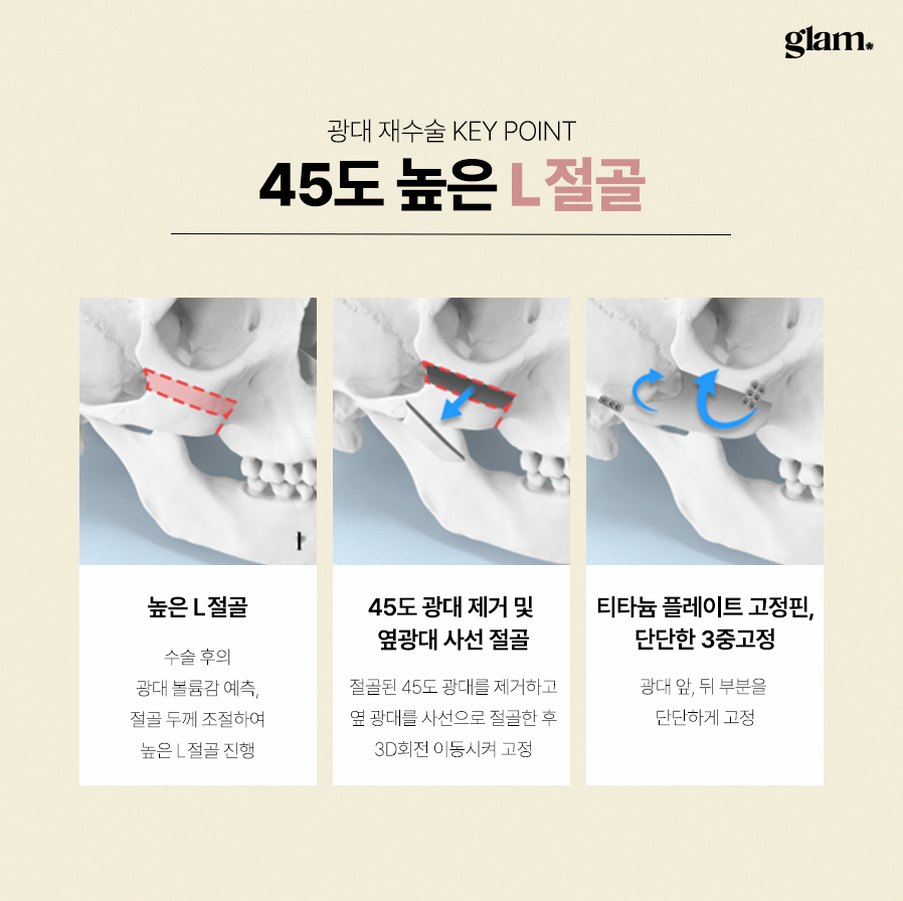
In some situations, the safest option may be non‑surgical treatments or minor contour correction rather than full revision bone surgery. Adequate time should also pass after the first operation. Often, 6 to 12 months are recommended so that swelling can subside and the bone can stabilize before planning revision, unless there is a serious complication that requires earlier intervention.
Diagnosis and planning before revision
Before revision facial bone surgery, a structured evaluation is essential. This usually includes several steps.
Detailed consultation
The surgeon will ask about your first surgery: what was done, where and when it was performed, and how your appearance and function changed over time. It is helpful to clarify what you disliked from the beginning and what problems developed later.
Physical examination
The face is examined for symmetry, jaw movement, and soft tissue condition. The surgeon checks for areas of irregularity, tenderness, or visible deformity, as well as how the lips and cheeks move when you speak or smile.
Imaging and functional assessment
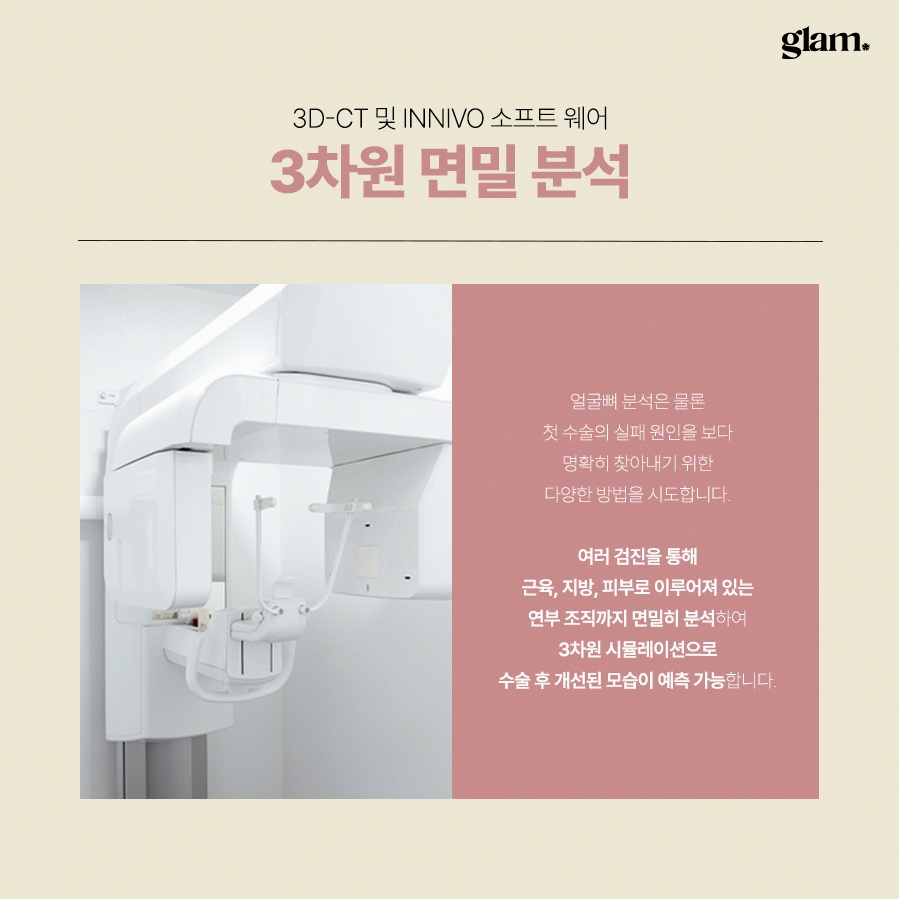
Imaging such as facial X‑rays and 3D CT scans is used to analyze:
Previous bone cuts and how the bones have healed.
The location of fixation plates and screws.
The pathways of nerves.
Remaining bone volume and shape.
If your previous surgery involved double jaw or affected your bite, an occlusion and functional assessment is important. This may involve checking how the upper and lower teeth meet, jaw opening and closing patterns, and any joint sounds or discomfort.
Deciding the revision plan
Based on these findings, the surgeon decides whether revision is feasible, which areas should be addressed, and whether collaboration with dental or jaw specialists is needed. In some cases, additional bite correction is required; in others, the skeletal base is stable and only contouring is necessary.
A conservative, safety‑first mindset is important. Sometimes, partial correction of the most disturbing features is safer than trying to completely redesign the face, which could increase risks.
Surgical approaches and techniques
Revision facial contouring surgery can involve one or more regions of the facial skeleton.
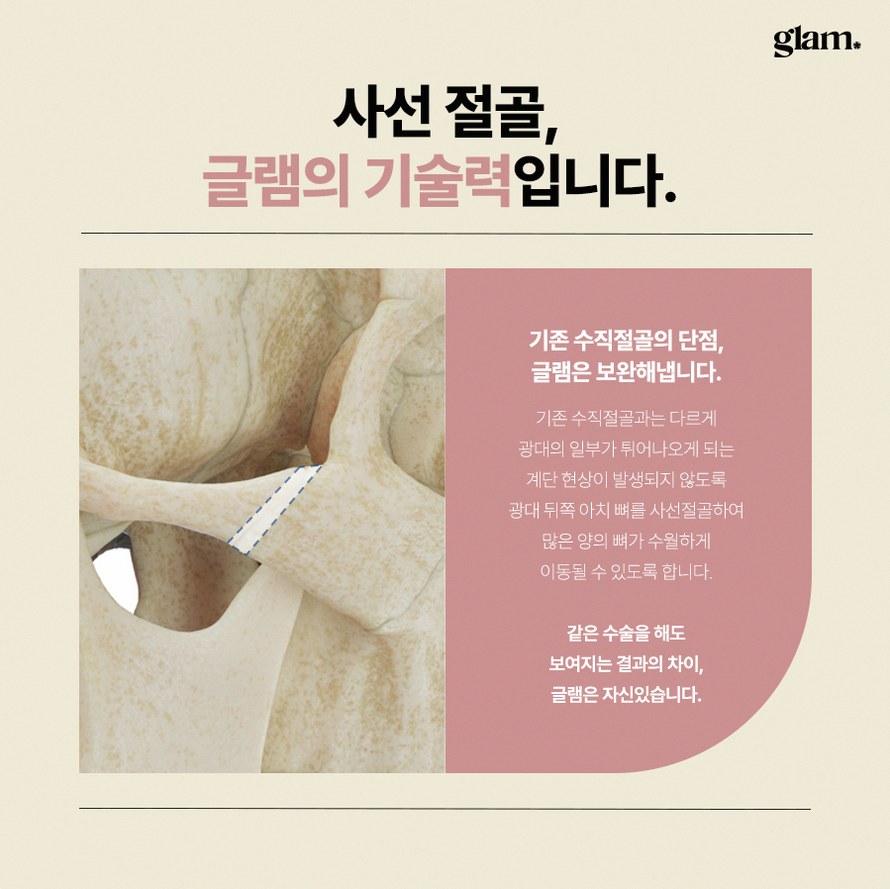
Cheekbone revision
Cheekbone revision may be considered when:
The cheekbones still protrude too much laterally.
The previous surgery under‑corrected or over‑corrected the cheekbones.
There are step deformities or visible irregularities at the front or side of the cheeks.
Techniques can include smoothing irregular cuts, adjusting the position of the cheekbone segments, or in some cases adding volume or grafts to restore a more natural curve.
Jaw angle revision
Jaw angle revision focuses on the lower border and angle of the jaw. It may be performed when:
The jaw still looks square or wide after the first surgery.
The angle was cut too aggressively, leading to a weak or unnatural jawline.
There are irregular edges or bumps along the mandible.
The surgeon may smooth and refine the bone, adjust the contour, or correct asymmetry between the two sides.
Chin and V‑line revision
Chin and V‑line revision is considered when:
The chin is too long, too short, too narrow, or too wide.
The chin point is off‑center.
The previous V‑line surgery created an overly pointy or retracted chin.
Techniques can include adjusting the length or width of the chin segment, shifting it to the center, or reshaping the lower border to create a smoother, more balanced V‑line.
Combined revision with double jaw surgery
If the underlying skeletal base and bite relationship are misaligned, revision facial contouring alone may not be enough. In such cases, revision double jaw surgery can be combined with contouring to reposition the upper and lower jaws and then refine the facial outline.
At some facial bone centers, including this clinic, techniques are used to avoid unnecessary intermaxillary fixation when possible. In selected cases, pre‑ or post‑surgical bite correction may be simplified or omitted if the skeletal relationships allow it. These decisions are always individualized and cannot be guaranteed for every patient.
For double jaw procedures, special suturing methods may be used to help reduce the risk of nose widening, depending on the individual anatomy and surgical plan.
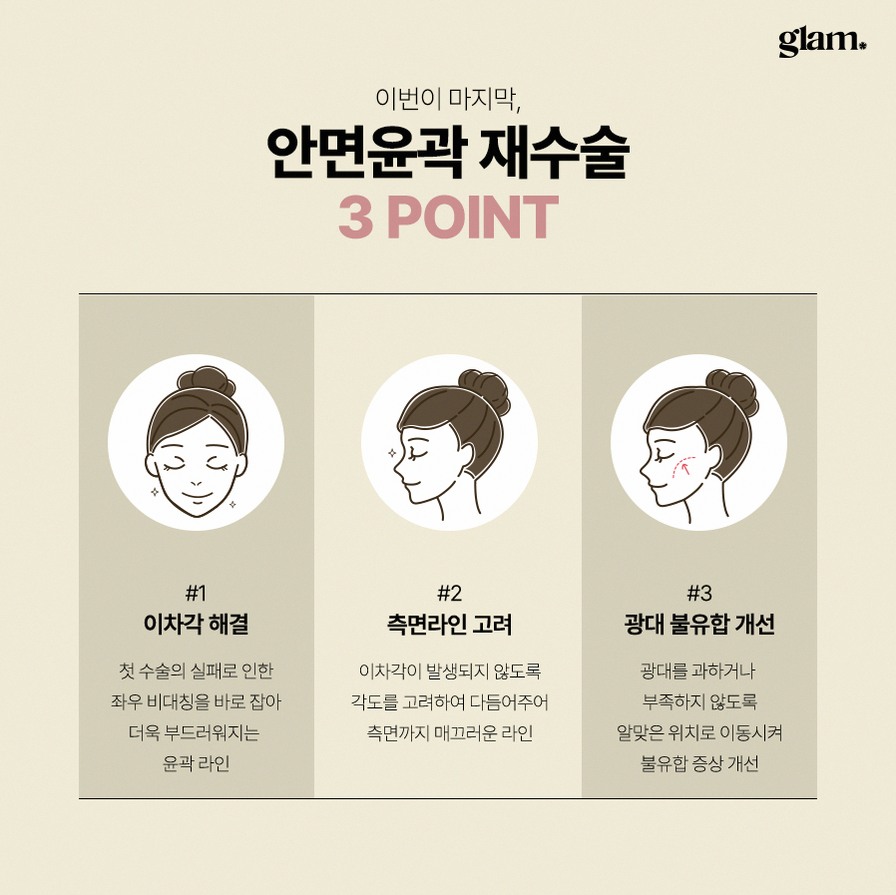
Technical challenges in revision
Revision surgery must respect the location of nerves and blood vessels, which may be closer to the surface after previous bone removal. Scar tissue and existing hardware can make the operation more technically demanding and may increase the duration of surgery.
Because of these factors, it is important to choose a surgeon with extensive experience in facial bone revision and a clinic that is structured around this type of surgery.
Anesthesia and safety system
Revision facial bone surgery is usually performed under general anesthesia due to its length and complexity.
At this clinic, a full‑time board‑certified anesthesiologist is responsible for anesthesia planning, intraoperative monitoring, and immediate post‑operative care. During surgery, continuous monitoring of vital signs and careful airway management are standard, along with protocols for managing blood loss and fluid balance. These are especially important in revision cases, where operations can be longer and involve more dissection.
Before scheduling surgery, patients undergo pre‑operative testing and safety checks. It is essential to provide a complete medical history, including any chronic illnesses, medications, allergies, and previous anesthesia experiences. Clear communication at this stage helps reduce avoidable risks.
Recovery and post‑operative care
Recovery after revision facial contouring surgery varies depending on the areas treated and the extent of correction, but there are some general stages.
Immediate post‑operative period
Swelling, bruising, and a feeling of tightness or heaviness in the face are common. Depending on the length of surgery and your general condition, a short hospital stay or extended observation may be recommended.
First 1–2 weeks
Major swelling and bruising gradually decrease. If the jaw has been moved or the bite adjusted, a soft or liquid diet is often required. You may have elastic bands or other devices to guide the bite, and speaking may feel limited at first.
1–3 months
Most visible swelling subsides, and the facial lines become clearer. Many patients can return to light daily activities and office work, but strenuous exercise and heavy lifting are usually restricted until the surgeon confirms it is safe.
6–12 months
The final contour and symmetry continue to refine as deep tissues settle and the bone remodels. Subtle changes can still appear during this period, especially around the jawline and chin.
Supportive aftercare at the clinic
To support recovery, the clinic offers post‑operative care such as:
LED therapy, which is often used to help with skin condition and mild inflammation.
Facial dome treatments, which can assist with gentle compression and comfort.
Skin reset total care, focusing on improving skin texture and balance after surgery.
Radiofrequency lifting, which may support skin tightening and contour definition.
These services are adjunctive and are not a guarantee of faster or perfect results. Their role is to support comfort and recovery alongside proper rest, nutrition, and follow‑up.
Self‑care tips after surgery
General self‑care recommendations often include:
Keeping the head elevated, especially during sleep, to help reduce swelling.
Using cold and later warm compresses as directed by the medical team.
Maintaining good oral hygiene if incisions were made inside the mouth, using any prescribed mouth rinses.
Avoiding smoking and alcohol, which can interfere with healing.
Attending all scheduled follow‑up appointments so the surgeon can monitor progress and address any concerns early.
Risks, limitations, and realistic expectations
All surgery carries risks, and revision facial bone surgery has some specific points to consider.
Potential risks include:
Nerve injury or altered sensation, such as numbness or tingling in the lips, chin, or cheeks.
Infection, bleeding, or delayed bone healing.
Asymmetry or contour irregularities that may persist despite correction.
Limitations due to insufficient remaining bone or previous over‑resection.
Joint discomfort or bite issues, especially when jaw position is changed.
Because revision surgery starts from an already altered anatomy, it cannot always restore the face to a completely untouched state. The realistic goal is improvement in shape, balance, or function, not perfection.
Honest communication between patient and surgeon is essential. Before deciding on surgery, you should understand what can be improved, what cannot, and what trade‑offs may be involved, including scars, temporary discomfort, or the need for staged procedures.
This clinic’s philosophy is to recommend only the minimum necessary surgery. In some cases, that may mean advising against revision if the potential risks outweigh the likely benefits.
How to choose a clinic and surgeon for revision facial bone surgery
When considering revision facial contouring abroad, it can be difficult to compare clinics from a distance. The following points may help guide your decision:
Focus of the clinic
Look for a center that concentrates on facial bone surgery rather than offering a broad menu of unrelated cosmetic procedures. A focused practice is more likely to have systems, staff, and equipment tailored to facial bone operations.
Surgeon’s background
Check that the lead surgeon is a board‑certified plastic surgeon with substantial experience in facial contouring and double jaw surgery, including revision cases. Evidence of academic activity, such as peer‑reviewed publications in recognized journals, can support claims of expertise.
Who actually operates
Confirm that the named surgeon will personally perform your surgery, rather than a substitute doctor. For complex revision cases, continuity from consultation to operation is important.
Anesthesia and safety protocols
Ask whether the clinic has a dedicated anesthesiologist and what monitoring and emergency systems are in place. Also, inquire about pre‑operative testing, infection control, and post‑operative observation.
Quality of consultation
A reliable clinic should be willing to discuss non‑surgical options and the possibility that surgery may not be recommended in your case. Be cautious if you feel pressured or if risks and limitations are minimized.
GLAM Plastic Surgery can be seen as an example of a focused facial bone center, with a limited procedure lineup, an experienced lead surgeon with academic publications, and a dedicated anesthesiologist. However, you should always compare several options and choose the one that best matches your medical needs and comfort level.
Preparing for an online consultation and your visit to Korea
For overseas patients, the process usually begins with an online consultation.
Before the online consultation
To make your remote consultation more effective, prepare the following:
Clear front and side facial photos under natural lighting, with hair pulled back.
Any previous imaging you have, such as CT scans or X‑rays, if available in digital form.
Operation records or a summary from your previous surgeon, if you can obtain them.
A written list of what bothers you most, in order of priority.
Information about your medical history, medications, and allergies.
During the consultation, ask about possible treatment options, expected changes, limitations, and the typical recovery course for someone in your situation.
Typical visit timeline for revision facial bone surgery in Korea
The exact schedule will vary, but a common structure for international patients might look like this:
Arrival and pre‑operative assessment
Arrive in Seoul at least several days before surgery. During this time, you will:
Have an in‑person consultation and physical examination.
Undergo imaging such as 3D CT scans and X‑rays.
Complete blood tests and other pre‑operative checks.
Review the surgical plan and consent forms.
Surgery day
You will be admitted to the clinic, meet the surgeon and anesthesiologist again, and undergo the planned procedure under general anesthesia. After surgery, you will be monitored in a recovery area and, if needed, in a hospital room.
Early recovery in Korea
Plan to stay in Korea for at least 1–2 weeks after surgery, depending on the extent of the operation and the surgeon’s advice. During this period, you will:
Attend follow‑up visits for wound checks and removal of stitches if applicable.
Receive initial post‑operative care sessions such as LED therapy or facial dome care.
Be monitored for early complications and guided on diet and activity.
Return home and remote follow‑up
Once you return to your home country, you will continue recovery. The clinic may request periodic photos and updates, and you should contact them promptly if you notice unusual symptoms. It is also wise to know where you can receive emergency care locally if needed.
Frequently asked questions
How is revision facial contouring surgery different from my first facial bone surgery?
Revision facial contouring is performed on a face that has already undergone bone cuts and repositioning. There is scar tissue, altered anatomy, and sometimes missing bone, which make the surgery technically more demanding. The surgeon must work around existing plates and screws and protect nerves that may be closer to the surface. As a result, planning is more complex, risks can be higher, and goals must be set more conservatively compared with primary surgery.
How long should I wait after my first surgery before considering revision facial bone surgery?
In many cases, it is recommended to wait at least 6 to 12 months after the first operation. This allows swelling to resolve, soft tissues to settle, and bones to stabilize, making it easier to judge the true final result. An earlier revision may be considered only if there is a serious complication, such as severe bite problems or hardware issues, and this decision should be made after careful evaluation by a qualified surgeon.
Can revision surgery fix asymmetry and an unnatural jawline completely?
Revision surgery can often improve asymmetry and an unnatural jawline, but complete correction is not always possible. The extent of improvement depends on remaining bone volume, nerve position, soft tissue condition, and what was done in the first operation. The aim is to achieve a more balanced and natural appearance while protecting function and safety. During consultation, your surgeon should explain which aspects can be improved and which limitations remain.
Is revision facial contouring more dangerous than primary surgery?
Revision facial contouring generally carries higher technical difficulty and can have increased risks compared with primary surgery, mainly due to scar tissue, altered anatomy, and previous hardware. However, with careful planning, detailed imaging, and a safety‑focused team including a dedicated anesthesiologist, many patients undergo revision safely. It is important to have a thorough discussion of risks, benefits, and alternatives before deciding.

What tests and scans are needed before planning revision facial bone surgery?
Most patients will need facial X‑rays and a 3D CT scan to analyze previous bone cuts, fixation plates, nerve pathways, and remaining bone volume. Blood tests and general pre‑operative assessments are also standard. In cases involving bite problems, additional functional evaluations may be required. These investigations help the surgeon design a realistic and safe revision plan.
Will I need bite correction again if my previous double jaw surgery failed?
If your bite is significantly misaligned after previous double jaw surgery, further bite correction may be necessary. This can involve revision double jaw surgery, sometimes combined with additional bite management. In some cases, if the skeletal base is acceptable and only minor adjustments are needed, less extensive measures may be considered. The need for any additional treatment is decided individually after detailed imaging and functional assessment.
How long does swelling last after revision facial bone surgery, and when will I see the final result?
Swelling is usually most noticeable in the first 1–2 weeks and then gradually decreases over 1–3 months. You will generally see a much clearer facial outline by around 3 months, but fine changes can continue up to 6–12 months as deep tissues settle. Because revision surgery often involves more dissection, swelling can sometimes last a bit longer than after primary surgery.
Considering revision at GLAM Plastic Surgery
For overseas patients thinking about revision facial bone surgery in Korea, starting with an online consultation can help clarify whether revision is appropriate, what type of procedure might be needed, and how long you should plan to stay in Seoul.
If you are concerned about facial asymmetry, an unnatural jawline, or functional discomfort after previous facial bone or double jaw surgery, you can contact GLAM Plastic Surgery with your photos and medical information for a personalized assessment. A careful, conservative approach and clear explanation of risks and realistic outcomes are key when deciding on any revision facial contouring procedure.



- 공유 링크 만들기
- X
- 이메일
- 기타 앱


댓글
댓글 쓰기