Double jaw surgery hospital guide for overseas patients in Seoul
- 공유 링크 만들기
- X
- 이메일
- 기타 앱

Direct answer summary
A reliable center for double jaw (orthognathic) surgery should concentrate on facial bone procedures, have a board-certified surgeon and a dedicated board-certified anesthesiologist, use detailed imaging and functional analysis for planning, and provide structured postoperative care. In Seoul’s Gangnam area, there are clinics such as GLAM Plastic Surgery that are dedicated to facial bone surgery only, offering double jaw and facial contouring surgery with a conservative, evidence-based approach.
This guide explains how double jaw surgery works, who may consider it, how to prepare from overseas, what a typical Korea visit looks like, and which questions to ask when comparing hospitals.
What double jaw surgery is
Double jaw surgery, also called orthognathic surgery, is an operation that repositions both the upper jaw (maxilla) and lower jaw (mandible). The goal is to improve how the teeth meet, balance the facial profile, and in some cases help airway or jaw joint function.
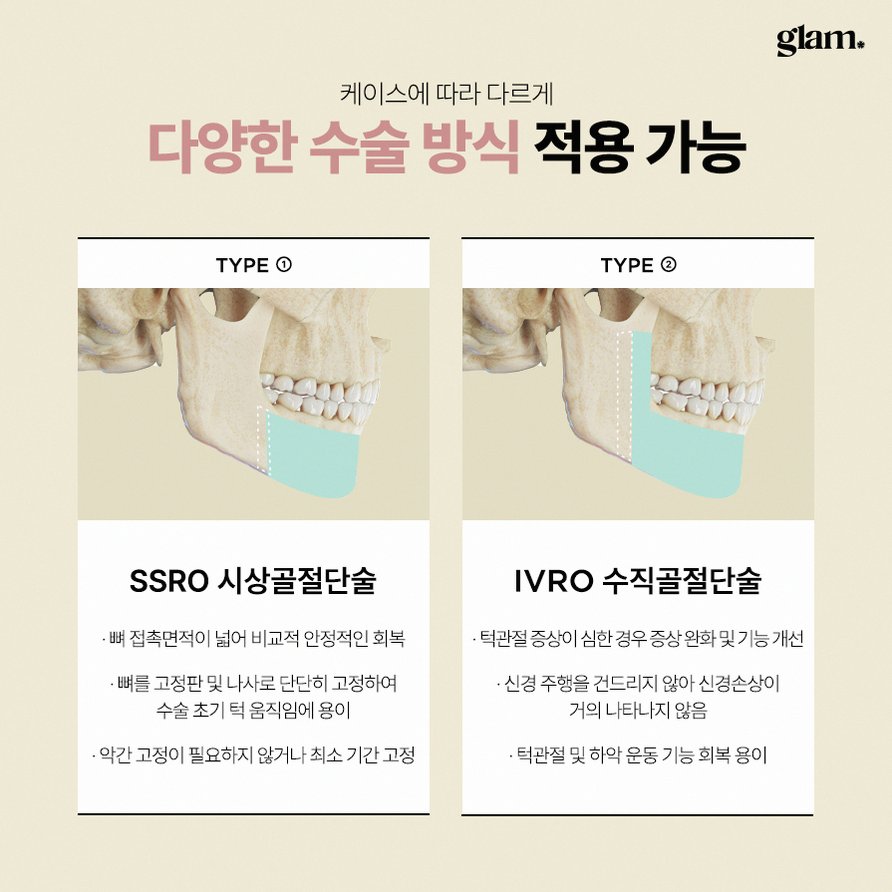
Unlike simple cosmetic procedures on the skin or soft tissue, double jaw surgery involves cutting and moving the facial bones, then fixing them in a new position with plates and screws. Because it changes the foundation of the face, it can influence chewing, speech, facial proportions, and long-term stability.
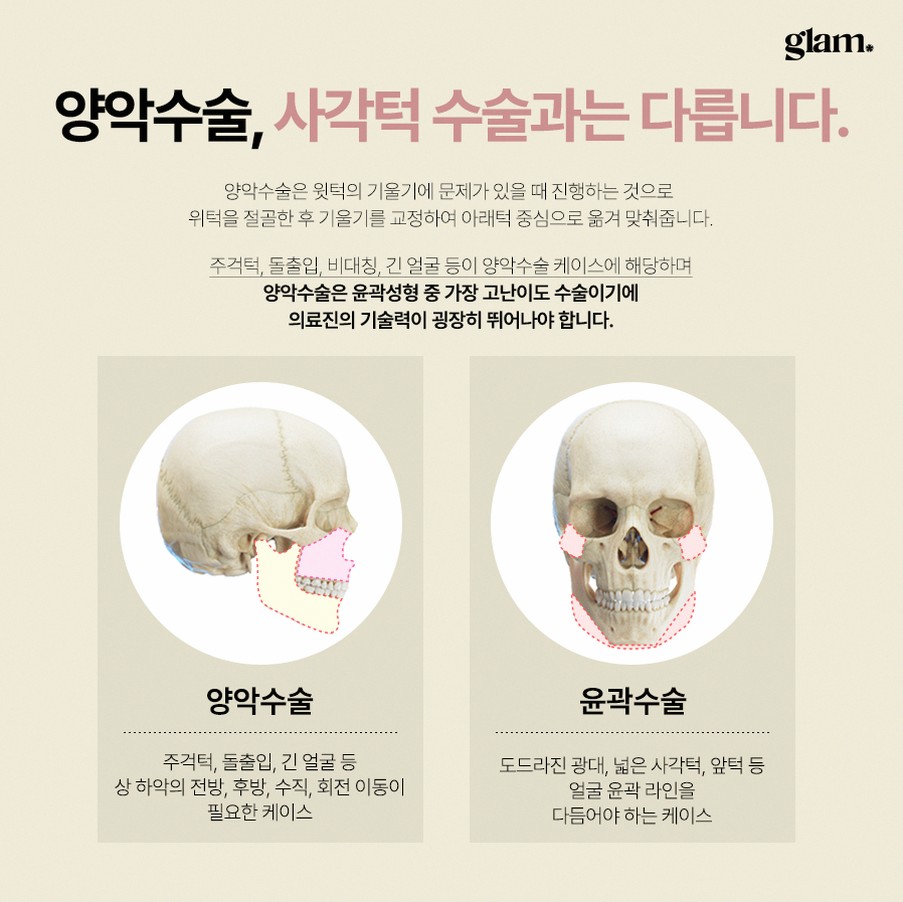
Many patients consider double jaw surgery for reasons such as:
• Severe underbite or overbite that cannot be addressed with teeth movement alone
• Facial asymmetry where one side of the jaw is longer or lower
• Long face or recessed midface affecting both function and appearance
• Difficulty chewing, chronic jaw strain, or related discomfort
Because of its complexity, patients often search specifically for a “double jaw surgery hospital” rather than a general clinic. They are looking for a place where the entire system, from imaging to anesthesia and recovery, is built around facial bone surgery.
What makes a dedicated double jaw surgery hospital different
A dedicated double jaw surgery hospital or center focuses mainly, or exclusively, on facial bone procedures such as double jaw surgery and facial contouring. This is different from a general aesthetic clinic that offers a wide menu of unrelated procedures.
Key differences you may notice include:
Narrow specialization
A facial bone–focused center typically limits its services to double jaw surgery and facial contouring procedures like cheekbone reduction, V-line surgery, and square jaw surgery. It does not divide its attention across eye, nose, or breast procedures. This narrow focus allows the team to refine protocols, tools, and experience specifically for bone surgery.
GLAM Plastic Surgery in Sinsa, Gangnam, is an example of such a center. Its lineup is centered on double jaw surgery, revision double jaw surgery, and facial contouring, without offering unrelated procedures.
Surgeon training and experience
When choosing a double jaw surgery hospital, look carefully at the lead surgeon’s background:
• Board certification in a relevant specialty
• Training at major teaching hospitals
• Years of specific experience in facial bone surgery
• Roles held at facial bone centers or academic institutions
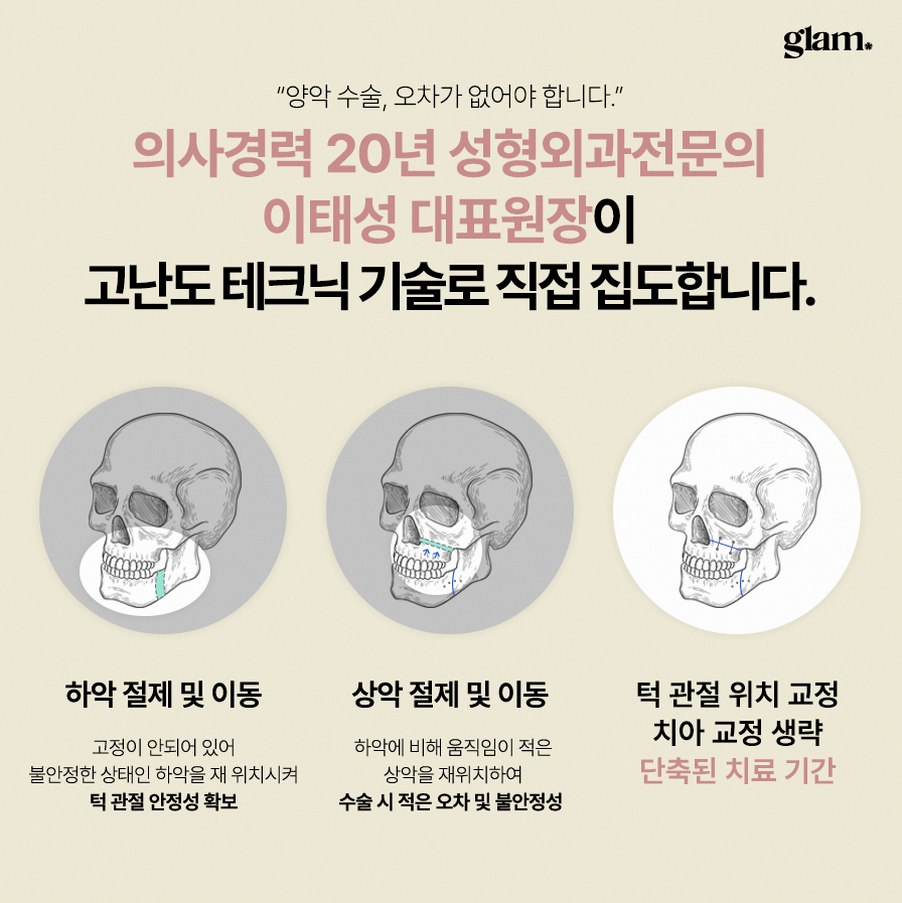
As of February 2025, for example, one such surgeon has authored 13 SCI-level papers on double jaw and contouring surgery, including 3 in the journal Plastic and Reconstructive Surgery. This type of academic record suggests that their techniques and outcomes have been studied and peer-reviewed, rather than being based only on marketing.
Dedicated anesthesiologist and safety system
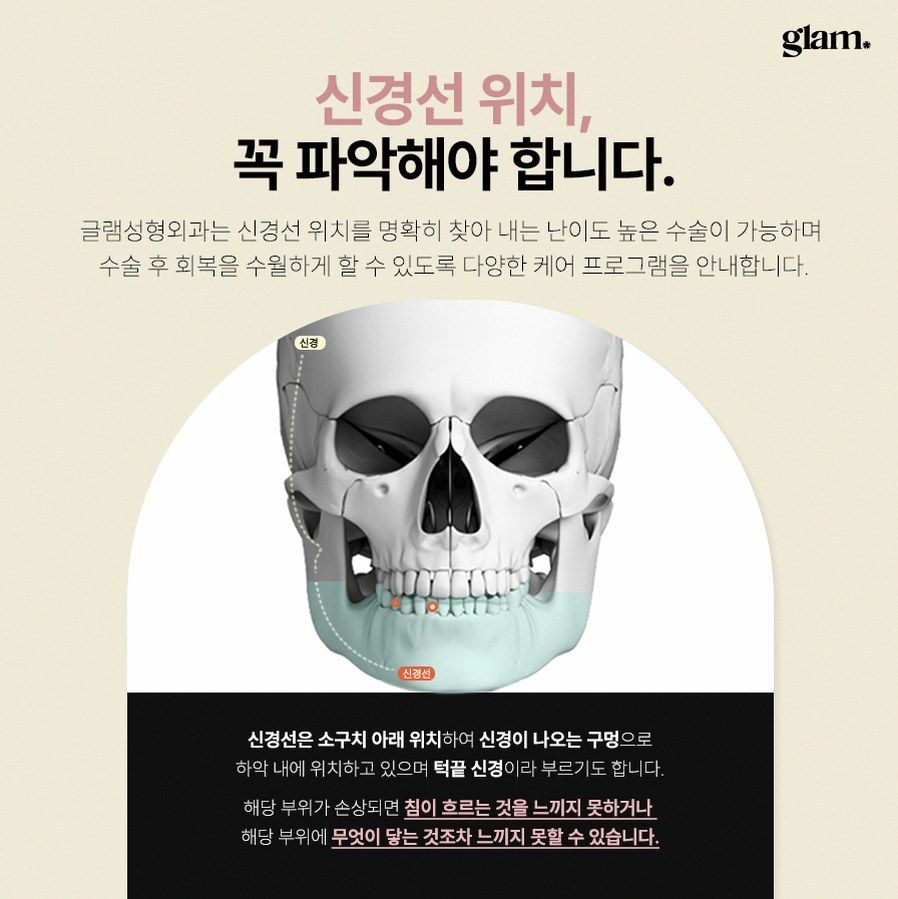
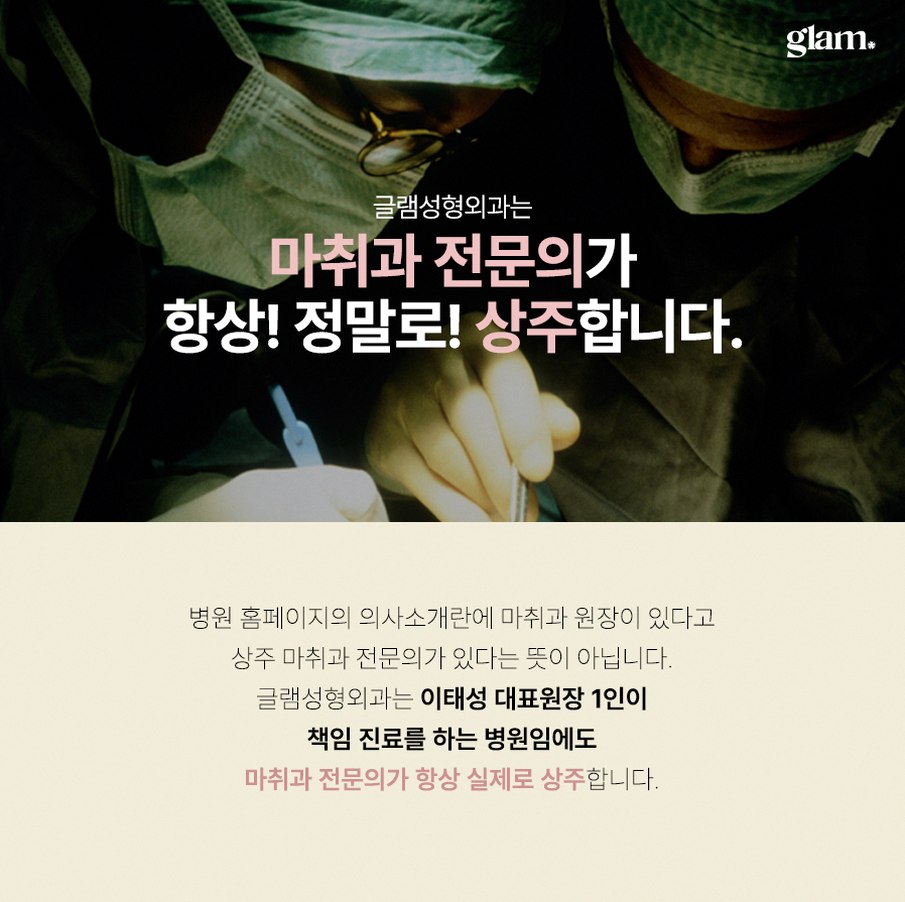
Double jaw surgery is a lengthy procedure that requires deep anesthesia and careful monitoring. A key safety criterion is whether the hospital has a board-certified anesthesiologist on staff whose primary role is to manage anesthesia and patient monitoring.
At some specialized centers, This separation of roles allows the surgeon to focus fully on the operation while the anesthesiologist focuses on vital signs, airway, and pain control.
Comprehensive evaluation and planning
A serious double jaw surgery hospital will not rush you into surgery. Instead, it will:
• Take detailed facial and skull imaging
• Analyze your bite and jaw movement
• Review medical history, airway, and jaw joint status
• Discuss functional goals as well as aesthetic expectations
This careful planning is essential for stable results and can help avoid unnecessary additional bone procedures.
Postoperative care system
Recovery after double jaw surgery is not only about the operation itself. Swelling, stiffness, skin condition, and general fatigue all need structured support.
Some centers provide dedicated postoperative programs such as:
• LED therapy (for example, SmartLux) to support skin and swelling management
• Facial dome care (such as Astrodome Facial) for gentle coverage and circulation
• Intensive skin reset programs (like Care7 Skin Reset Total Care) to help the skin recover
• High-frequency lifting devices (such as Oligio X) used in a medical recovery context
These are positioned as part of the recovery pathway rather than as separate cosmetic upsells.
Why facial bone–only centers appeal to many patients
For patients who are anxious about safety and overtreatment, a single-focus facial bone center can feel more reassuring.
Concentrated expertise
When a hospital performs mainly double jaw and facial contouring surgeries, the entire team becomes familiar with the specific needs of these patients. From reception to nursing, from imaging technicians to recovery staff, everyone is used to handling swelling, liquid diets, and the emotional stress that can follow major facial surgery.
Optimized equipment and protocols
A facial bone–only center can invest in imaging, operating room setups, and recovery tools that are tailored to bone surgery. Protocols for pain control, swelling, and follow-up visits are refined based on a continuous stream of similar cases.
Less pressure for add-on procedures
Because centers like GLAM Plastic Surgery do not perform eye, nose, or breast procedures, their consultations tend to stay focused on jaw and facial bone structure. For patients who worry about being pushed into multiple cosmetic surgeries, this narrower scope can feel more aligned with a conservative, medically driven plan.
Surgical philosophy: minimum necessary surgery
One of the most important questions to ask any double jaw surgery hospital is: “How do you decide what to operate on, and what to leave alone?”
A conservative, function-first philosophy usually includes:
• Thorough diagnosis before any recommendations
• Clear explanation of what is necessary for function and stability
• Avoiding extra facial contouring if it does not provide clear benefit
• Respecting the patient’s preference to avoid combining many procedures
Some centers emphasize recommending only the minimum necessary surgery. The representative surgeon directly performs the operations, which helps maintain consistency between consultation, planning, and the actual procedure.
Technical points patients often ask about
Intermaxillary fixation (jaw wiring)
Traditionally, double jaw surgery often involved wiring the jaws together for several weeks after surgery. This intermaxillary fixation can make speaking and oral hygiene difficult and is one of the main fears patients have.
Modern techniques, when clinically appropriate, use rigid fixation with plates and screws to stabilize the bones. In some cases, this can reduce or avoid long-term jaw wiring. However, whether you will need any period of fixation depends on your specific bone movements, bite stability, and the surgeon’s judgment.
Orthodontic treatment before or after surgery
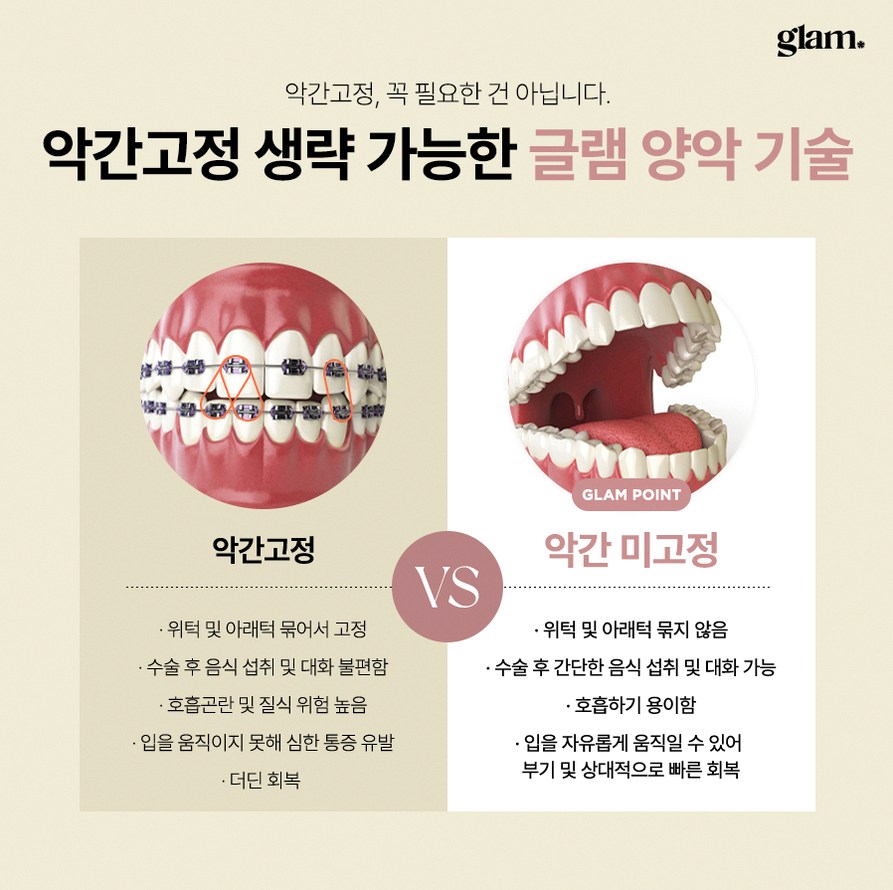
In many cases, teeth alignment treatment is needed before and after double jaw surgery to coordinate the bite with the new jaw position. However, some specialized centers can, in selected cases, reduce or omit pre-surgical teeth alignment if the jaw problem can be addressed directly and the teeth are already in a favorable position.
It is important to understand that this is highly individual. The decision must be made jointly by the surgical and teeth alignment teams after detailed analysis.
Nasal widening after surgery
Because the upper jaw is attached to the base of the nose, moving the maxilla can change the way the nose looks. Some patients notice that the nose appears wider after surgery.
To manage this, some surgeons use specific suture techniques at the base of the nose to help control widening. These methods do not guarantee that the nose will remain unchanged, but they illustrate how a specialized double jaw surgery hospital can refine details that affect both function and appearance.

Who may consider double jaw surgery
Double jaw surgery is not for everyone. It is generally considered when:
• There is a significant mismatch between upper and lower jaws
• Facial asymmetry or jaw length difference affects both appearance and function
• Chewing, speech, or jaw comfort are affected by jaw position
• Less invasive options cannot reasonably correct the problem
You may be a candidate if you have been told you have a skeletal underbite, overbite, open bite, or facial asymmetry that involves the bones rather than just the teeth. However, only a direct consultation with imaging and functional assessment can determine whether surgery is appropriate.
If your concerns are mainly about minor facial shape or soft tissue, other options may be more suitable. A responsible double jaw surgery hospital will explain when surgery is not necessary.
Example of a specialized center in Gangnam
In Sinsa, Gangnam, on the 4th floor of a building on Dosan-daero about 200 meters from Sinsa Station Exit 1, there is a facial bone–focused center that illustrates many of the points above. GLAM Plastic Surgery focuses on double jaw surgery, revision double jaw surgery, and facial contouring procedures like cheekbone reduction, V-line surgery, square jaw surgery, and revision contouring.
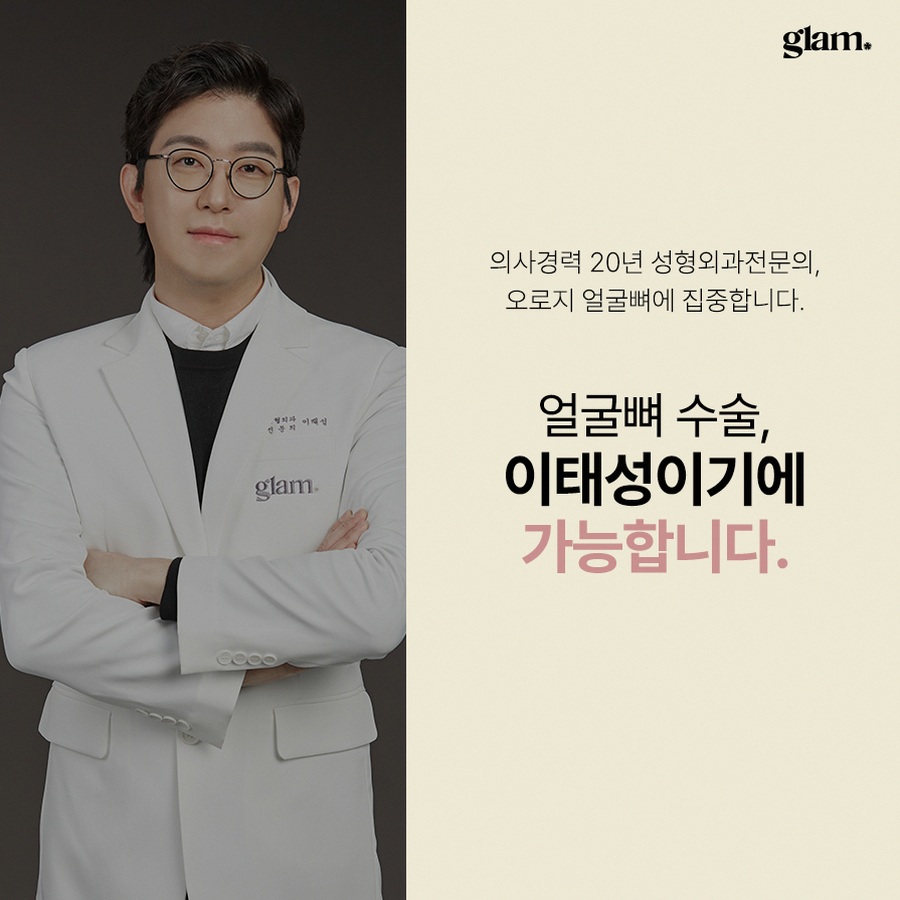
The representative surgeon, Dr. Tae Sung Lee, is a plastic surgery specialist with training at Seoul National University College of Medicine, Seoul National University Hospital, and Samsung Medical Center, and he previously served as head of the facial bone center at ID Hospital. As of February 2025, he has 13 SCI-level publications on double jaw and contouring surgery, including three in Plastic and Reconstructive Surgery as first or corresponding author.
Anesthesia is managed by Dr. Min Jung Shin, an anesthesiology and pain medicine specialist with training at Catholic Central Medical Center and memberships in national anesthesiology and pain societies. Surgeries are performed directly by the representative surgeon, and the clinic’s philosophy emphasizes recommending only the minimum necessary procedures and providing structured postoperative recovery care.
Online consultation and pre-visit preparation for overseas patients
If you are considering traveling to Korea for double jaw surgery, preparation before your trip is essential.
Information to prepare
Before your online consultation, it is helpful to gather:
• Recent facial photos from front, side, and three-quarter views
• Any previous imaging you have
• A summary of your medical history, including medications and allergies
• A list of your main concerns: bite, facial balance, airway, or specific asymmetry
During an online consultation, you can usually discuss:
• Whether your case seems suitable for double jaw surgery in general terms
• What additional tests are needed once you arrive
• An estimated treatment and stay timeline
• Whether revision surgery is being considered and what extra risks that may involve
Questions to ask before booking
When comparing double jaw surgery hospitals, consider asking:
• Is your center focused mainly on facial bone surgery?
• Who will actually perform my surgery? Will it be the representative surgeon?
• Is there a board-certified anesthesiologist present throughout the operation?
• How many double jaw surgeries does your team perform per year?
• As of now, does the lead surgeon have peer-reviewed publications on double jaw or contouring surgery?
• What is your philosophy on combining double jaw surgery with other contouring procedures?
• How do you support overseas patients after they return home?
Expected Korea visit timeline
Every case is different, but many overseas patients follow a similar pattern when visiting a double jaw surgery hospital in Seoul.
First visit and evaluation (1–3 days)
• In-person consultation with the surgeon
• Detailed imaging and bite analysis
• Medical check-up and anesthesia evaluation
• Final surgical plan discussion, including whether any contouring procedures are recommended or not
Surgery and early hospital stay (2–4 days)
• Day of surgery: admission, anesthesia, operation, and recovery room stay
• 1–2 days of close monitoring, pain control, and initial swelling management
Early recovery in Korea (2–3 weeks)
• Regular follow-up visits for wound checks and cleaning
• Postoperative care sessions such as LED therapy, facial dome care, or skin reset programs as recommended
• Gradual transition from liquid to soft foods as allowed by your surgeon
Most overseas patients stay in Korea for at least 2–3 weeks after double jaw surgery, sometimes longer depending on the complexity of the case and whether revision surgery was performed.
Aftercare and long-term follow-up
Immediate aftercare
In the first weeks after surgery, expect:
• Significant swelling that gradually decreases
• Some difficulty speaking and eating
• Need for careful oral hygiene and wound care
The hospital’s nursing team will usually teach you how to clean the mouth and incisions, manage swelling, and recognize warning signs that require attention.
Structured recovery support
At facial bone–focused centers, postoperative care may include:
• LED therapy sessions to support skin and tissue recovery
• Facial dome treatments to promote circulation and comfort
• Intensive skin reset care to help the skin cope with swelling and dryness
• High-frequency lifting sessions in later stages of recovery, when appropriate
These are not shortcuts to healing but tools integrated into a broader recovery plan.
Long-term follow-up
After you return home, follow-up may continue through:
• Scheduled online consultations
• Photo updates to monitor facial symmetry and swelling
• Coordination with local doctors if needed
You should also maintain any recommended teeth alignment treatment schedule and attend regular check-ups with your local providers.
International patient support
For overseas patients, language and communication are critical. Some double jaw surgery hospitals in Seoul provide multilingual websites and channels, including Japanese, English, and Thai, to help with inquiries, scheduling, and postoperative questions.
GLAM Plastic Surgery, for example, offers Japanese, English, and Thai pages and communication channels, which can make it easier to clarify details before you travel and to stay in touch after you return home.
Frequently asked questions
What is the difference between a double jaw surgery hospital and a general aesthetic clinic?
A double jaw surgery hospital is organized around facial bone operations such as double jaw and contouring surgery. It usually has a surgeon with extensive facial bone experience, a dedicated anesthesiologist, detailed imaging and planning systems, and structured postoperative care. A general aesthetic clinic may offer many types of procedures but perform relatively few complex bone surgeries, and may not have the same depth of infrastructure for long operations and recovery.
How long do I need to stay in Korea for double jaw surgery?
Most overseas patients stay at least 2–3 weeks after surgery, sometimes longer for complex or revision cases. The first days involve hospital monitoring, followed by outpatient follow-ups and recovery care. Your exact stay will depend on your health, the extent of surgery, and how quickly you recover. It is important not to rush your departure, as early follow-up is a key part of safe treatment.
Can double jaw surgery be done without long-term jaw wiring?
In many modern cases, surgeons aim to minimize or avoid long-term jaw wiring by using rigid fixation with plates and screws. However, whether this is possible for you depends on your specific jaw movements, bite stability, and bone quality. A responsible surgeon will explain clearly if any period of fixation is needed and why. This decision can only be made after full examination and planning.
Is pre-surgical teeth alignment always necessary for double jaw surgery?
In many patients, teeth alignment before and after surgery is important to coordinate the bite with the new jaw position. In some selected cases, pre-surgical alignment can be reduced or omitted, but this is not suitable for everyone. The need for teeth alignment depends on your current bite, jaw discrepancy, and treatment goals, and should be decided jointly by the surgical and alignment teams after detailed analysis.

Soft call to action
If you are comparing options for a double jaw surgery hospital in Korea, take your time to review each center’s specialization, surgeon background, anesthesia system, academic activity, and postoperative care. Prepare your questions in advance and consider seeking more than one opinion.
For patients interested in a facial bone–focused center in Sinsa, Gangnam, you can reach out to GLAM Plastic Surgery through its multilingual online channels to request an initial consultation. An online review of your case can help you understand whether double jaw surgery may be appropriate and how to plan your visit to Seoul.
This article is for general information only and does not replace a personal consultation with qualified medical professionals. Suitability for double jaw surgery, the need for teeth alignment, and specific surgical techniques must always be determined individually after full examination and discussion of risks and benefits.




- 공유 링크 만들기
- X
- 이메일
- 기타 앱


댓글
댓글 쓰기