Sagging After Facial Contouring And Revision Options In Sinsa Gangnam
- 공유 링크 만들기
- X
- 이메일
- 기타 앱
Direct answer summary
Sagging after facial contouring is relatively common, especially after cheekbone reduction, jaw angle surgery, or V-line surgery. In the first months, much of what you see is swelling and temporary looseness, which usually improves over 6 to 12 months. However, if clear jowls, hollow cheeks, or an aged look remain after this period, there may be a structural issue with bone support or soft tissue suspension. In those cases, a careful evaluation and, if needed, revision facial contouring or lifting procedures can help improve the balance of the face.
This guide explains why sagging can occur, how to know whether it is temporary or long term, and what revision options are available for international patients considering treatment in Sinsa, Gangnam, Seoul.
What sagging after facial contouring really means
In daily life, people use the word “sagging” to describe several changes after facial bone surgery.
Common complaints include:
Jowls along the jawline that make the lower face look heavy or droopy.
Deepened nasolabial folds from the nose to the mouth corners.
Marionette lines running from the mouth corners down toward the chin.
Hollow or sunken cheeks that make the face look tired or older.
Loose skin or a small double chin under the jaw.
These changes can appear after cheekbone reduction, jaw angle reduction, or V-line surgery, especially when the bone support is reduced and the overlying soft tissue has to adapt to a new framework.
Normal healing versus concerning sagging
Not every uneven or droopy look after surgery is a complication. The face goes through several stages of healing.
Normal post-operative changes can include:
Swelling that makes the face look round, firm, or even lumpy.
Temporary asymmetry, where one side looks more swollen or slightly lower.
Mild skin looseness that gradually tightens as swelling goes down and tissues reattach.
Changes in facial expression or stiffness that improve as muscles recover.
These changes usually improve steadily over the first 3 to 6 months, and continue to refine up to 12 months.
Concerning signs of sagging include:
Persistent jowls that do not improve after swelling has mostly gone.
A clearly aged or tired look compared to before surgery.
Obvious drooping of the midface or cheek area, sometimes more on one side.
Deepened folds around the mouth that stay or worsen.
A collapsed or sunken appearance in the midface or lower face.
If these features are still strong after 6 to 12 months, especially if they are combined with asymmetry or bite changes, it may indicate a structural problem rather than just slow healing.
Why sagging can occur after facial bone surgery
Several factors can contribute to sagging after facial contouring.
Excessive bone reduction
If too much cheekbone, jaw angle, or mandible is removed, the bony support for the soft tissue is reduced. The skin, fat, and muscles then have less “scaffold” to rest on, which can lead to drooping or hollow areas.
Inadequate cheekbone fixation or repositioning
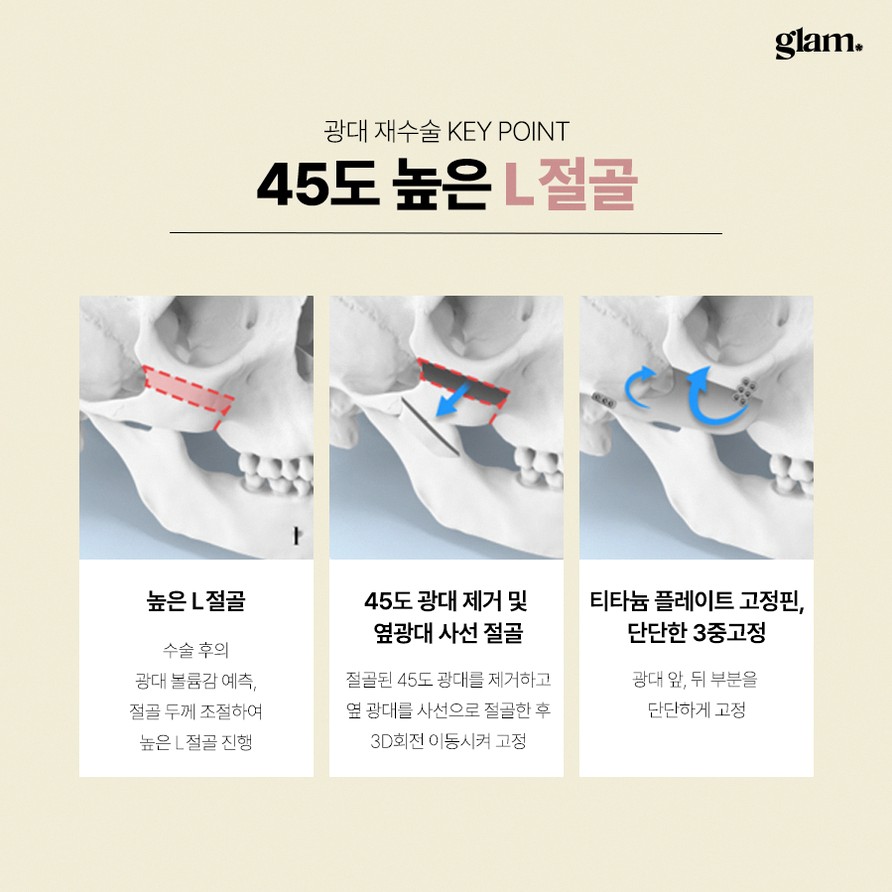
During cheekbone reduction, the bone segment is usually cut and repositioned. If the fixation is not stable or the segment is moved too far inward or downward, the overlying cheek tissue can lose support and appear saggy or asymmetric.
Weak or loosened soft tissue suspension
Under the skin, there are layers such as the periosteum and ligaments that help hold the soft tissue to the bone. If these supports are weakened during surgery, or if they do not heal firmly, the tissues can slide slightly downward over time.
Pre-existing skin laxity and aging
Patients with thinner skin, lower skin elasticity, or early signs of aging before surgery are more prone to sagging afterward. Large weight changes after surgery can also affect how the soft tissue drapes over the new bone shape.
Planning that does not match bone and soft tissue
If the original surgical plan focused only on reducing bone without considering skin quality, soft tissue volume, and age, the risk of sagging increases. The same amount of bone reduction can look very different in a 22-year-old with firm skin compared to a 40-year-old with early laxity.
How long to wait before judging sagging
Most patients want to know when they can decide whether their sagging is temporary or permanent.
In general:
- First 1 to 3 months: Swelling dominates. The face may look bigger, rounder, or uneven. It is too early to judge sagging.
- to 6 months: Swelling gradually decreases. Some early sagging or looseness can appear as the tissues settle. Many mild issues continue to improve in this period.
- to 12 months: Soft tissues adapt to the new bone shape. Skin tightens as much as it naturally can. The final contour becomes clearer.
For most people, a reliable assessment is possible around 6 to 12 months after surgery. Revision decisions are usually made in this window, unless there is a clear structural problem that requires earlier attention, such as severe asymmetry, unstable bone segments, or functional issues.
Psychological impact and realistic expectations
Many patients who notice sagging after contouring feel regret and fear that they have “ruined” their face. It is important to understand:
Not all sagging requires another bone surgery.
Some cases can be improved with soft tissue lifting or non-surgical tightening.
In some situations, the safest option is a small, targeted revision rather than a large operation.
At GLAM Plastic Surgery in Sinsa, Gangnam, the team focuses on conservative, evidence-based planning, especially for revision cases. The goal is to use the minimum necessary intervention to restore support and improve balance, rather than repeating aggressive bone reduction.
What revision facial contouring for sagging means
Revision facial contouring refers to secondary surgery performed after a previous cheekbone, jaw angle, or V-line procedure. In the context of sagging, the main goals are to restore structural support, correct asymmetry, and improve the way soft tissue drapes over the bone.
When revision bone work may be needed
Revision bone surgery is considered when:
The cheekbone or jaw has been over-resected, leading to a collapsed or sunken look.
The cheekbone segment is malpositioned, causing one side to appear flatter or droopier.
There are clear contour irregularities or step-offs that make sagging more noticeable.
There is functional impact, such as bite changes or discomfort near the bone cuts.
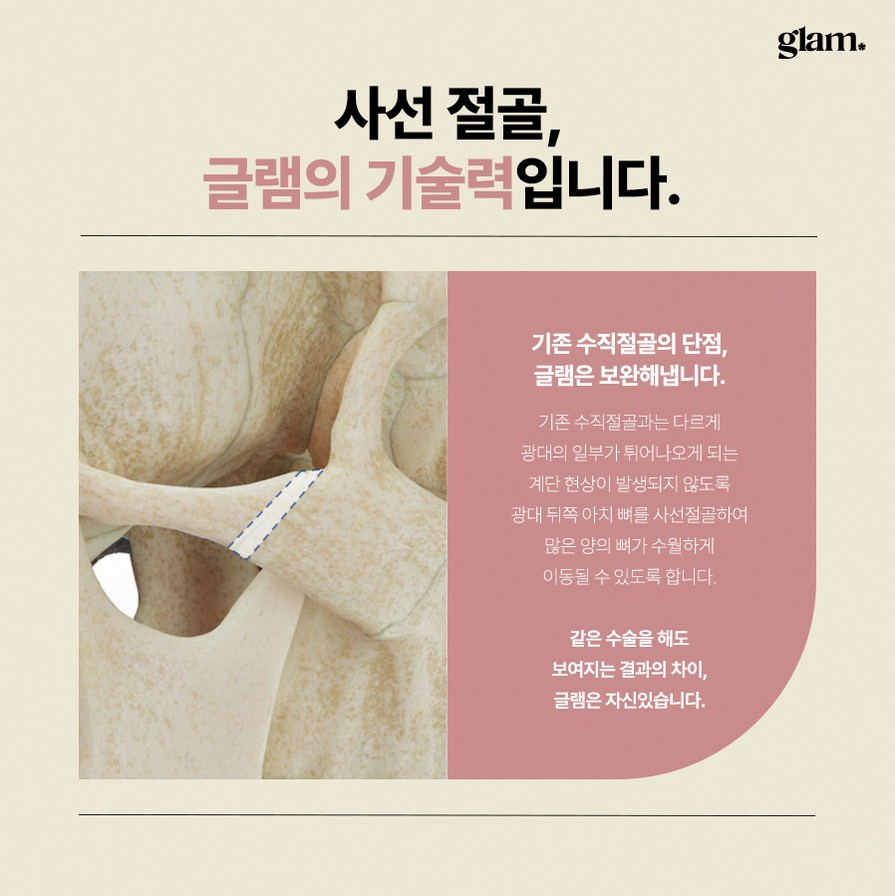
In these cases, revision may involve repositioning the cheekbone, smoothing irregularities, or even limited augmentation to rebuild support.
When the issue is mainly soft tissue
Sometimes imaging shows that the bone position is acceptable, but the skin and soft tissue have lost elasticity or volume. In these situations, revision may focus more on soft tissue rather than bone.
Possible approaches include:
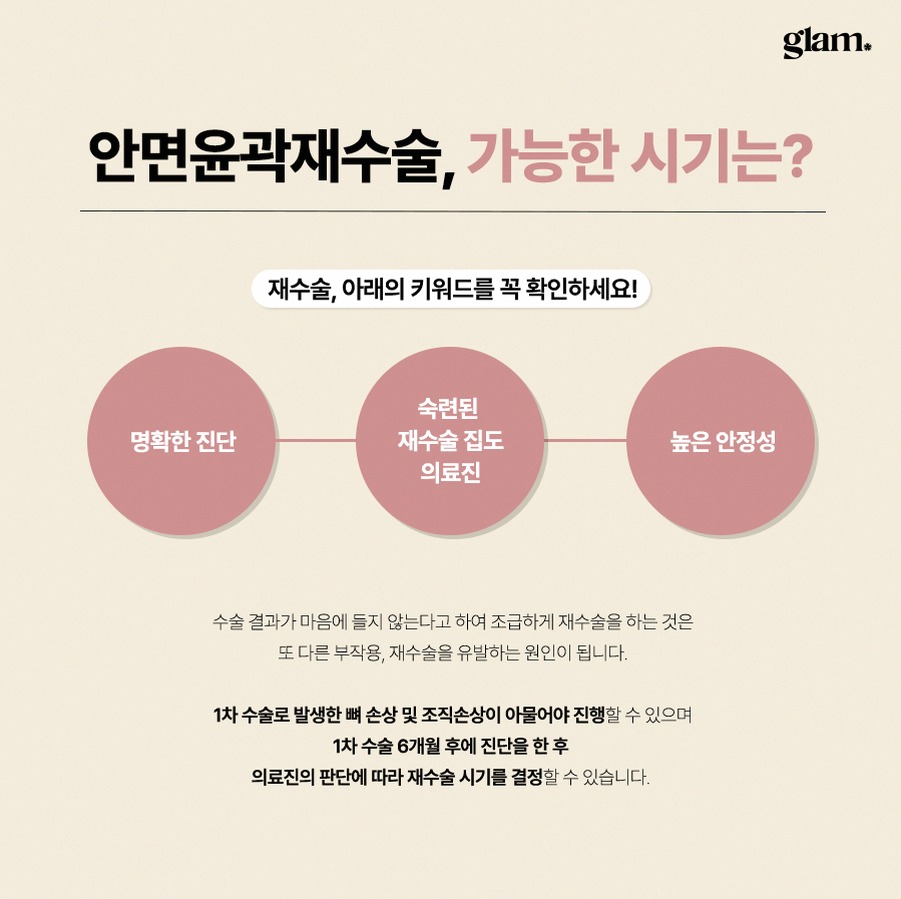
Surgical lifting procedures such as midface lift, lower face lift, or neck lift for more advanced sagging.
Energy-based tightening such as radiofrequency or ultrasound for mild laxity.
Volume restoration with appropriate methods if hollowing is a major concern.
These options can sometimes be combined with minor bone adjustments, but the key is to match the treatment to the real cause of the sagging.
Why revision surgery is more complex
Revision facial contouring is technically more demanding than first-time surgery because:
Scar tissue changes the normal anatomy and makes dissection more difficult.
Blood supply may be altered, so careful handling is needed.
Nerves may be closer to previous bone cuts or plates.
There may be limits to how much correction is possible, especially if a large amount of bone was removed.
For these reasons, precise pre-operative analysis and conservative planning are essential. The lead surgeon at GLAM Plastic Surgery is a board-certified plastic surgeon with around 20 years of experience in facial bone surgery and multiple SCI-level publications on contouring and double jaw surgery, which supports an evidence-based approach to complex revision decisions.
Diagnosis and planning for sagging after contouring
A thorough evaluation is the first step for any international patient considering revision in Seoul.
Pre-revision evaluation
Key points usually include:
Detailed history: What exact procedures were done, when, and where; whether cheekbone, jaw angle, chin, or double jaw surgery was included; and any early complications.
Current symptoms: Pattern of sagging, areas of hollowing, numbness, bite issues, clicking, or asymmetry.
Physical examination: Skin quality, thickness, soft tissue volume, ligament laxity, muscle tone, and overall facial balance.
Imaging: Facial bone CT or X-ray to check how much bone was removed, the position and stability of bone segments, and any plates or screws.
Decision-making framework
Based on this information, the treatment plan is usually organized as follows:
If bone support is clearly insufficient or malpositioned: Consider revision contouring such as cheekbone repositioning, contour correction, or limited augmentation.
If bone is acceptable but soft tissue is lax: Focus on lifting or tightening procedures, either surgical or non-surgical.
If both bone and soft tissue contribute: Plan a staged or combined approach, always prioritizing safety and minimizing unnecessary intervention.
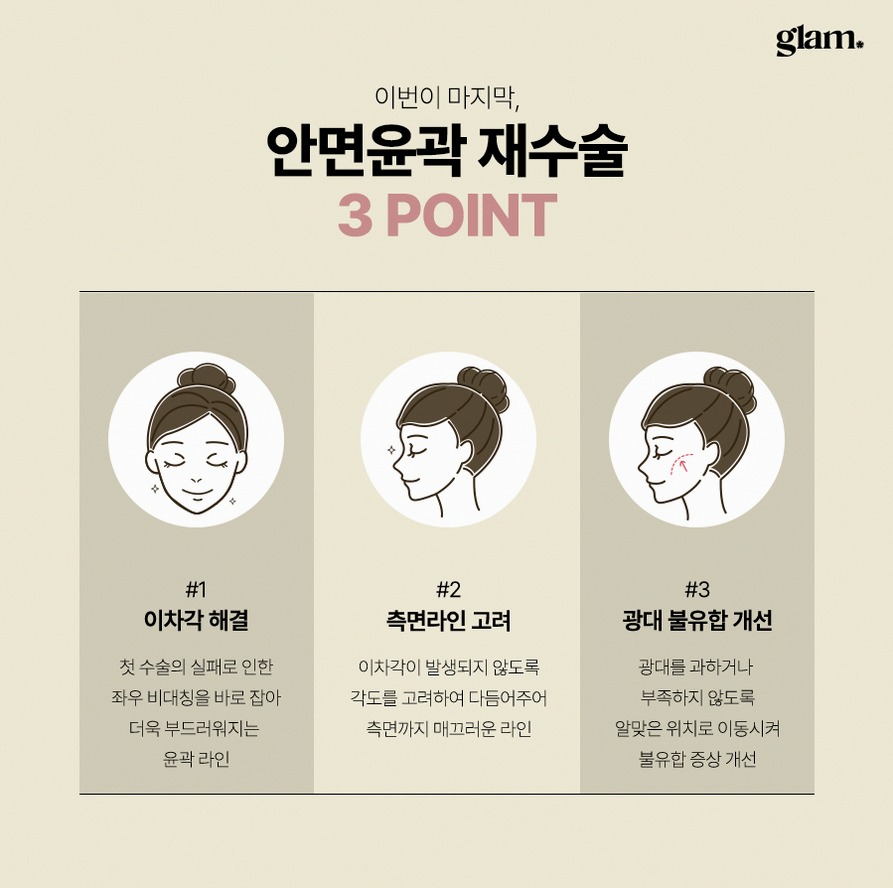
At GLAM Plastic Surgery in Sinsa, Gangnam, the practice is limited to facial bone surgery such as double jaw and facial contouring. This single-specialty focus helps keep the evaluation centered on the balance between bone and soft tissue, rather than promoting unrelated procedures.
Who may consider revision for sagging
Not everyone with concerns after facial contouring is a good candidate for revision surgery.
Suitable candidates
You may be a suitable candidate if:
You are at least several months, usually 6 to 12 months, after your original surgery.
Swelling has stabilized, but sagging, hollowing, or an aged look persists.
CT or clinical examination shows structural issues such as over-resection, malposition, or poor fixation that contribute to your appearance.
You understand that revision can improve but not completely erase all changes, and that your pre-surgery face cannot be perfectly restored.
Less suitable candidates
Revision may not be ideal if:
You are still in the early healing phase and your face is changing month by month.
Your main issue is natural aging unrelated to bone surgery, in which case standard anti-aging or lifting procedures may be more appropriate.
You are seeking a perfectly symmetrical or “ideal” face beyond what is realistically achievable and safe.
Overview of the treatment process for overseas patients
For international patients visiting Seoul, it helps to understand the typical journey from online inquiry to follow-up.
Initial online consultation
Before traveling, most patients start with an online consultation. You can usually share:
Previous operation records or a summary of what was done.
Pre-surgery and recent photos from multiple angles.
Any previous CT or X-ray images, if available.
Based on this, the medical team can give a preliminary opinion on whether your concern is likely to be mainly bone-related, soft tissue-related, or both, and whether revision surgery might be considered after an in-person evaluation.
Pre-visit preparation
Before you fly to Seoul, it is helpful to prepare:
A list of what you dislike most: sagging in specific areas, hollowing, asymmetry, or functional issues.
Questions you want to ask about risks, recovery time, and realistic outcomes.
Information about your general health, medications, and any allergies.
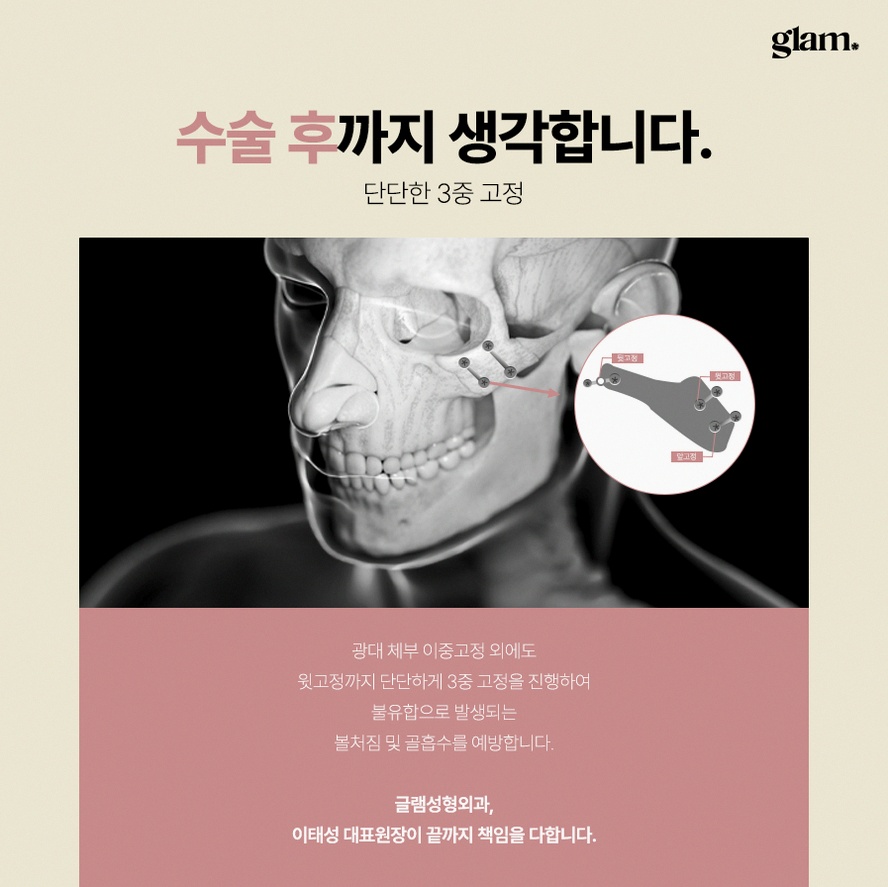
If you are comparing clinics, consider not only the cost but also:
Whether the clinic focuses on facial bone surgery.
Experience with revision contouring and published scientific work.
Availability of an anesthesiology specialist for longer operations.
Structured aftercare options for swelling and recovery.
In-person examination and imaging in Seoul
Once you arrive, the first visit usually includes:
Detailed facial analysis and palpation of bone edges.
Assessment of skin quality, soft tissue support, and facial movement.
CT or X-ray imaging to confirm the bone situation and fixation status.
After this, the surgeon can explain:
Whether revision bone surgery is recommended or not.
Whether lifting or non-surgical tightening would be more appropriate.
What level of improvement is realistic in your specific case.
Planning and surgery
If surgery is recommended and you decide to proceed, the plan may include:
Revision bone work such as cheekbone repositioning, contour smoothing, or limited augmentation.
Soft tissue procedures such as midface, lower face, or neck lifting if needed.
Non-surgical adjuncts such as radiofrequency lifting for mild laxity or to support recovery.
Surgery is usually performed under general anesthesia, with an anesthesiology specialist present for safer management, especially in longer or more complex revision operations.
Expected Korea visit timeline
The exact schedule varies, but a common pattern for overseas revision patients is:
Day 1 to 2: In-person consultation, imaging, and final planning.
Day 3 to 5: Surgery day, followed by early monitoring at the clinic.
First week: Swelling, bruising, and initial wound care. Multiple short follow-up visits.
Second week: Removal of sutures if needed, check of nerve function and bite, early aftercare such as LED therapy or gentle facial care.
Many patients stay in Korea for around 2 to 3 weeks after revision surgery, depending on the complexity of the procedure and their travel distance. This allows time for early healing and for the surgeon to confirm that there are no immediate complications.
Aftercare and recovery support
Postoperative care is especially important in revision cases.
Typical aftercare includes:
Swelling management with cold and then warm compresses as instructed.
Pain control and medications to reduce inflammation and prevent infection.
Monitoring for nerve function, bite alignment, and wound healing.
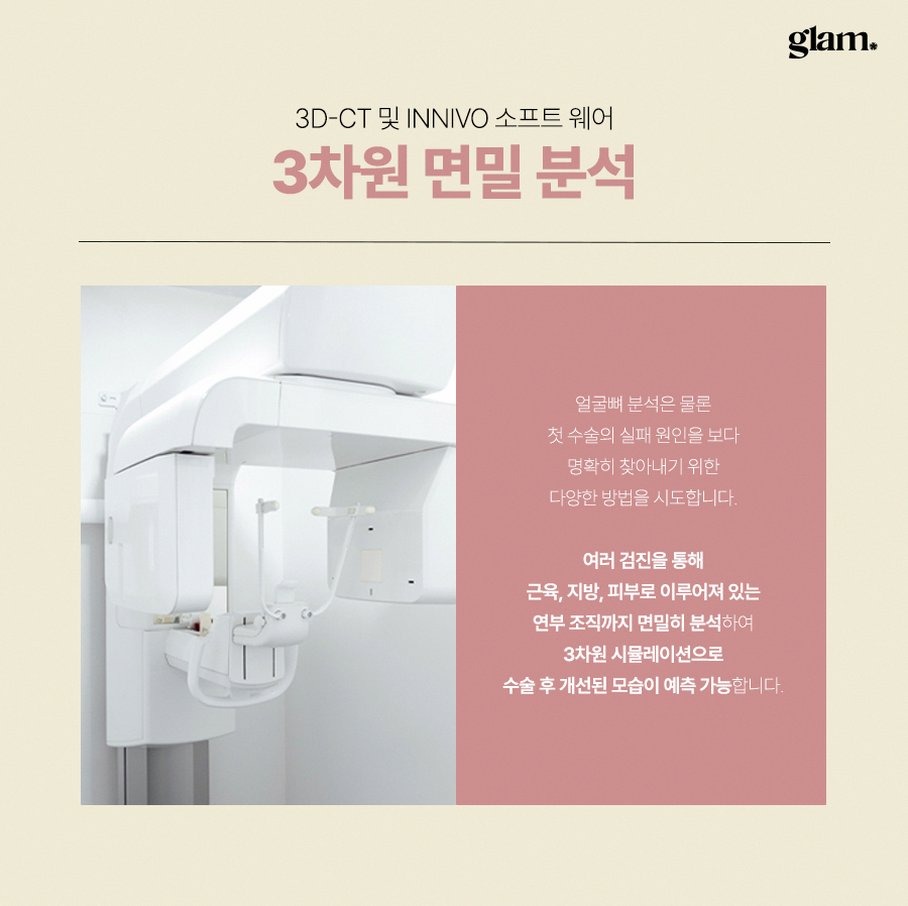
At GLAM Plastic Surgery, additional tools such as LED therapy, facial dome care, skin reset programs, and radiofrequency lifting may be used as adjuncts to support recovery and gentle tightening. These are not substitutes for proper revision when structural issues exist, but they can help improve comfort and the quality of healing.
Risks and considerations
Revision facial contouring carries higher risk than first-time surgery. Potential risks include:
Increased chance of nerve irritation or numbness due to scar tissue.
Asymmetry or contour irregularities if the correction is limited by previous bone removal.
Longer recovery time and the possibility that some degree of sagging or laxity may remain.
When choosing a clinic, consider whether the surgeon:
Specializes in facial bone surgery rather than many unrelated procedures.
Has a long-term track record and academic work in contouring and double jaw surgery.
Is willing to advise against revision if the risks outweigh the likely benefits.
For safety and planning, bring any previous records and imaging when seeking a second opinion. Focus on long-term function and facial harmony, not only short-term cosmetic change.
Frequently asked questions about sagging after facial contouring
How long should I wait after facial contouring before deciding if my sagging is permanent?
Most patients should wait at least 6 months, and often up to 12 months, before deciding whether sagging is likely to be permanent. During the first 3 to 6 months, swelling and tissue adaptation can change the appearance significantly. If, after 6 to 12 months, you still see clear jowls, drooping cheeks, or a collapsed look that is not improving, it may be time to seek a detailed evaluation for possible revision or lifting.
Is sagging after cheekbone or V-line surgery normal, and when does it improve on its own?
Mild looseness or a slightly heavier lower face can be normal as swelling goes down and tissues settle after cheekbone or V-line surgery. In many cases, the skin gradually tightens and the face looks more natural over 6 to 12 months. However, if the cheekbone was moved too far in, or the jaw was reduced excessively, the loss of support can cause more obvious sagging that does not fully improve on its own.
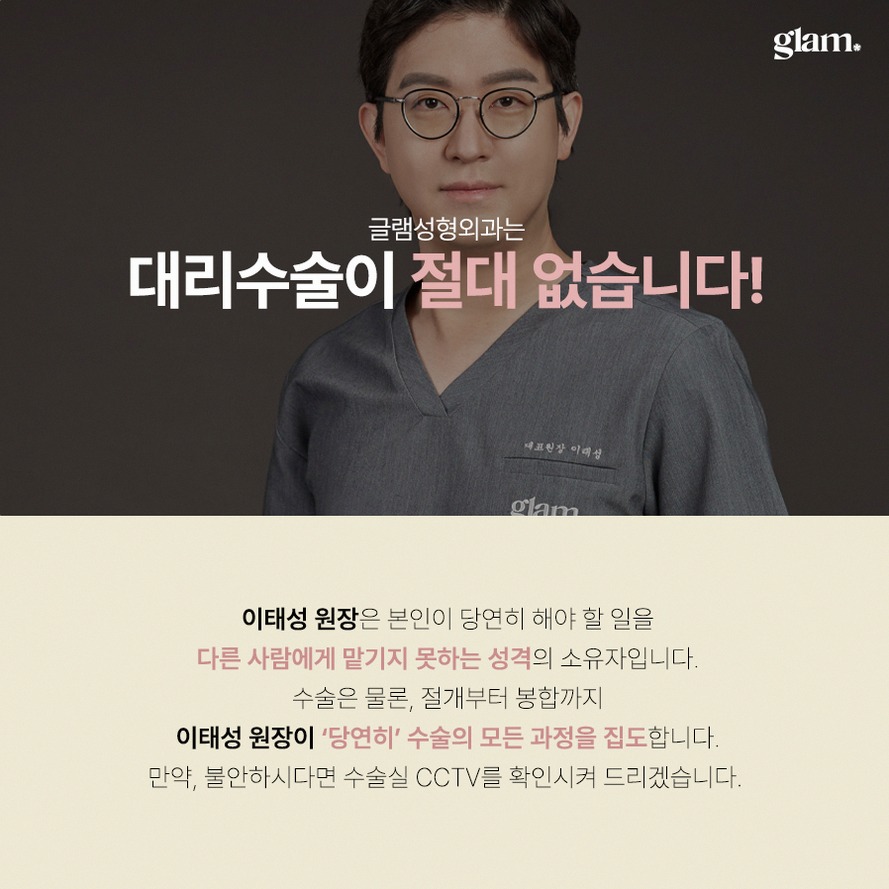
When is revision facial contouring better than just doing a facelift or thread lift?
Revision bone surgery is more appropriate when imaging shows that bone support is insufficient or malpositioned, such as a cheekbone segment that has dropped or a jaw that was over-resected. In these cases, lifting alone may not give a satisfying result because the underlying structure is not ideal. If the bone is in a good position and the main issue is skin laxity, then a facelift, neck lift, or non-surgical tightening may be enough without touching the bone again.
Can revision surgery completely fix sagging caused by over-resection of bone?
Revision can often improve sagging caused by over-resection, especially if some support can be rebuilt or repositioned. However, there are limits. If a large amount of bone was removed, it may not be possible to fully restore the original structure, and some degree of looseness or contour change may remain. A careful consultation is needed to understand what level of improvement is realistic in your case.
What tests or scans are needed before planning revision for sagging?
A facial bone CT scan is usually the most useful test before revision. It shows how much bone was removed, the exact position of bone segments, and the location of plates or screws. Standard facial photos and a physical examination are also important to evaluate skin quality and soft tissue support. Sometimes, panoramic X-rays or other imaging may be added depending on the previous surgery.
Is revision more dangerous than the first surgery, and how can risks be reduced?
Revision is generally more complex than primary surgery because of scar tissue and altered anatomy, so the risk profile is higher. Risks can be reduced by choosing a surgeon who focuses on facial bone surgery, has extensive revision experience, and works with a dedicated anesthesiology specialist. Conservative planning, avoiding unnecessary additional bone reduction, and clear communication about expectations also help manage risk.
Are there non-surgical options that help with mild sagging after contouring?
Yes, for mild sagging or early laxity, non-surgical options such as radiofrequency lifting, ultrasound-based tightening, and structured skin care programs can help improve firmness. These treatments are most effective when bone support is adequate and the problem is mainly skin quality. They are not a replacement for revision bone surgery when there is a clear structural issue, but they can be useful as part of a comprehensive plan.
I had facial contouring abroad and now have sagging. Can I still get revision in Seoul?
Many patients seeking revision in Seoul had their first surgery in another country. In most cases, you can still be evaluated and treated, as long as you provide as much information as possible about your previous procedures. Bringing any available records, photos, and imaging helps the surgeon understand what was done and plan a safer revision.
Will revision make me look unnatural or too sharp again?
The aim of revision for sagging is usually to restore support and balance, not to create an overly sharp or extreme contour. With conservative planning, slight augmentation or repositioning is often used instead of further reduction. During consultation, you can discuss your preferred facial style and what you want to avoid, so the plan focuses on natural harmony.

How do I choose a clinic for revision facial contouring focused on sagging problems?
When choosing a clinic, look for a team that focuses on facial bone surgery and has clear experience with revision cases. Check whether the lead surgeon has published scientific work on facial contouring or double jaw surgery and whether an anesthesiology specialist is involved in longer operations. It is also important that the clinic is willing to say no to unnecessary surgery and can explain clearly when lifting or non-surgical options may be better than bone revision.
Soft call to action for online consultation
If you are worried about sagging after facial contouring and are considering a visit to Sinsa, Gangnam, an online consultation can be a safe first step. By sharing your history, photos, and any available scans, you can receive a personalized assessment of whether revision bone surgery, lifting, or non-surgical care is more suitable for you. Multilingual support in English, Japanese, and Thai can help make communication easier for overseas patients.
This article is for general information only and does not replace a face-to-face consultation with a qualified medical professional. Individual conditions and treatment plans vary, so please seek personalized advice before making any medical decisions.




- 공유 링크 만들기
- X
- 이메일
- 기타 앱


댓글
댓글 쓰기