Revision Options and Timing in Sinsa, Gangnam
- 공유 링크 만들기
- X
- 이메일
- 기타 앱
vision facial contouring can help by rebalancing the bone and soft tissue, but it should be planned carefully at a clinic that focuses specifically on facial bone surgery.
This guide explains why sagging happens after cheekbone or jaw contouring, when revision surgery may be considered, how a bone-specialized clinic in Sinsa, Gangnam, approaches these cases, and what international patients can expect when coming to Seoul.
What is sagging after facial contouring and why does it happen?
Facial contouring usually refers to procedures that reshape the facial bones, such as cheekbone reduction, V-line surgery, and square jaw reduction. The goal is often a smaller, slimmer, or more balanced face.
After surgery, many patients experience swelling and a heavy feeling in the lower face. This is normal in the early phase. However, some patients later notice new jowls, drooping along the jawline, or hollowed cheeks that make them look older or more tired than before.
Several factors can contribute to sagging after facial contouring:
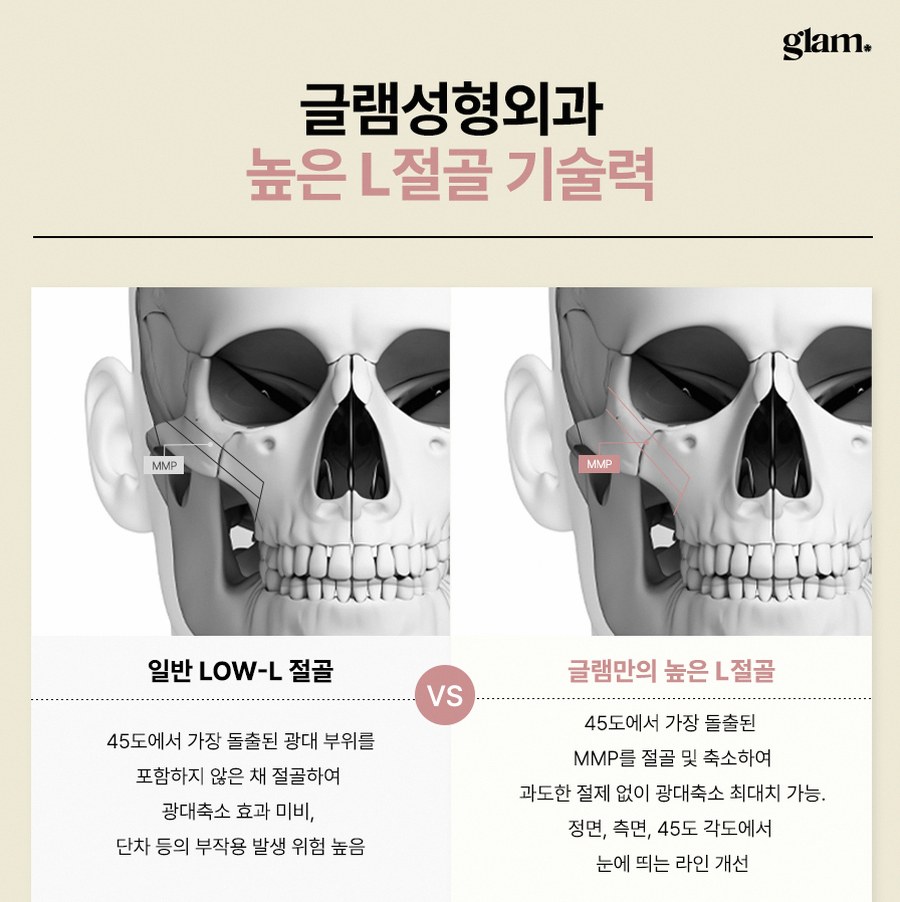
Loss of bony support: When cheekbones or the jaw angle are reduced, the overlying soft tissue has less structure to rest on. If the reduction is excessive or not well balanced, the skin and fat can slide downward.
Over-resection of bone: If too much bone is removed, especially in the cheekbone or jawline, the face may look overly small or hollow, and soft tissue can collapse.
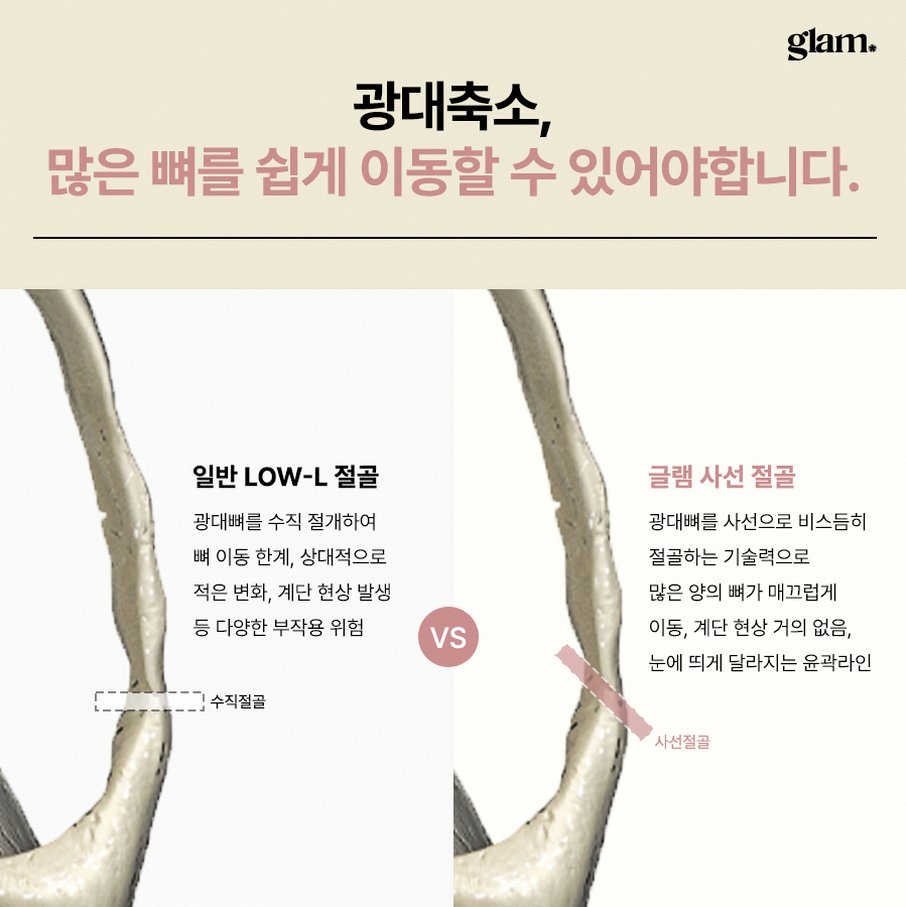
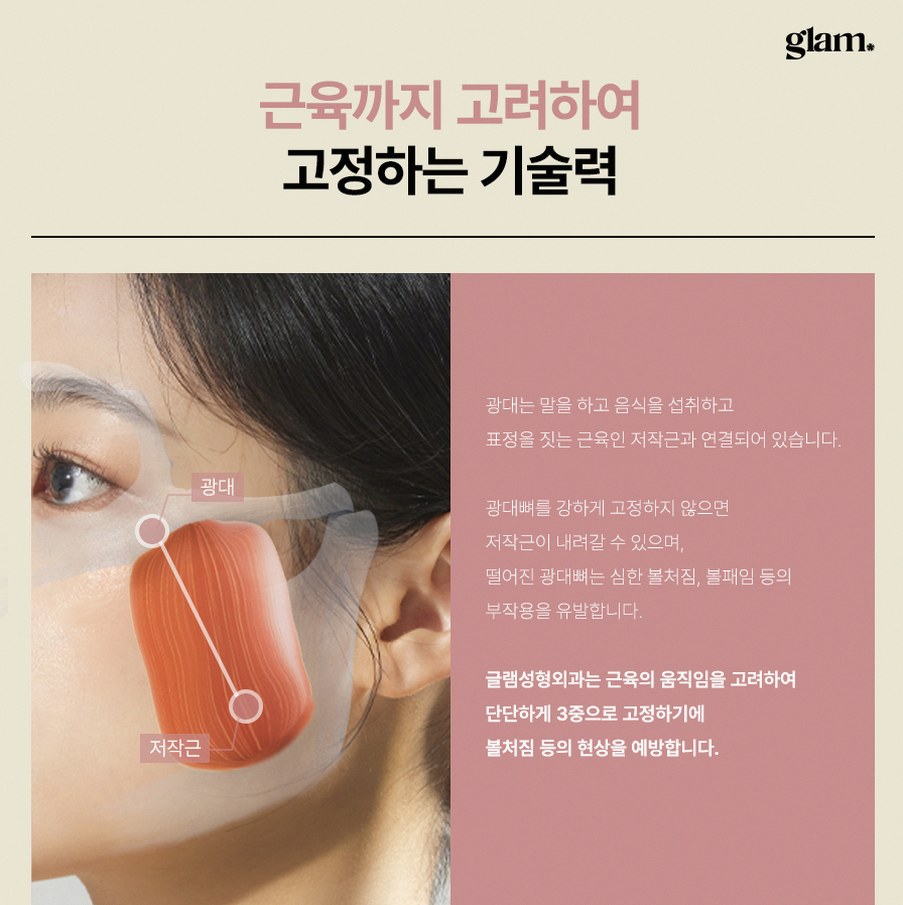
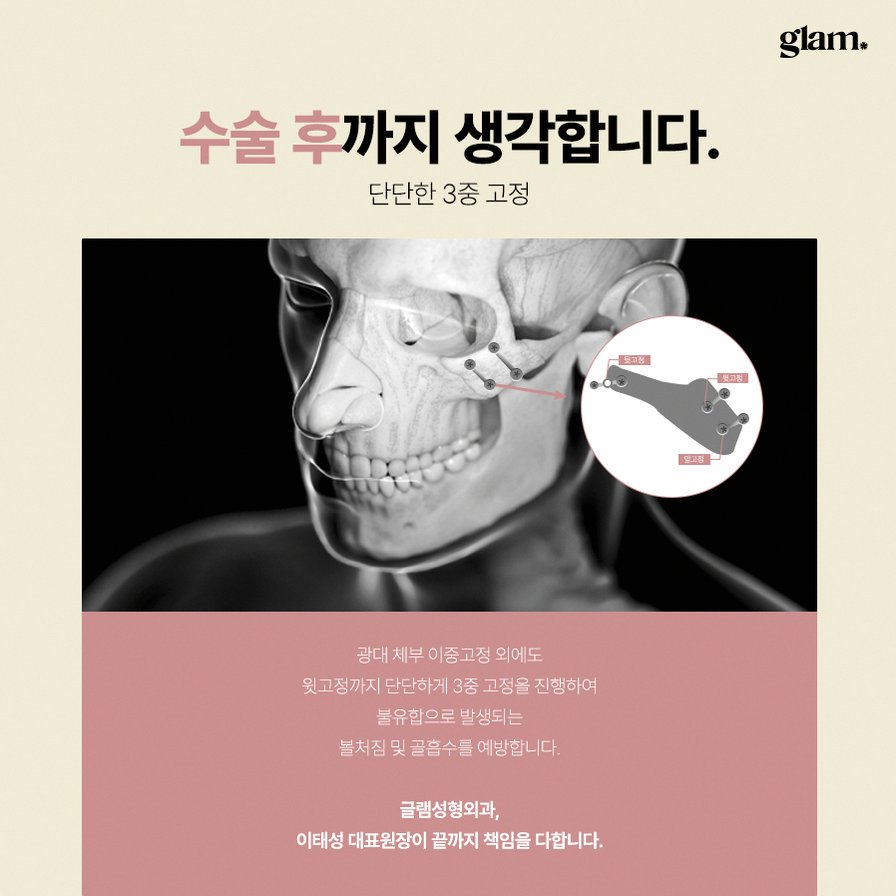
Insufficient soft tissue fixation: During contouring, tissues that are detached from the bone should be repositioned and fixed. If this is not done securely, or if fixation loosens with time, sagging can appear.
Aging and skin elasticity: Natural aging, thinner skin, and reduced elasticity make sagging more likely, especially in patients in their 30s or older.
Swelling masking early sagging: In the first few months, swelling can hide true sagging. As swelling goes down, drooping or hollow areas may become more visible.
It is also important to distinguish between temporary swelling-related heaviness and true sagging. In the first 3–6 months, the lower face may look bulky or uneven mainly from swelling. True sagging tends to persist or even worsen after this period, with clearer jowls, a blurred jawline, or sunken midface.
Revision is not only about cutting bone again. A proper plan looks at the entire relationship between bone, soft tissue, and skin. Sometimes the key is to restore support or volume, rather than to further reduce the face.
When is revision facial contouring for sagging actually needed?
Revision facial contouring is a major decision, so timing and indications are important.
Time frame for considering revision
In general, surgeons prefer to wait at least 6–12 months after the first facial contouring surgery before making a final decision about revision. This waiting period allows:
Swelling to subside.
Scar tissue to soften.
Soft tissue to settle into its new position.
There are exceptions, such as clear complications with bone position or fixation, but for most patients, a stable evaluation is only possible after this healing period. Early consultations can still be helpful to understand the situation, but definitive surgical planning is usually done later.
Typical reasons to consider revision
Common indications for revision facial contouring due to sagging or soft tissue problems include:
Persistent jowls or drooping along the jawline that were not present before surgery.
Sunken or hollow cheeks that make the face look gaunt, older, or tired.
Asymmetry between left and right sides after bone contouring, affecting both shape and soft tissue drape.
Functional issues, such as bite changes, combined with visible sagging or imbalance.
Cases where revision may not be appropriate
Revision is not always the answer. It may not be suitable when:
Sagging is minimal and mostly noticeable only to the patient, not to others.
Expectations are unrealistic, such as wanting a perfectly smooth or filtered appearance.
Non-surgical or minimally invasive options, like lifting procedures or energy-based tightening, may address the main concerns without additional bone work.
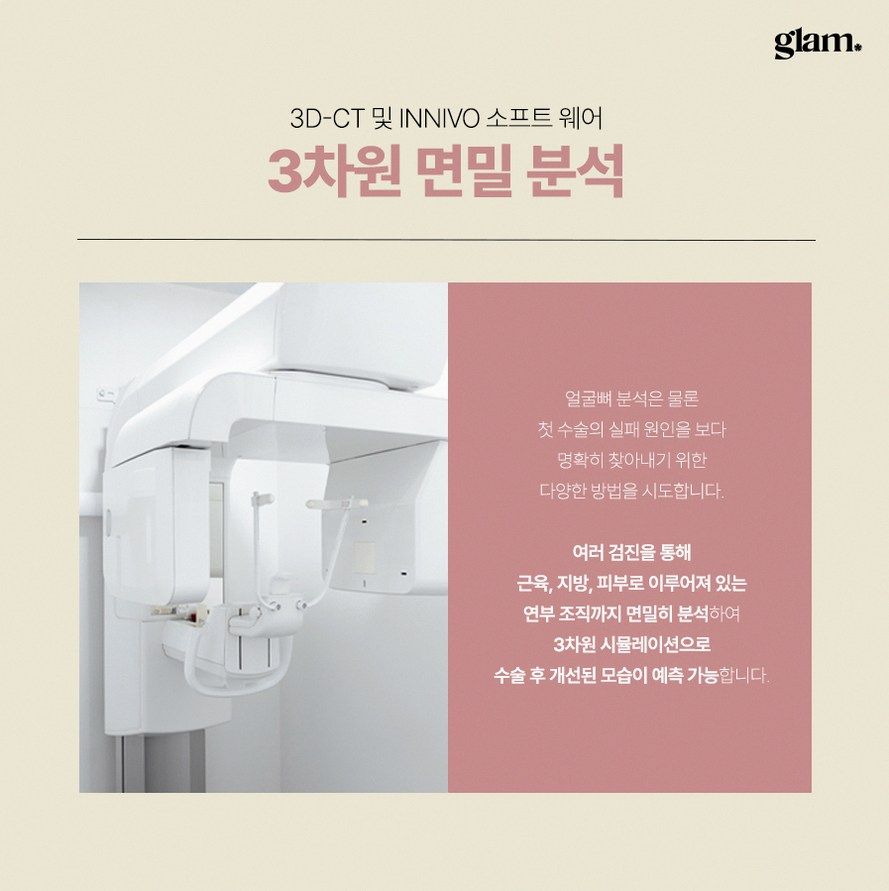
Before any revision is planned, a careful evaluation is essential. This usually includes CT imaging to assess how much bone was removed, how it healed, and how the current bone structure supports the soft tissue. Clinical examination of skin quality, fat distribution, and muscle activity also plays a key role.
How a facial bone–focused clinic approaches sagging revision
For complex sagging after facial contouring, many patients prefer a clinic that focuses only on facial bone surgery rather than a general aesthetic center with a broad menu of procedures.
A single-focus facial bone surgery center concentrates on double jaw and facial contouring, including revisions. This narrow focus allows the team to see a large number of similar cases, including patients who had surgery elsewhere and now need correction.
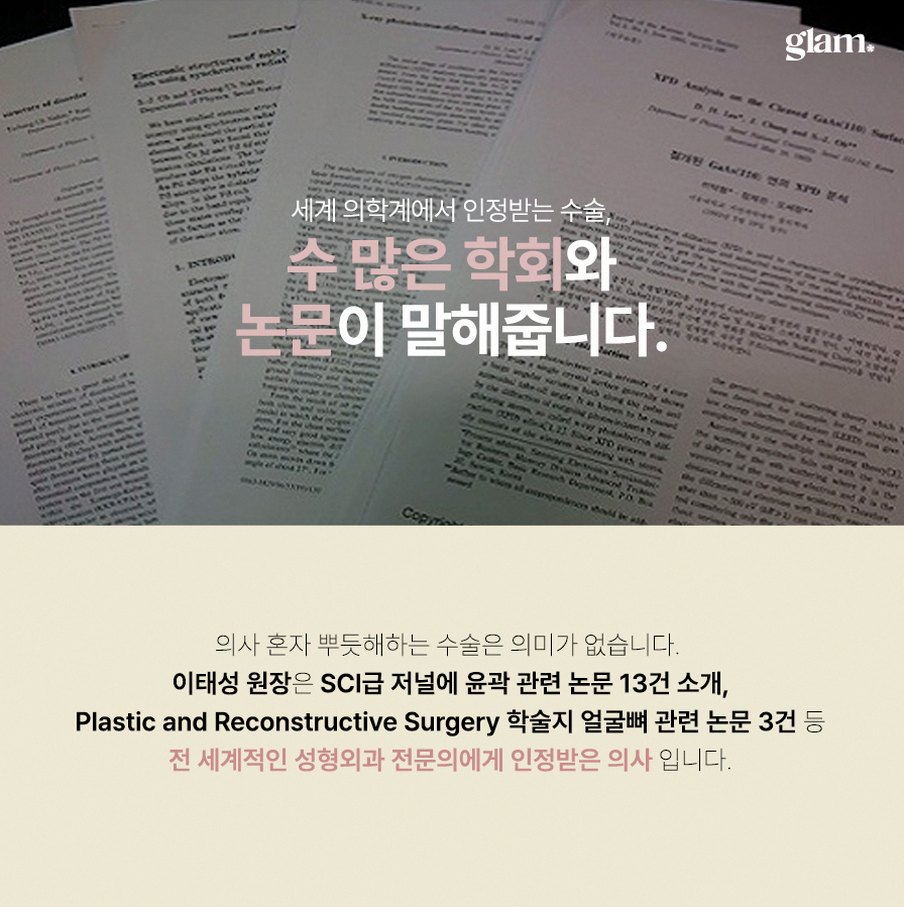
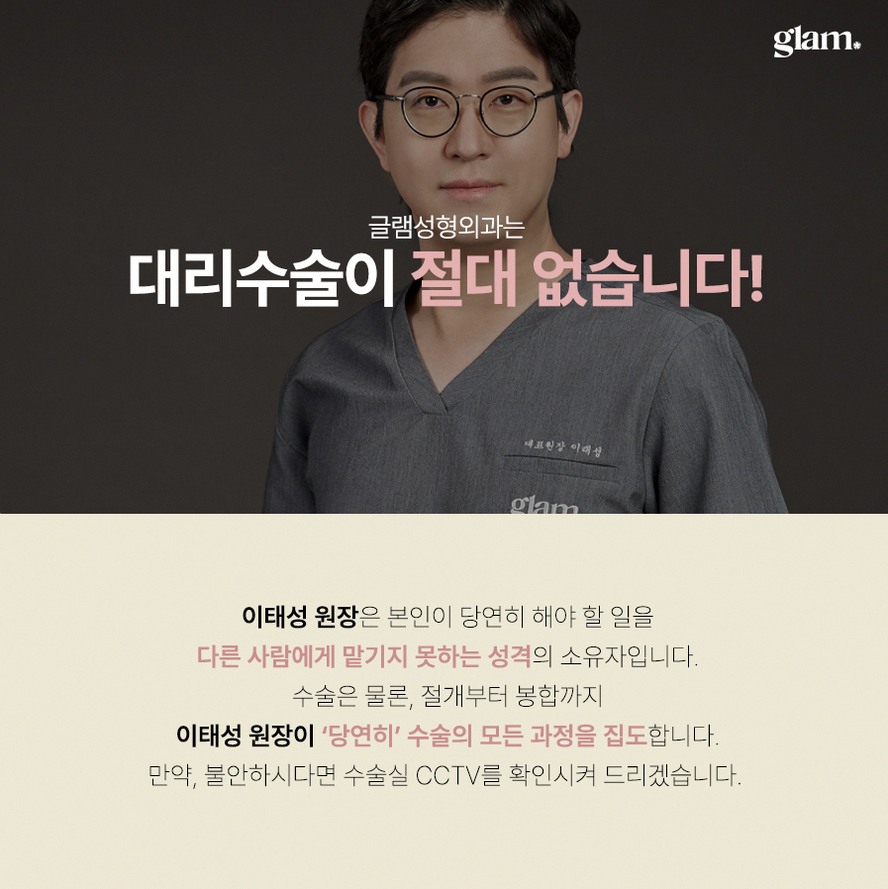
At GLAM Plastic Surgery in Sinsa, Gangnam, the medical team is structured specifically around facial bone surgery. As of February 2025, Dr. Tae Sung Lee has 20 years of experience in facial bone surgery and is listed as author or corresponding author on 13 SCI-level papers in the fields of jaw and contouring surgery, including three published in Plastic and Reconstructive Surgery. He performs the surgeries directly and follows a philosophy of recommending only the minimum necessary procedures.
This is especially important in revision bone surgery, where operating times and complexity can be higher.
Typical evaluation process for sagging revision
A structured evaluation often includes:
Detailed consultation with the facial bone surgeon to discuss your history, current concerns, and goals.
Imaging, usually CT scans, to see how the cheekbones, jaw angle, and chin were reshaped, and how they have healed.
Assessment of soft tissue thickness, skin elasticity, and fat distribution in the midface, jowls, and neck.
Review of previous operative records and imaging if you can provide them, which helps the surgeon understand what was done and where fixation points may be.
Because this type of clinic does not perform procedures like eye, nose, or breast surgery, the entire system is centered on facial bone and its interaction with soft tissue. The aim is not to offer as many procedures as possible, but to choose the smallest set of interventions that can reasonably improve structure and support.
Revision options for sagging after facial contouring
Revision for sagging or hollowing after contouring is usually individualized. It may combine bone-focused revision with soft tissue support and non-surgical care.
Bone-focused revision options
Depending on the findings, bone-related options may include:
Adjusting over-resected or asymmetrical areas when technically possible, for example by modifying the jawline or cheekbone segments.
Repositioning or re-fixating bone segments if their position contributes to drooping or imbalance.
Balancing the cheekbone and jawline so that the overlying soft tissue can drape more naturally, avoiding an overly flat midface or excessively narrow lower face.
Not every patient with sagging needs further bone cutting. In some cases, the bone structure is already acceptable, and the main problem is soft tissue descent.
Soft tissue and support procedures
Soft tissue procedures are often combined with or chosen instead of bone revision. These may include:
Re-suspension of soft tissues that were not adequately fixed during the first surgery, to restore support.
Lifting procedures to address jowls and lower face sagging, improving the jawline definition.
Fat grafting or other volume restoration methods for hollow cheeks or a sunken midface, when appropriate, to restore a healthier, less gaunt appearance.
The exact combination depends on whether the main issue is lack of support, lack of volume, or both.
Non-surgical or minimally invasive support
Non-surgical options are often used as part of a staged plan, especially after revision surgery, to support skin quality and healing. These may include:
High-frequency lifting devices such as Oligio X, which can help with skin tightening and mild lifting, and may also support swelling reduction.
LED therapy and facial care programs, such as SmartLux LED, Astrodome facial care, and Care7 Skin Reset total care, to help with circulation, swelling, and skin condition during recovery.
These treatments are not a replacement for structural revision when bone or major soft tissue problems are present, but they can play a useful role in fine-tuning and recovery.
Safety, anesthesia, and recovery in revision contouring
Revision facial bone surgery is often more complex than the first operation because of scar tissue, altered anatomy, and existing fixation plates or screws. This makes planning, surgical experience, and anesthesia management especially important.
At a center like GLAM Plastic Surgery, a board-certified anesthesiologist is dedicated to the clinic. This allows continuous monitoring and tailored anesthesia plans, which can be reassuring for international patients undergoing general anesthesia far from home.
Typical surgery and recovery outline
Although details vary, many revision cases follow a similar pattern:
Preoperative tests and consultation: Blood tests, imaging, and medical evaluation to confirm that you are fit for surgery.
Surgery under general anesthesia: Performed by the facial bone surgeon, with the anesthesiologist managing your airway, pain control, and vital signs.
Immediate postoperative monitoring: Recovery room observation, followed by a stay in the clinic for a set period, depending on the extent of surgery.
Swelling and bruising: Usually more noticeable in the first 1–2 weeks, with gradual improvement over several weeks to months. Final contour and soft tissue position can take many months to stabilize.
Role of structured aftercare
Aftercare programs are designed to support healing and comfort. At a bone-focused clinic in Seoul, this may include:
SmartLux LED therapy to support circulation and reduce swelling.
Astrodome facial care and Care7 Skin Reset total care to help maintain skin condition during the healing period.
Oligio X high-frequency lifting to assist with skin tightening and swelling reduction when appropriate in the later recovery phase.
Realistic expectations are essential. Revision surgery can often improve sagging and contour, but it may not completely restore your pre-surgery appearance. The aim is usually a natural, balanced improvement rather than extreme changes.
Who may consider sagging revision at a bone-specialized clinic?
Not everyone with mild sagging needs revision surgery, but certain patients may benefit from evaluation at a facial bone–focused center in Sinsa, Gangnam.
Possible candidates include:
Patients who had cheekbone reduction, V-line surgery, or square jaw reduction and now feel they look older, more tired, or unbalanced.
Those who suspect over-resection or poor fixation and want an evidence-based, conservative approach rather than aggressive re-operation.
People who value academic and clinical experience, such as a surgeon with multiple SCI-level publications in facial bone surgery and long-term focus on jaw and contouring.
International patients who need English, Japanese, or Thai support for clear communication before and after surgery.
Patients who are ready to undergo thorough evaluation and accept that only procedures considered truly necessary will be recommended.
Online consultation and pre-visit preparation for overseas patients
For patients living outside Korea, the first step is usually an online consultation. To make this as accurate as possible, it is helpful to prepare in advance.
Before your online consultation, try to gather:
Previous medical records from your original facial contouring surgery, including operative notes if available.
Pre- and post-operative imaging such as CT or X-rays.
Clear photos of your face from the front, 45-degree angles, and both sides, in good lighting and neutral expression.
A written list of your main concerns: where you see sagging or hollowing, how it differs from before surgery, and what you hope to improve.
During the online consultation, you can ask about:
Whether your sagging seems mainly related to bone structure, soft tissue, or both.
What type of revision, if any, is recommended and why.
The expected degree of improvement and what limitations you should be aware of.
Estimated recovery time and the aftercare plan, especially considering your travel schedule.
Expected Korea visit timeline for revision facial contouring
Every case is different, but many international patients follow a similar timeline when visiting Seoul for revision facial contouring.
Before arrival
Online consultation and review of photos and imaging.
Preliminary surgical plan and estimated schedule.
Travel and accommodation arrangements near Sinsa Station in Gangnam. GLAM Plastic Surgery is located on the 4th floor on Dosan-daero, about 200 meters from Sinsa Station exit 1, which is convenient for follow-up visits.
First days in Seoul
In-person consultation and physical examination.
Updated imaging if needed, such as CT scans taken in Korea.
Final confirmation of the surgical plan and preoperative tests.
Surgery and early recovery
Surgery under general anesthesia.
Initial monitoring at the clinic and early postoperative care.
First week focused on rest, swelling control, and wound care, with follow-up visits.
Following weeks
Additional check-ups and aftercare sessions such as LED therapy, facial care, and, when appropriate, high-frequency lifting.
Most international patients stay in Seoul at least 2–3 weeks after surgery for safe early recovery and suture removal, but the exact duration depends on the procedure and individual healing.
After returning home
Online follow-ups using photos and, if necessary, local imaging.
Continued observation of swelling reduction and soft tissue settling over several months.
Aftercare and long-term maintenance
Aftercare is not only about comfort; it also supports the quality of the final result.
In the early phase, focus is on controlling swelling, managing discomfort, and protecting incisions. Gentle oral hygiene, soft diet if the jaw is involved, and avoiding smoking are usually recommended.
As healing progresses, structured programs such as SmartLux LED therapy, Astrodome facial care, and Care7 Skin Reset total care can help maintain skin condition and support circulation. Later, energy-based treatments like Oligio X may be introduced to assist skin tightening and reduce residual swelling, if suitable for your case.
Long-term, maintaining a stable weight, protecting the skin from excessive sun exposure, and avoiding sudden large weight loss can help preserve facial volume and support.

Consultation tips for patients worried about sagging after contouring
To make the most of your consultation, consider the following practical steps:
Write down your main concerns in order of priority. For example, “new jowls on both sides,” “hollow cheeks,” or “asymmetry when I smile.”
Collect any records from your previous surgery and bring or send them in advance.
Prepare questions about the cause of your sagging, the proposed treatment plan, and realistic expectations.
Ask about the balance between bone revision and soft tissue procedures in your case, and whether non-surgical support will be part of the plan.
This preparation helps the surgeon understand not only your anatomy, but also what matters most to you.
Frequently asked questions
How long should I wait after my first facial contouring surgery before considering revision for sagging?
Most surgeons recommend waiting at least 6–12 months after your initial facial contouring surgery before making a final decision about revision. This allows swelling to subside and tissues to settle into their new positions. However, an earlier consultation can still be useful to review your case, check imaging, and discuss possible directions, even if the final decision is postponed until your face has stabilized.
Can sagging after facial contouring be fixed without cutting bone again?
In some cases, yes. If the main cause of your sagging is soft tissue descent or skin laxity, lifting and support procedures, sometimes combined with volume restoration and energy-based tightening, may be enough. If imaging shows that bone shape or position is the main problem, some degree of bone revision may be necessary. At a conservative, bone-focused clinic, the goal is to recommend only the minimum intervention needed to achieve a meaningful improvement.
Is revision facial contouring more dangerous than the first surgery?
safety. As with any surgery, there are risks, and you should be fully informed about possible complications and realistic outcomes before deciding.
Will revision surgery make my face look even smaller and more hollow?
This is a common fear, especially if you already feel your face is too small or hollow after the first surgery. Proper revision planning focuses on restoring balance and support, not simply making the face smaller. In some cases, adding volume or adjusting bone segments to improve support can make the face look healthier and less gaunt. Discuss your concerns clearly so the surgeon can design a plan that avoids further over-reduction.

I live overseas. Is it possible to have revision facial contouring in Seoul?
Yes, many international patients travel to Seoul for revision facial contouring. Clinics like GLAM Plastic Surgery offer multilingual support in English, Japanese, and Thai, and have experience guiding overseas patients through online consultations, pre-arrival planning, and coordinated postoperative follow-up. It is important to plan enough time in Seoul for in-person evaluation, surgery, early recovery, and check-ups before returning home.
A soft invitation to consult
If you are worried about sagging, jowls, or hollow cheeks after facial contouring and are considering revision in Sinsa, Gangnam, an online consultation with a facial bone–focused center can help clarify your options. Sharing your photos, imaging, and previous records allows the team to assess whether bone revision, soft tissue procedures, or a combination might be appropriate, and to outline a realistic treatment and travel plan.
This article is for general information only and does not replace a personal consultation with a qualified medical professional. Individual conditions, risks, and treatment plans can only be assessed through direct evaluation.




- 공유 링크 만들기
- X
- 이메일
- 기타 앱


댓글
댓글 쓰기