Facial Bone Surgery Revision Contouring Guide in Seoul Gangnam
- 공유 링크 만들기
- X
- 이메일
- 기타 앱
Direct answer summary
If you are searching for facial bone surgery but already had jawline, cheekbone, chin, or double jaw surgery before, you may actually need information about revision facial contouring. This means secondary surgery on the facial bones to correct aesthetic or functional problems left after the first operation. At clinics like GLAM Plastic Surgery near Sinsa Station in Gangnam, the focus is on careful evaluation, conservative planning, and performing only the minimum necessary revision on areas such as the cheekbones, jawline, chin, and double jaw.
This guide explains what revision facial contouring is, when to consider it, how it is evaluated and performed, what to expect when visiting Korea, and how overseas patients can prepare for a safe and realistic treatment journey.
Treatment overview – from “facial bone surgery” to revision contouring
Many people type “facial bone surgery” into a search engine after they are disappointed with a previous contouring or double jaw operation. They may not know the term “revision surgery,” but they know something feels wrong: asymmetry, an unnatural V line, bite problems, or a face that looks older or too small.
Revision facial contouring surgery refers specifically to operating again on facial bones that were already cut, reduced, or moved in the past. Instead of starting with untouched bone, the surgeon must work with changed anatomy, scar tissue, and sometimes limited remaining bone. Because of this, revision surgery is usually more complex and must be approached with extra caution.
GLAM Plastic Surgery in Gangnam is an example of a clinic that focuses only on facial bone surgery, such as double jaw and facial contouring. As of February 2025, the lead surgeon has 20 years of experience in this field and has published 13 SCI‑level papers on facial contouring and double jaw surgery, including 3 in Plastic and Reconstructive Surgery. This academic background is used as a basis for evidence-based planning rather than for aggressive or excessive treatment.
What is revision facial contouring surgery
Revision facial contouring means a secondary or later surgery on the facial skeleton after a previous operation such as
- Cheekbone reduction
- Square jaw reduction
- V line surgery
- Chin surgery
- Double jaw surgery
The goal can be to improve appearance, restore balance, or solve functional problems. Common reasons people seek revision include
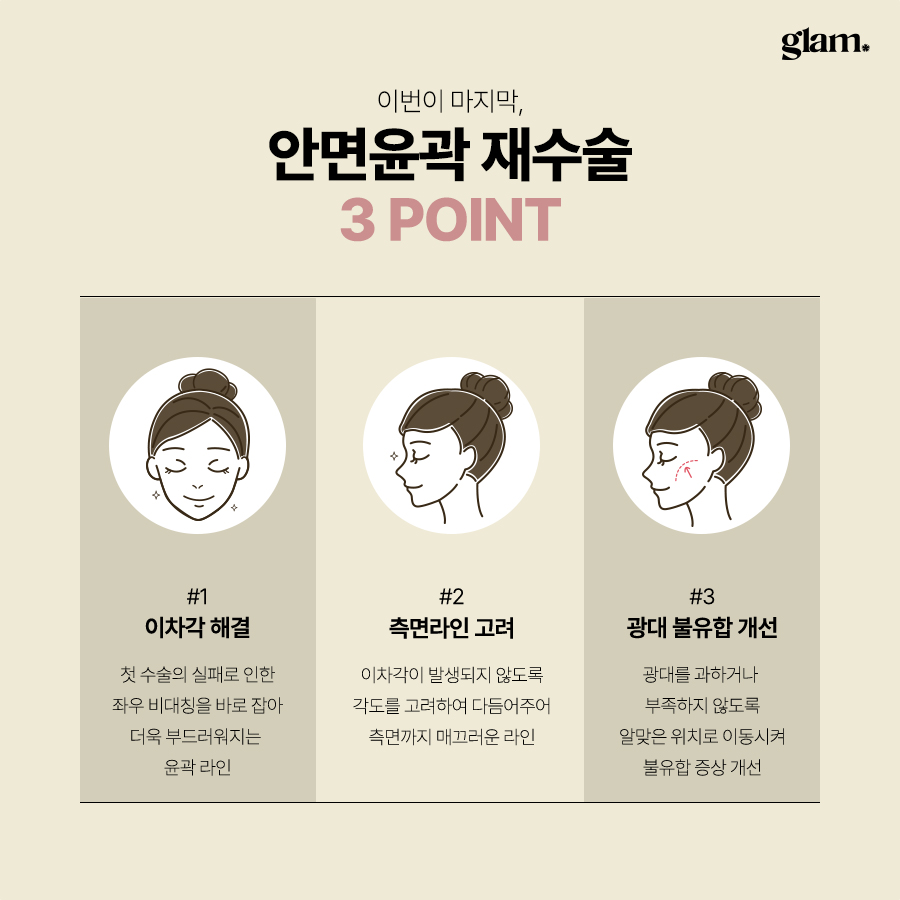
- Asymmetry or imbalance between the left and right sides of the face
- Over resection, where the face looks too small, hollow, or aged
- Under correction, where the jawline or cheekbones still look wide or bulky
- Functional issues, such as bite problems after double jaw surgery, difficulty chewing, or joint discomfort
- Irregular bone surfaces or step offs that can be seen or felt through the skin
- Sagging soft tissue after bone reduction, such as jowls or hollow cheeks
Because the bone and soft tissue have already been changed, revision surgery is more demanding than primary surgery. Scar tissue can make dissection harder, normal anatomical landmarks may be distorted, and there is usually less bone available to cut or move again. For these reasons, careful planning and a conservative philosophy are critical.
When to consider revision instead of just waiting
After any facial bone surgery, healing takes time. Swelling, stiffness, and changes in sensation are normal and can last for months. It is important not to judge the final result too early.
General healing timeline after primary facial bone surgery
First 1 to 3 months: major swelling gradually decreases, but the face can still look puffy or feel stiff.
Around 3 to 6 months: swelling continues to improve; contour becomes clearer, but minor asymmetries may still change.
Around 6 to 12 months: the final contour is usually judged in this period, once bone and soft tissues have stabilized.
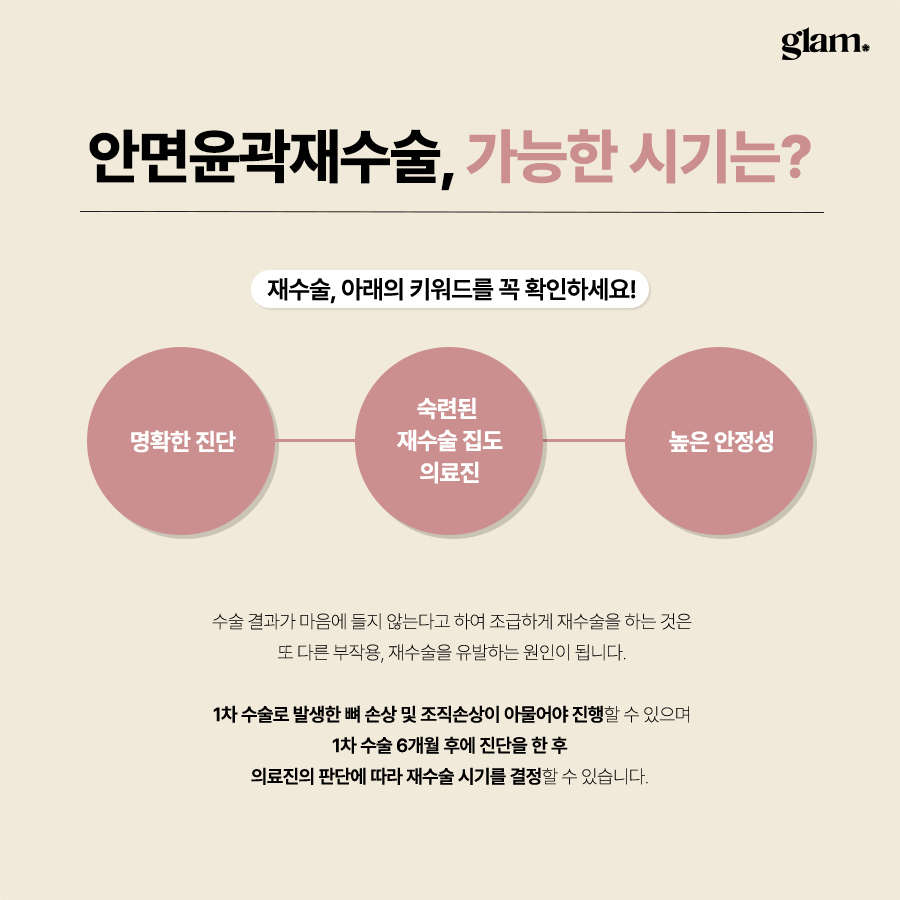
In many cases, waiting at least 6 to 12 months after the first surgery before deciding on revision is recommended, unless there is a serious functional problem.
Red flag situations where a revision consultation is reasonable
Clear facial asymmetry that does not improve after the expected healing period
Persistent bite problems or difficulty closing teeth properly after double jaw surgery
Obvious step like bone edges or sharp ridges that remain visible or palpable
Severe dissatisfaction due to over resection, a face that looks much older, or an unnatural facial expression
Ongoing joint discomfort or difficulty chewing that does not improve with time
Even in these cases, revision should not be rushed. In most situations, the surgeon waits until bone healing and soft tissue stabilization are sufficient. Early revision may be considered only when there is a serious functional issue or a clear surgical error that cannot be left as it is.
Key evaluation steps before revision facial contouring
Before any revision surgery, a precise and honest preoperative assessment is essential. At a clinic that focuses only on facial bone surgery, the evaluation usually includes several steps.
Detailed consultation
Discussion about what procedures were done previously, including the type of bone cuts and fixation methods if known
Clarification of what specifically bothers you now, both visually and functionally
Understanding your expectations, lifestyle, and tolerance for downtime
Review of previous records
- Previous operation notes, if available
- Pre and post operative X rays or CT scans from the first surgery
- Photographs showing the progression of swelling and current appearance
Imaging and functional analysis
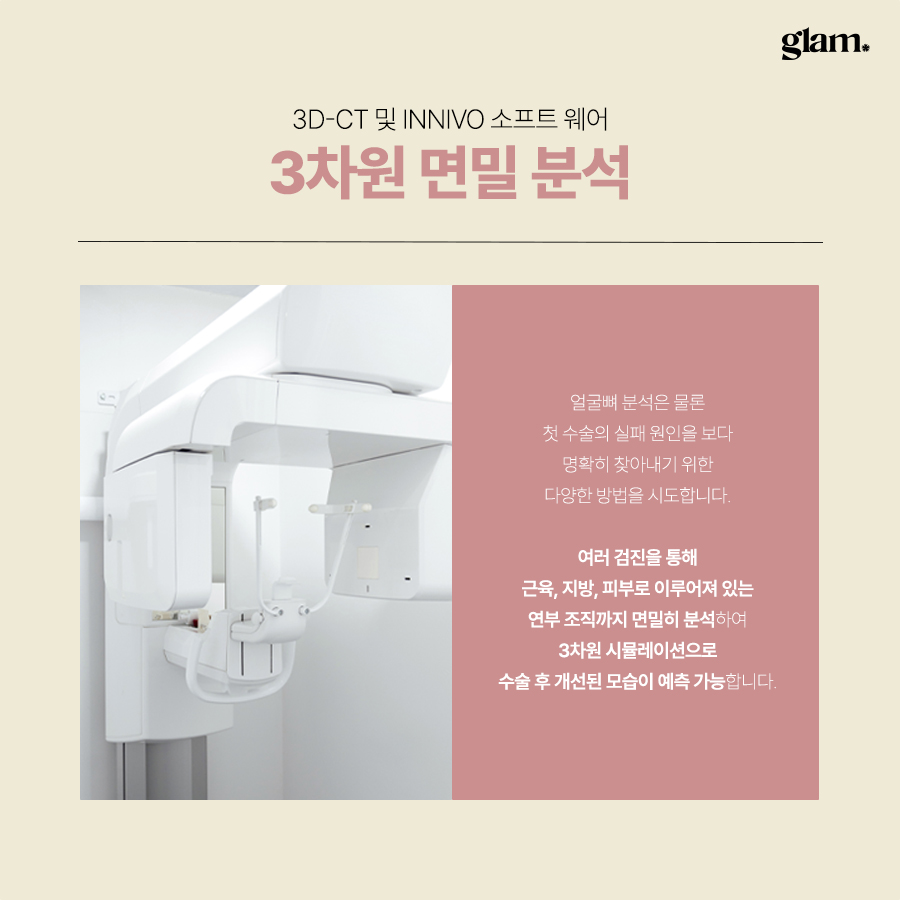
- D CT or similar imaging to analyze current bone shape, remaining bone thickness, nerve position, and joint condition
- Assessment of occlusion, or how the upper and lower jaws meet
- Evaluation of jaw joint movement and any pain or clicking
- Testing of nerve sensation in areas such as the lower lip and chin
Balancing aesthetics and function
In a facial bone focused clinic, the surgeon’s attention is not divided between many types of procedures. This allows careful balancing of aesthetic goals, such as symmetry and proportion, with functional priorities, such as a stable bite, joint health, and nerve safety.
Because revision has less margin for error, planning usually aims for conservative bone work. Instead of trying to change everything at once, the surgeon may recommend the minimum set of procedures that can realistically improve your main concerns.
Types of revision facial contouring cases
Revision cheekbone surgery
Typical problems after cheekbone reduction include
- Persistent wide cheekbones or a face that still looks broad from the front or side
- Asymmetry between the left and right cheekbones
- A sunken or flat midface that makes the face look tired or older
- Step deformities or irregularities near the cheek area that can be seen or felt
General strategies in revision cheekbone surgery can include
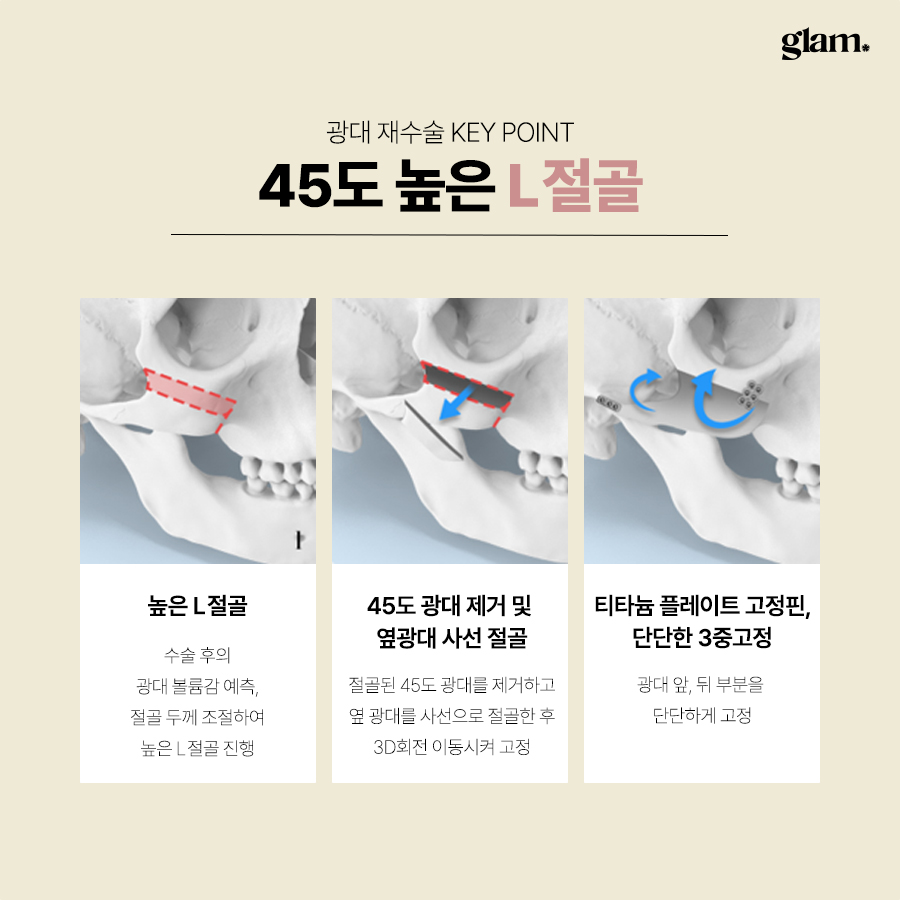
Correcting malpositioned cheekbones that were not moved to the planned position
Addressing incomplete movement where the cheekbone was not sufficiently repositioned
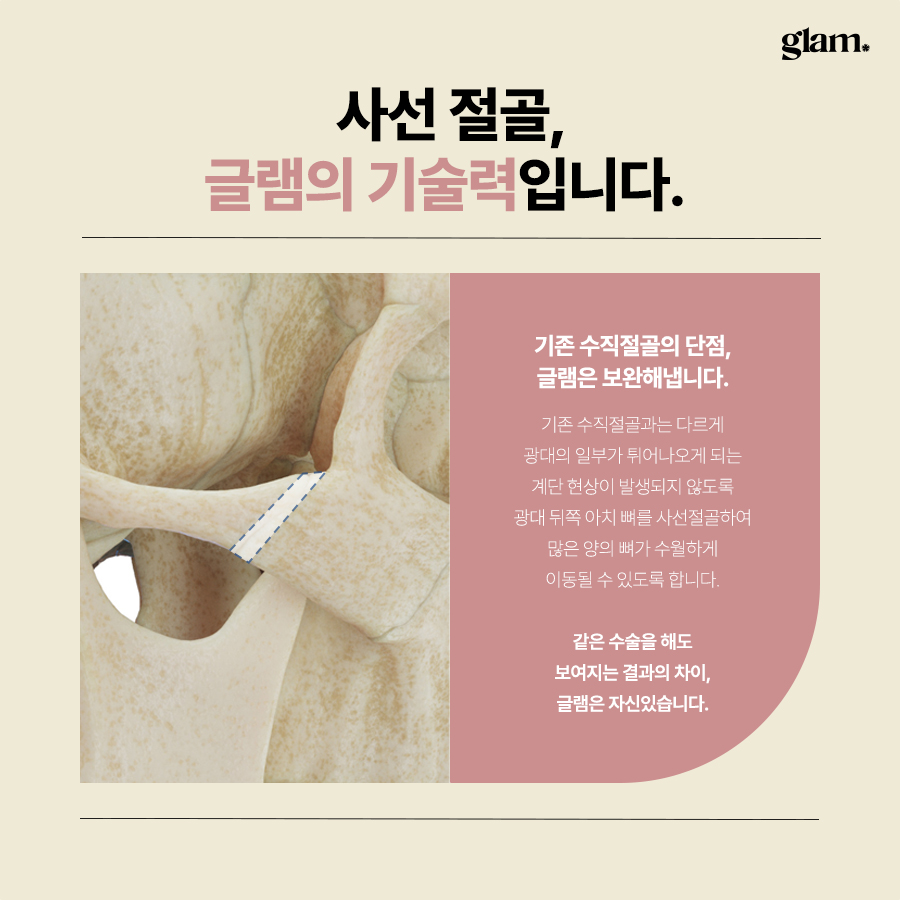
Smoothing irregular bone edges or step offs to create a more continuous contour
In selected cases, partial reconstruction or repositioning rather than further reduction, especially when the midface looks too sunken
Revision square jaw and V line surgery
Common issues after square jaw or V line surgery include
- Uneven jaw angles, where one side looks longer or sharper
- Too much reduction, leading to a weak or aged looking lower face
- Too little reduction, where the jawline still appears wide or bulky
- A long or drooping chin that looks unnatural
- An overly sharp or artificial V line that does not match the rest of the face
General approaches in revision jawline and chin surgery focus on
Recontouring irregular jaw borders to smooth uneven lines
Adjusting chin length and width while preserving the safety of the mental nerve
Avoiding further over resection that could worsen soft tissue sagging or hollowing
Sometimes adding subtle volume or adjusting angles rather than just cutting more bone
Revision double jaw surgery
Revision double jaw surgery, also called orthognathic revision, is one of the most complex types of facial bone revision. Typical problems include
- Unstable or uncomfortable bite
- Facial asymmetry that persists after the first surgery
- Protrusion or retrusion of the jaws that was not adequately corrected
- Nose widening or drooping after upper jaw movement
- Chin position issues, such as being too far back, too far forward, or off center
General strategies in revision double jaw surgery include
Careful occlusal planning, sometimes in cooperation with orthodontic treatment
Repositioning the upper and lower jaws with attention to facial balance, airway, and joint health
Planning to minimize the need for long periods of jaw fixation when possible
Using techniques aimed at reducing the risk of nose widening or drooping after upper jaw movement
At GLAM Plastic Surgery, there is experience with double jaw surgery without intermaxillary fixation and, in selected cases, with omitting pre or post orthodontic treatment. However, this depends entirely on individual conditions, such as the severity of the bite problem and tooth alignment. It is not suitable for everyone and cannot be promised in advance without full evaluation.
Why revision facial contouring requires a more cautious approach
Revision surgery is not simply “doing the same thing again.” The surgeon must work in an area that has already been changed, which brings specific risks and limitations.
Challenges in revision
Scar tissue and altered anatomy make dissection more difficult and can increase bleeding risk.
There is often less remaining bone, so the surgeon has limited room for further reduction or repositioning.
Important structures, such as nerves and blood vessels, may be closer to the surface or in unexpected locations.
Soft tissues may already be looser or thinner, increasing the risk of sagging or hollowing after additional bone work.
Evidence based and conservative philosophy
An evidence based approach means using published research and accumulated clinical data to guide decisions, rather than relying only on trend or patient demand. At GLAM Plastic Surgery, the lead surgeon’s academic work in facial contouring and double jaw surgery supports this type of planning.
A conservative philosophy is also important. Instead of suggesting many simultaneous procedures, the surgeon may recommend the minimum necessary operations to improve your main concerns while respecting the limits of your current anatomy. This can be reassuring for patients who are worried about over treatment after a disappointing first experience.
Safety system and anesthesia for revision surgery
Revision facial bone surgery can be long and complex. Safe anesthesia and continuous monitoring are essential, especially for patients who feel anxious after a previous negative experience.
Role of a dedicated anesthesiologist
At GLAM Plastic Surgery,
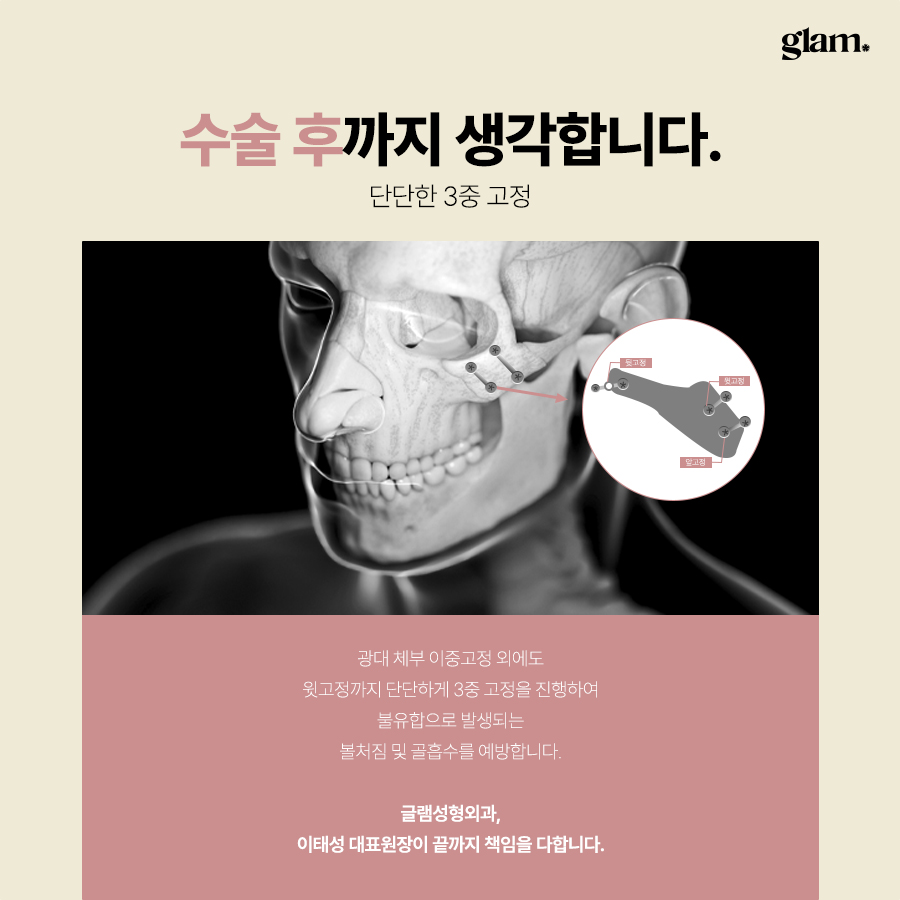
Continuous monitoring of vital signs during long surgeries
Tailored anesthesia plans for patients with previous anesthesia issues or high anxiety
More stable control of pain and nausea during and after surgery
Clinic system and scheduling
The clinic operates without a lunch break, which can make scheduling more flexible for patients, including those traveling from abroad with limited time. It can also help with timing of preoperative tests, surgery, and early postoperative care within a compact schedule.
Postoperative care and swelling management after revision
Recovery after revision facial contouring can be different from the first surgery. Because tissues have already been disturbed once, swelling and numbness may last longer.
Realistic recovery expectations
Swelling may be more prolonged than after primary surgery, sometimes taking several months to settle.
Numbness or stiffness can be more pronounced, especially around the chin and lower lip, but often improves gradually.
Bruising and discomfort are usually manageable with medication and proper care, but individual experiences vary.
Supportive care programs
GLAM Plastic Surgery offers several post surgery care options to support recovery, such as
- LED therapy for gentle stimulation and comfort
- Facial dome care aimed at helping with swelling management
- Skin reset total care to support the skin after surgery
- Radiofrequency lifting to assist soft tissue adaptation and mild lifting
These are supportive treatments, not substitutes for proper surgery or medical follow up. Their role is to help manage swelling, support soft tissue, and improve comfort during the healing period.
Who may consider revision facial contouring at this type of clinic
Suitable candidates
People who have had previous facial bone surgery and now experience clear aesthetic or functional problems
Those who understand that revision has limitations and may not restore a completely untouched, natural bone structure
Patients willing to undergo detailed imaging, step by step planning, and realistic discussion of possible outcomes
Individuals who value a conservative, safety focused approach rather than aggressive multi area surgery
Who may not be suitable
People expecting a perfect, celebrity like result regardless of their current anatomy and limitations
Those who are still in the early swelling phase, such as within a few months after primary surgery, and have not allowed enough time for natural healing
Individuals not ready to accept the possibility of partial improvement rather than complete correction
Patients unwilling to share previous records or to undergo proper imaging and evaluation
Guidance for international and out of town patients
Seoul, and especially the Sinsa Station area in Gangnam, is a popular destination for facial bone surgery. For overseas patients, planning and communication are key.
Language and communication
GLAM Plastic Surgery provides information in multiple languages, including English, Japanese, and Thai. Social media channels and online consultation tools can help you communicate your concerns, share photos, and ask questions before traveling.
Pre visit preparation for overseas patients
Share previous medical records and imaging in advance if possible. This allows the surgeon to make a preliminary assessment and advise whether revision seems feasible.
Provide clear front, side, and oblique photos of your face in good lighting.
Explain your main concerns in simple, prioritized points rather than a long list of minor issues.
Inform the clinic about any medical conditions, medications, or previous anesthesia problems.
Expected Korea visit timeline
The exact schedule varies, but a typical plan for revision facial contouring might look like this
Day 1 to 2: In person consultation, physical examination, 3D CT and other imaging, final surgical planning, preoperative tests.
Day 3 to 4: Surgery day, followed by monitoring in the clinic and early postoperative care.
First week after surgery: Regular check ups for swelling, wound condition, and any early concerns.
Second week and beyond: Suture removal if needed, additional care sessions such as LED therapy or facial dome care, and preparation for returning home.
Many overseas patients stay in Seoul for about 2 to 3 weeks for revision facial bone surgery, but this can differ depending on the complexity of the case and individual healing.
How to prepare for a revision consultation
A revision consultation is more productive when you arrive prepared. This helps the surgeon understand your situation quickly and allows more time for meaningful discussion.
Practical checklist
Write down what bothers you most about your current face shape or function. Try to rank your top three concerns.
Gather previous surgery records, X rays, and CT scans if available. Digital files are especially useful.
Prepare questions about risks, realistic outcomes, and alternative options. For example, ask what can be improved, what cannot, and why.
Be ready to discuss your full medical history, including medications, allergies, and any previous anesthesia issues.
Decision making tips
Consider getting more than one opinion, especially for complex revision cases.
Compare not only cost, but also the surgeon’s focus, experience with revision, imaging system, anesthesia system, and postoperative care.
Ask how the clinic handles complications or unexpected findings during surgery.
Choose a surgeon based on experience with facial bone revision and a clear, honest explanation, not just marketing images.
FAQ
What is the difference between primary facial bone surgery and revision facial contouring
Primary facial bone surgery is the first operation on untouched bone, such as initial cheekbone reduction, square jaw reduction, or double jaw surgery. Revision facial contouring is a secondary surgery performed after a previous operation, working on bone that has already been cut or moved. Revision is more complex because of scar tissue, altered anatomy, and limited remaining bone, so it requires more cautious planning and often a more conservative approach.
How long should I wait before considering revision facial contouring
In many cases, it is recommended to wait at least 6 to 12 months after the first facial bone surgery before deciding on revision. This allows swelling to subside and tissues to stabilize, so the final contour can be judged more accurately. However, if you have serious functional problems, such as a severe bite issue or significant joint pain, an earlier consultation is reasonable to discuss options and timing with a specialist.
Can revision facial contouring completely fix asymmetry or over resection
Revision surgery can often improve asymmetry or problems caused by over or under correction, but it has limitations. Because the bone has already been changed and some volume may be lost, it may not be possible to restore a completely untouched, natural bone structure. The goal is usually realistic improvement rather than perfection. A detailed consultation and 3D imaging are needed to understand what is and is not possible in your specific case.
Is revision double jaw surgery possible without jaw fixation or orthodontic treatment
In some selected cases, revision double jaw surgery may be performed without traditional intermaxillary fixation and without full pre or post orthodontic treatment. This depends on factors such as your current bite, tooth alignment, and the amount of movement needed. It is not suitable for everyone and cannot be guaranteed without full evaluation. At clinics like GLAM Plastic Surgery, the surgeon will explain whether such an approach is appropriate for your situation after reviewing your records and imaging.

Soft call to action for online consultation
If you are struggling after a previous jawline, cheekbone, chin, or double jaw operation, it can be emotionally and physically exhausting. You do not need to rush into another quick fix, but you also do not need to give up.
A thorough, individualized evaluation at a facial bone focused clinic near Sinsa Station in Gangnam can help you understand your current condition, possible revision options, and realistic expectations. Overseas patients can start with an online consultation, sharing photos and previous records, before deciding whether to travel.
Taking the time to gather information, ask detailed questions, and choose a conservative, safety first team is an important step toward a more balanced and comfortable result after revision facial contouring.




- 공유 링크 만들기
- X
- 이메일
- 기타 앱


댓글
댓글 쓰기