[썸네일]https://contentsbox-images.s3.ap-northeast-2.amazonaws.com/transformed/cc6dd0a1ee704b2db06b61e98412aa71.jpg
Direct answer summary
Square jaw reduction, also called mandibular angle contouring, is a facial bone surgery that reshapes the back and lower border of the jaw to create a slimmer, less angular lower face. It is different from simple jawline slimming injections because it changes the bone structure itself. For people whose wide lower face is mainly caused by bone, square jaw reduction may offer more noticeable and longer-lasting contour changes than non-surgical options.
At this ophthalmology clinic in Gangnam, the medical team focuses its lineup on facial bone surgery such as square jaw reduction, V-line contouring, cheekbone reduction, and double jaw surgery. The representative surgeon is a board-certified plastic surgeon with around 20 years of experience in facial bone surgery based on the clinic’s own information, and operations are performed directly by this surgeon. A board-certified anesthesiology and pain medicine specialist manages general anesthesia, and the clinic uses structured planning with imaging and facial analysis to design each case.
If you are considering square jaw reduction in Korea, this guide explains what the surgery involves, who might consider it, how it compares with non-surgical contouring, and what to expect before, during, and after a visit to Gangnam.
What is square jaw reduction surgery
Square jaw reduction is a facial bone contouring procedure focused on the lower jaw, especially the mandibular angle, which is the corner at the back of the jaw near the ear. In many people with a “square” or wide lower face, this angle is prominent, making the jawline look broad and angular from the front and side.
[이미지복붙]https://contentsbox-images.s3.ap-northeast-2.amazonaws.com/transformed/f32aa587691e4576b4c2812dac526203.jpg
During square jaw reduction, the surgeon reshapes this area by shaving or cutting part of the mandibular angle and, when needed, the lower border of the jawbone. The goal is to create a smoother, more tapered jawline that blends naturally with the chin and cheekbones.
Depending on your bone structure and goals, the surgery may include:
Resection or shaving of the mandibular angle to reduce the width and sharpness of the jaw corner.
Smoothing or partial reduction of the lower border of the jaw to avoid a step-like contour and to create a more continuous line from the angle toward the chin.
Adjustment for asymmetry if one side of the jaw is wider or more protruding than the other.
Square jaw reduction is often combined with other facial bone procedures when necessary, such as cheekbone reduction, chin contouring, or V-line surgery. However, the concept at this clinic is to focus on what is structurally required and to avoid unnecessary combinations.
Bone-dominant vs muscle-dominant square jaw
Not all wide jawlines are caused by bone. Understanding the main cause of your jaw width is important because it affects whether surgery is appropriate.
Bone-dominant square jaw
In bone-dominant cases, the jawbone itself is thick, wide, or protruding at the mandibular angle and along the lower border. Signs may include:
A strong, square shape visible even when the face is relaxed and the masseter muscles are not clenched.
A wide lower face that shows clearly on X-ray or CT as thick or flared jawbone.
A jawline that feels hard and bony to the touch along the angle and lower border.
For bone-dominant square jaws, square jaw reduction surgery can directly reshape the bone and may help create a slimmer, softer contour that non-surgical treatments cannot easily achieve.
Muscle-dominant or soft-tissue-dominant jaw
In muscle-dominant cases, the masseter muscles at the side of the jaw are thick or overdeveloped. In soft-tissue-dominant cases, fat or skin thickness around the jawline contributes more to the width than the bone itself. Signs may include:
[이미지복붙]https://contentsbox-images.s3.ap-northeast-2.amazonaws.com/transformed/7e43121985584f0b898b323dcaf23bd0.jpg
The jaw looking wider when you clench your eyes or chew, and narrower when you relax.
Imaging showing relatively normal jawbone thickness but large masseter muscles.
A softer feel around the jawline due to muscle or soft tissue rather than hard bone.
For these patterns, non-surgical or soft-tissue-focused options may be considered first. In some patients, a combination of bone surgery and soft-tissue management is planned.
Why proper diagnosis and imaging matter
Because the causes of a square jaw vary, a careful diagnosis is essential before deciding on surgery. At a facial bone-focused clinic, preoperative evaluation typically includes:
Facial proportion analysis from the front and side to understand how the jaw relates to the cheekbones, chin, and overall face length.
Occlusion and jaw function assessment to check how your upper and lower jaws meet and move, and to identify any functional issues that must be considered in planning.
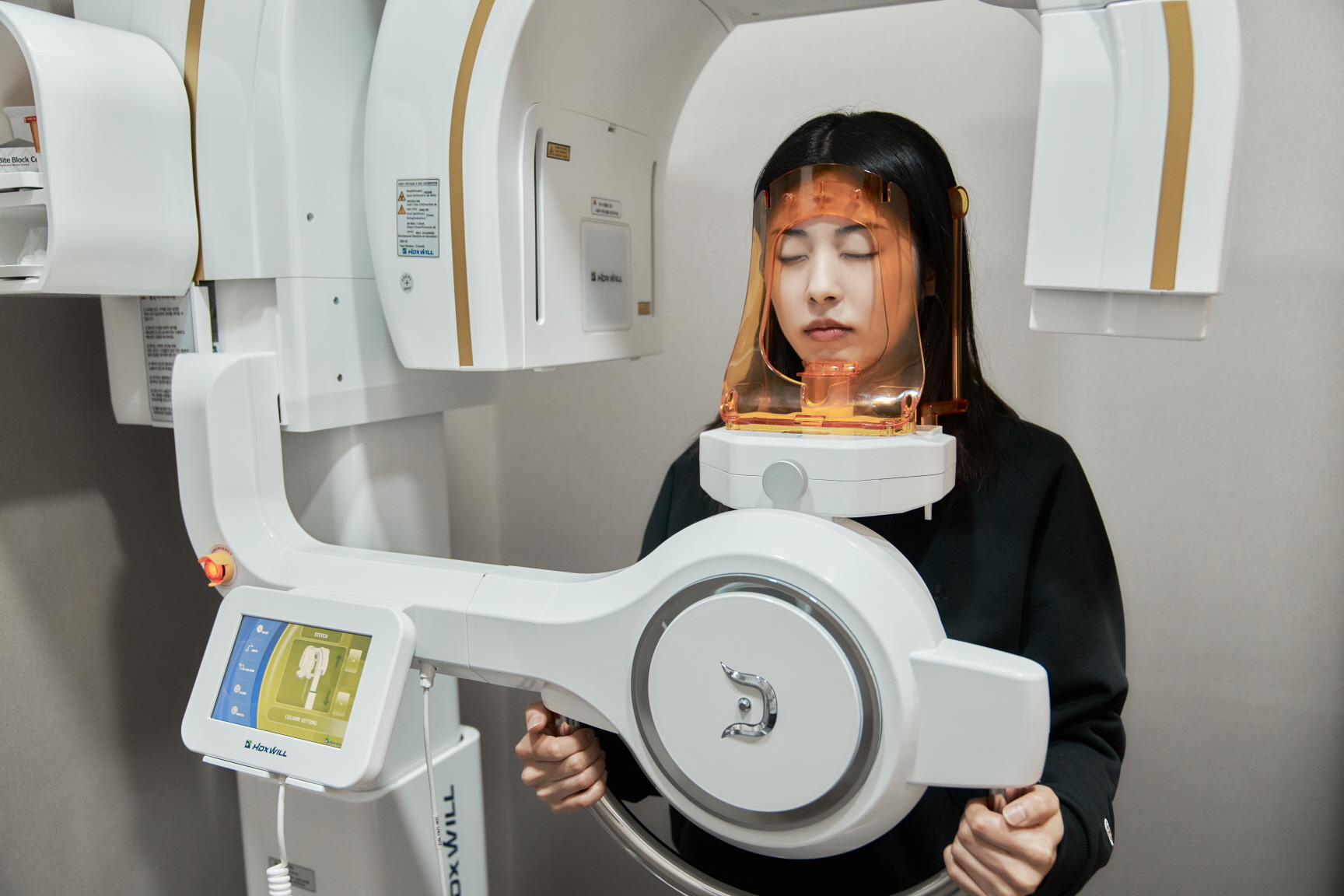
Imaging such as X-ray or CT scans to assess bone thickness, shape, and the position of important structures such as the inferior alveolar nerve.
Evaluation of asymmetry, including whether one side of the jaw is longer, thicker, or set differently than the other.
This information helps the surgeon decide whether bone surgery, soft-tissue management, or a combination is appropriate, and how much bone can be safely reshaped without over-resection or functional problems.
How square jaw reduction differs from non-surgical contouring
Many people first try non-surgical jawline slimming treatments such as injections or energy-based devices. These can be useful for certain cases, but they work differently from bone surgery.
Non-surgical jawline slimming typically:
Targets muscle or fat, not bone.
Relies on gradual changes over time.
May need repeated sessions to maintain the effect.
Has minimal downtime but also limited impact on strong bone structure.
Square jaw reduction surgery, in contrast:
Directly reshapes the jawbone.
Can produce more visible changes in bone-dominant square jaws.
Requires anesthesia, operating room time, and a recovery period with swelling.
Involves surgical risks that must be carefully managed.
[이미지복붙]https://contentsbox-images.s3.ap-northeast-2.amazonaws.com/transformed/3fd0d803b5f0485a89ef4ede602277dd.jpg
For some patients, non-surgical treatments may be enough, especially if the jaw width is mostly from muscle or soft tissue. For others with a clearly bone-dominant square jaw, surgery may be the more effective option. An honest consultation that includes imaging can help clarify where you fall on this spectrum.
Clinic background and medical team
This ophthalmology clinic in Gangnam focuses its lineup on facial bone surgery rather than offering a wide range of cosmetic procedures. Main procedures include square jaw surgery, cheekbone reduction, V-line contouring, double jaw surgery, and revision facial contouring.
The representative surgeon is a board-certified plastic surgeon with around 20 years of experience in facial bone surgery based on the clinic’s own information. The surgeon graduated from Seoul National University College of Medicine, completed training at Seoul National University Hospital, obtained board certification in ophthalmology care at Samsung Medical Center, and completed further training at the University of Washington Medical Center in Seattle.
The surgeon previously served as head of a facial bone center at a large contouring-focused hospital (ID Hospital facial bone center), which can be seen as part of their experience in handling a wide range of facial bone cases.
As of February 2025, this surgeon is listed as first or corresponding author on 13 SCI-level papers in the field of facial bone and double jaw surgery, including 3 papers in the journal Plastic and Reconstructive Surgery. This publication record suggests ongoing involvement in research and academic discussion related to facial bone operations.
The clinic’s system includes one board-certified plastic surgeon responsible for the facial bone surgery and one board-certified anesthesiology and pain medicine specialist in charge of anesthesia. For general anesthesia cases, the anesthesiology specialist is present, which is intended to support safety for these more complex operations.
The clinic emphasizes that the representative surgeon performs the operations directly and aims to suggest only the minimum necessary surgery based on each patient’s structure and goals, which may be reassuring for people who are worried about over-treatment.
Who may consider square jaw reduction
Square jaw reduction may be considered by people who:
Feel that their lower face looks wide, square, or heavy from the front or side.
Have a strong mandibular angle that makes the jawline look very angular.
Have a bone-dominant square jaw confirmed by imaging.
Want a slimmer, softer, or more tapered lower face line that still looks balanced with the rest of the face.
Have tried or considered non-surgical contouring but understand that bone structure is the main issue.
[이미지복붙]https://contentsbox-images.s3.ap-northeast-2.amazonaws.com/transformed/45bd65cd0d4f4e30b3f9e55134287cea.jpg
It may also be considered in combination with other facial bone procedures if:
The cheekbones are prominent and the midface looks wide compared to the lower face.
The chin is short, long, or off-center and needs contouring together with the jaw.
There is overall facial asymmetry that involves both the jaw and other facial bones.
On the other hand, you may not be an ideal candidate if:
Your jaw width is mostly due to muscle or soft tissue and bone appears normal on imaging.
You have untreated jaw function problems that require a different type of surgery.
You are unable to take time for recovery and follow-up.
These points are general; an individual consultation is needed to determine suitability.
Planning and safety considerations
Facial bone surgery requires careful planning to balance aesthetics and function. Key planning and safety points include:
Analyzing facial proportions so that the new jawline matches your cheekbones, chin, lips, and nose, aiming for harmony rather than an isolated change.
Checking occlusion and jaw movement to avoid creating or worsening functional issues.
Reviewing imaging to understand bone thickness and the course of the inferior alveolar nerve, so that bone reduction is done within safe limits.
Planning the amount and pattern of bone resection to avoid over-resection, step deformities, or new asymmetry.
Discussing realistic expectations, potential changes in facial shape, and the normal course of swelling and healing.
The presence of a board-certified anesthesiology and pain medicine specialist for general anesthesia cases is intended to support monitoring and management during surgery. Preoperative testing and evaluation are typically conducted to assess your general health and suitability for anesthesia.
What to expect during surgery and early recovery
Surgery details vary with each patient, but in general:
Anesthesia
Square jaw reduction is usually performed under general anesthesia. At this clinic, a board-certified anesthesiology specialist manages anesthesia for such cases. You will be asleep and monitored throughout the procedure.
[이미지복붙]https://contentsbox-images.s3.ap-northeast-2.amazonaws.com/transformed/a048bc64fc6646a4ba78fdcac1f44c93.jpg
Surgical approach
Incisions are commonly made inside the mouth along the lower gum line, so there are usually no visible external scars. Through these incisions, the surgeon accesses the mandibular angle and lower border, reshapes the bone according to the preoperative plan, smooths any sharp edges, and then closes the incisions.
Immediate postoperative period
After surgery, you are monitored as you wake up from anesthesia. Swelling, tightness, and some discomfort around the jaw are expected. Pain control and swelling management are provided according to the clinic’s protocols.
You may stay for observation for a period determined by your condition and the extent of surgery. Instructions on diet, oral hygiene, and sleeping position are given before discharge.
Postoperative care and swelling management
Swelling after square jaw reduction is normal and tends to be most noticeable in the first week or two. It then gradually subsides over several weeks to months, with the final contour taking shape as deep swelling resolves.
This clinic offers postoperative care programs that may include:
LED therapy used with the aim of supporting healing and helping with swelling.
Facial dome care and total skin reset care, which are applied to help the skin and soft tissues recover more comfortably.
Radiofrequency lifting devices used to help with skin tightening and swelling control.
These treatments are not described as guaranteed solutions but as supportive measures to make the recovery period more manageable and to encourage smoother soft-tissue adaptation over the reshaped bone.
You will also receive guidance on:
Oral hygiene to keep the intraoral incisions clean.
Diet progression from soft to more regular foods as healing allows.
Activity restrictions and gradual return to normal daily life.
Follow-up visits for check-ups and imaging if needed.
Online consultation and pre-visit preparation
For overseas patients, an online consultation is usually the first step. Through email or messaging, you can share:
[이미지복붙]https://contentsbox-images.s3.ap-northeast-2.amazonaws.com/transformed/ce4ac9a469cf45da8d210af869f63ee2.jpg
Front, 45-degree, and side-view photos of your face with a neutral expression.
Information about your concerns, what you want to change, and any previous facial procedures.
Medical history, including medications, allergies, and any systemic conditions.
Based on this information, the clinic can provide a preliminary opinion on whether square jaw reduction might be appropriate, whether combined procedures should be considered, and a rough outline of the expected treatment plan and stay in Korea. Final decisions and detailed planning are made after in-person examination and imaging.
To prepare for your visit:
Arrange your travel dates with enough time for consultation, surgery, and early follow-up.
Avoid certain medications or supplements that may affect bleeding, as advised by the clinic.
Plan for someone to accompany you if possible, especially for the day of surgery and the first day after.
Prepare questions about the procedure, alternatives, risks, and recovery so you can discuss them clearly during your consultation.
Expected Korea visit timeline
The exact schedule depends on your case and travel plans, but a typical timeline for international patients might look like this:
Day 1: In-person consultation and imaging
You visit the clinic near Sinsa Station Exit 1 on Dosan-daero in Gangnam. Facial analysis, occlusion assessment, and imaging such as X-ray or CT are performed. You discuss your goals, review the surgical plan, and go over anesthesia, risks, and postoperative care. If you decide to proceed, preoperative tests are arranged.
Day 2 or 3: Surgery day
You arrive at the clinic at the appointed time. After final checks, general anesthesia is administered by the anesthesiology specialist. The representative surgeon performs the square jaw reduction according to the plan. After surgery, you recover in the clinic until you are stable enough to leave.
First week: Early recovery
You attend at least one or more follow-up visits for wound checks, swelling management, and postoperative care sessions such as LED therapy or facial dome care if scheduled. Swelling is most noticeable during this period, so plan for a relatively quiet schedule.
Second week and beyond: Continued recovery
If your stay in Korea allows, you may have additional follow-up visits. Many international patients return home after about 7 to 14 days, depending on the complexity of the surgery and the surgeon’s recommendations. Continued healing and reduction of swelling occur over the following weeks and months, with remote follow-up possible through photos and online communication.
[이미지복붙]https://contentsbox-images.s3.ap-northeast-2.amazonaws.com/transformed/a453969ae94243ebb5d94c43b6ae41da.jpg
Clinic convenience for international patients
The clinic is located in Gangnam, Seoul, near Sinsa Station Exit 1 on Dosan-daero, an area that is familiar to many international visitors. Clinic hours include weekdays and Saturdays, and there is no lunch break in the schedule, which can be convenient for working professionals and travelers with limited time.
Multilingual support is available in Japanese, English, and Thai, which may make communication easier if you are not fluent in Korean. Staff can help coordinate appointments, explain instructions, and support you during your stay.
Frequently asked questions
Is square jaw reduction painful
Some discomfort, tightness, and soreness around the jaw are common after surgery, especially in the first few days. Pain control is usually managed with prescribed medications. Most patients describe the sensation as manageable rather than unbearable, but experiences vary.
How long does swelling last
Swelling is usually most visible in the first 1 to 2 weeks. It then gradually decreases over several weeks. Residual deep swelling can take a few months to fully settle, and the final contour may be best judged after this period. Individual healing speeds differ.
Will I look unnatural or “too V-line”
The aim of square jaw reduction at a structure-focused clinic is to create a slimmer, softer lower face while maintaining balance with your natural features. Overly aggressive bone removal can risk an unnatural look, so careful preoperative planning and conservative, proportion-based design are emphasized. However, exact outcomes cannot be guaranteed, and it is important to discuss your preferences clearly.
Can square jaw reduction be done alone, without other facial bone surgery
Yes, if your main concern is the width and angle of the lower jaw and your cheekbones and chin are already in good proportion, square jaw reduction alone may be planned. In other cases, combining it with cheekbone or chin contouring may better harmonize the overall facial shape. The clinic’s approach is to recommend only what appears structurally necessary rather than automatically combining multiple procedures.
What are the main risks
As with any facial bone surgery, potential risks may include infection, bleeding, prolonged swelling, numbness or altered sensation, asymmetry, over- or under-correction, and issues related to anesthesia. Careful planning, experienced surgical technique, and proper postoperative care are used to reduce these risks, but they cannot be completely eliminated. A detailed risk discussion is part of the consultation process.
How is this clinic different from a general cosmetic clinic
This ophthalmology clinic focuses its lineup on facial bone surgery such as square jaw reduction, cheekbone reduction, V-line contouring, and double jaw surgery, rather than offering a broad range of unrelated treatments. The representative surgeon has an academic and clinical background centered on facial bone operations, including 13 SCI-level papers as of February 2025, and a board-certified anesthesiology specialist manages general anesthesia cases. These elements may appeal to patients who prioritize specialization and structured planning.
[이미지복붙]https://contentsbox-images.s3.ap-northeast-2.amazonaws.com/transformed/0f0bbc0a5d604dcb87dfccbd8f6e3d2a.jpg
Will the representative surgeon operate on me directly
According to the clinic’s own information, the representative surgeon performs the facial bone operations directly. This is intended to provide continuity from consultation through surgery and follow-up. You can confirm the operating surgeon during your consultation.
Soft call to action
If you are considering square jaw reduction in Korea and want a clearer understanding of whether your jawline is bone-dominant or muscle-dominant, an online consultation with this Gangnam clinic can be a practical first step. By sharing photos, medical history, and your concerns, you can receive a preliminary assessment and discuss possible options before arranging your trip.
Located near Sinsa Station on Dosan-daero, with multilingual support in Japanese, English, and Thai and clinic hours without a lunch break, the clinic is set up to be accessible for international visitors. If you are ready to explore whether square jaw reduction or another facial bone contouring approach suits your face and goals, you can contact the clinic online to begin a personalized discussion.
[이미지복붙][이미지링크=https://glamps.co.kr/outline_x.php?utm_source=naver&utm_medium=blog&utm_campaign=blog_organic]https://contentsbox-images.s3.ap-northeast-2.amazonaws.com/transformed/7e54b4a02c764a67a4f6438355039615.jpg
[이미지복붙][이미지링크=https://tinyurl.com/u6ey2vsc]https://contentsbox-images.s3.ap-northeast-2.amazonaws.com/transformed/146c7318ad2641e7b01b3167e47db297.jpg
[이미지복붙][이미지링크=tel:02-543-0309]https://contentsbox-images.s3.ap-northeast-2.amazonaws.com/transformed/8f726a7af1e847b78b0de3cfd16e0ffb.jpg
[이미지복붙][이미지링크=https://tinyurl.com/4ef9d3em]https://contentsbox-images.s3.ap-northeast-2.amazonaws.com/transformed/a7b8e7a2a2f44244bc9493f55bd1351f.jpg






댓글
댓글 쓰기