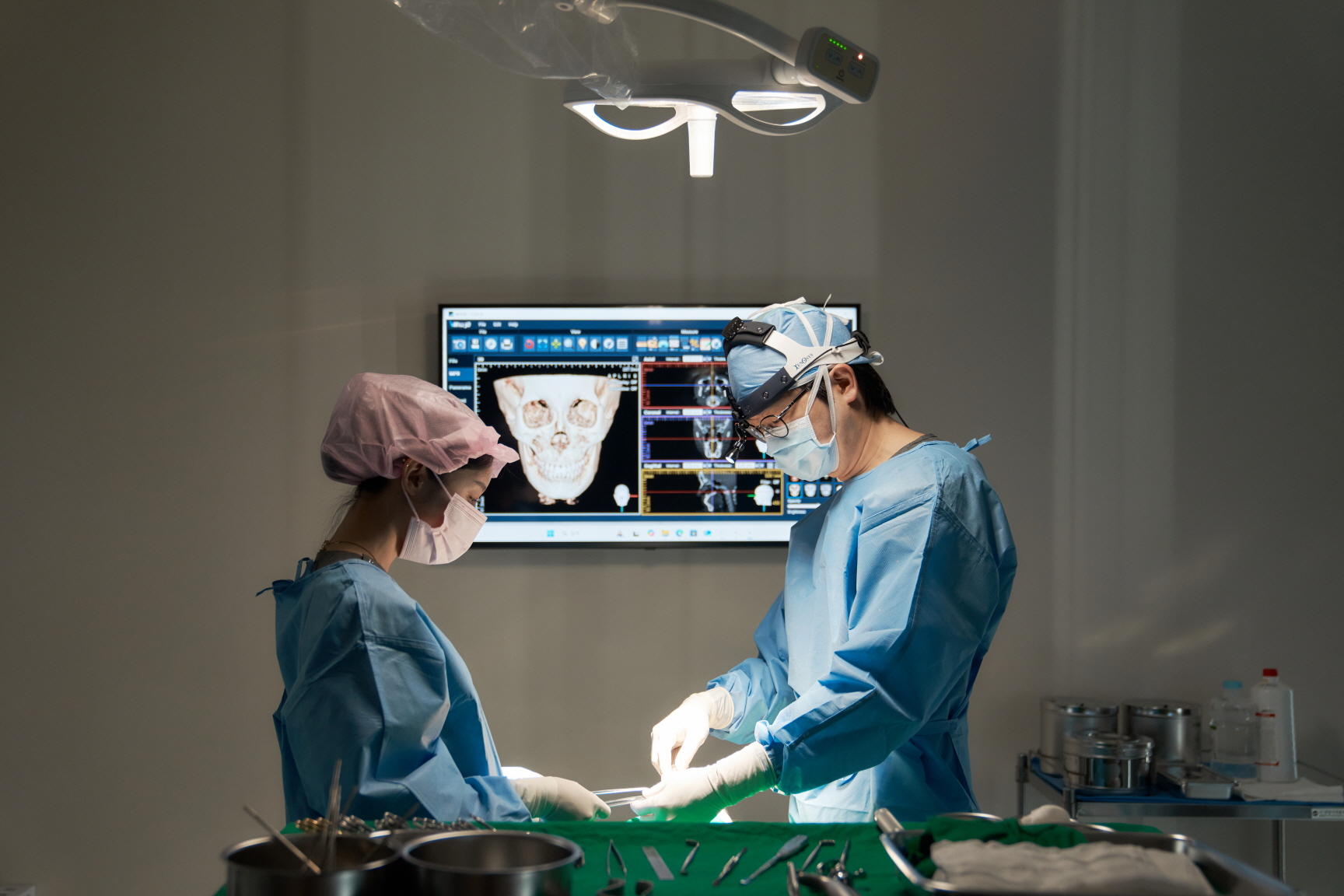
[썸네일]https://contentsbox-images.s3.ap-northeast-2.amazonaws.com/transformed/925ec6d6b1604a7591f0bc27499da9fa.jpg
Direct answer summary
Chin augmentation surgery for a short or receding chin is a bone-based procedure that reshapes and repositions the front part of the lower jaw. Instead of simply adding volume with fillers or implants, the surgeon adjusts the jawbone itself so the chin better matches the lips, jawline, and overall facial contour. In a facial bone–focused eye clinic in Gangnam, this procedure is planned in three dimensions, often by the same surgeon who performs double jaw and facial contouring surgery. For international patients, the clinic provides multilingual support and a structured system for consultation, surgery, and recovery in Seoul.
What is a short chin and why it matters
A short or receding chin means the chin is set back or too small compared with the nose, lips, and jawline. When viewed from the side, the lower face may look weak, and the profile can appear unbalanced.
Common concerns include a convex profile, where the mid-face and mouth appear more forward than the chin, and an unclear jawline, where the jaw and neck blend together. Some people feel that their mouth or lips look more protruded than they actually are because the chin is positioned too far back. Others feel their face looks rounder, shorter, or less defined than they would like.
These issues are often related to the position and shape of the lower jawbone rather than just the skin or fat. Even if the skin is tight and there is not much fat under the chin, the lower face can still look weak if the bony chin is underdeveloped or recessed. This is why simply adding volume on top of the bone does not always create a natural or stable improvement.
[이미지복붙]https://contentsbox-images.s3.ap-northeast-2.amazonaws.com/transformed/1bc0e8f84f53420e9a14626704446109.jpg
Chin augmentation options: bone-based vs. simple volume methods
There are two broad approaches to improving a short chin: volume-based methods and bone-based surgery.
Non-surgical or minor options include fillers, fat grafting, and simple chin implants. These methods add volume in front of or around the chin. They can slightly project the chin and are sometimes suitable for very mild recession or for people who want a temporary change. However, they do not change the underlying jaw structure. If the bone is significantly recessed, the result may look artificial from certain angles, or the profile may still feel unbalanced.
Bone-based chin surgery focuses on the jawbone itself. In procedures similar to sliding genioplasty, the surgeon cuts the front part of the lower jawbone and moves it forward, downward, or slightly reshapes it. The repositioned bone is then fixed with small plates and screws. This approach allows three-dimensional planning of the chin position to match the patient’s facial proportions, bite, and jawline.
At a clinic that focuses on facial bone surgery, such as double jaw and facial contouring, the main strategy for short chin correction is to adjust the bone rather than only adding volume. This can help achieve a more stable and structural improvement that is tailored to the patient’s overall face.
Who may consider short chin correction
Short chin correction may be considered by adults who are concerned about the shape and balance of their lower face.
Typical candidates include people whose chin is clearly recessed when viewed from the side. When they look at their profile photos, they may notice that the chin does not reach a line drawn down from the lower lip or that it sits far behind the tip of the nose.
Some individuals feel that their lips or mouth look too protruded, even though their eyes and bite are within a normal range. In these cases, the issue can be that the chin is too far back, not that the mouth is actually too forward.
[이미지복붙]https://contentsbox-images.s3.ap-northeast-2.amazonaws.com/transformed/68da7657fe374e36a7197dda668edff8.jpg
Others may have already tried fillers or a simple chin implant but feel that the shape is still not natural or that the jawline remains unclear. They may feel that the added volume sits on top of a weak structure instead of truly correcting the bone position.
Short chin correction is also often considered together with facial contouring or double jaw surgery. When the upper and lower jaws are repositioned, or when the jawline is slimmed, the chin needs to be balanced with the new facial structure. In such cases, chin surgery is planned as part of a comprehensive facial bone plan.
Before deciding on surgery, a thorough consultation and imaging are essential. X-ray or CT scans are typically used to evaluate the jawbone structure, the relationship between the upper and lower jaws, and the overall facial proportions. This helps determine whether bone-based chin correction alone is appropriate or whether it should be combined with other facial bone procedures.
Treatment planning and evaluation
Planning for short chin correction is not only about moving the chin forward. It requires a detailed evaluation of the entire lower face from multiple angles.
First, facial proportions are analyzed from the front and side. The surgeon considers the width and length of the face, the position of the nose and lips, and the balance between the upper, middle, and lower thirds of the face.
Second, the shape and position of the lower jawbone are assessed. This includes the chin, the body of the jaw, and the angle area near the ear. The surgeon examines how the chin relates to the jawline and neck, and whether there is any asymmetry.
Third, the bite and how the upper and lower jaws meet are reviewed. Even though chin augmentation mainly focuses on the front part of the lower jaw, the position of the chin should not conflict with the functional relationship of the jaws.
Fourth, soft tissue thickness and skin elasticity are evaluated. The same amount of bone movement can look different in someone with very thin skin compared to someone with thicker soft tissue. This affects how much the chin is moved and how the contour is shaped.
[이미지복붙]https://contentsbox-images.s3.ap-northeast-2.amazonaws.com/transformed/d0d938102f3643f685fcb9e95595a866.jpg
At a facial bone–focused ophthalmology clinic, the same surgeon who performs double jaw and facial contouring surgery typically plans the chin correction. This means the chin is not treated as an isolated feature but as part of the entire lower face and profile. The planning philosophy is to recommend only the minimum necessary surgery based on objective evaluation, avoiding unnecessary or excessive procedures.
Surgical methods for short chin correction (bone-focused)
Bone-cutting chin surgery, often similar to sliding genioplasty, is a common method for correcting a short chin in a structural way. The procedure is usually performed through an incision inside the mouth, so there is no visible scar under the chin.
The surgeon exposes the front part of the lower jawbone and creates a controlled cut in the bone. The chin segment is then carefully moved forward, downward, or slightly rotated, depending on the desired change. In some cases, the chin can also be narrowed or slightly widened to match the facial width.
Once the chin segment is in the planned position, it is fixed in place with small plates and screws. These are designed to stay in the body and usually do not need to be removed unless there is a specific reason later.
In some patients, chin correction is combined with jawline contouring. This may involve smoothing or reshaping the lower border of the jaw to create a more continuous line from the chin to the angle of the jaw. Combining these steps can help avoid a disconnected look between the chin and the rest of the jaw.
The exact method and amount of movement are chosen according to the degree of chin recession, the overall facial balance, and whether other facial bone procedures such as double jaw or cheekbone contouring are being performed at the same time. The goal is not to chase a single ideal shape but to improve facial harmony and reduce the sense of a weak or recessed chin.
Anesthesia and safety system
Chin bone surgery is typically performed under general anesthesia or deep sedation. The choice depends on the scope of surgery, whether it is combined with other facial bone procedures, and the patient’s health status.
[이미지복붙]https://contentsbox-images.s3.ap-northeast-2.amazonaws.com/transformed/6975be6455354298a25c2ff98f21c2dc.jpg
At this eye clinic in Gangnam, facial bone procedures are supported by a board-certified anesthesiology and pain medicine specialist. This specialist is responsible for planning the anesthesia, monitoring the patient’s condition throughout the surgery, and managing the immediate postoperative period.
During surgery, vital signs such as heart rate, blood pressure, oxygen saturation, and breathing are continuously monitored. Standard safety protocols for facial bone surgery are followed, including preoperative assessment, fasting instructions, and postoperative observation.
Although no medical procedure is without risk, having a dedicated anesthesiology specialist and a structured monitoring system is intended to manage and reduce anesthesia-related risks as much as possible.
Recovery process and aftercare
Recovery after bone-based chin augmentation follows several stages. Individual experiences vary, but there are common patterns that most patients can expect.
Immediately after surgery, swelling and a feeling of tightness around the chin and lower lip are common. Some bruising may appear under the chin or along the jawline. Temporary numbness or altered sensation in the chin and lower lip area is also frequent because the nerves that supply sensation run close to the surgical field.
During the first one to two weeks, swelling is usually at its peak in the first few days and then gradually decreases. Patients may be advised to keep their head elevated, use cold or warm compresses as instructed, and avoid strenuous activity. A soft diet is often recommended at the beginning to reduce strain on the jaw. Good oral hygiene, including gentle rinsing, is important to reduce the risk of infection when the incision is inside the mouth.
Over several weeks to months, residual swelling continues to subside, and the final contour of the chin becomes clearer. Sensation in the chin and lower lip typically improves slowly over time, although the timeline can vary from person to person.
[이미지복붙]https://contentsbox-images.s3.ap-northeast-2.amazonaws.com/transformed/db24f840c66a4f648549d4a40bb6ec82.jpg
The clinic provides structured postoperative care programs originally developed for facial bone surgery patients. These may include non-invasive treatments such as LED therapy or other modalities intended to support healing and help reduce swelling. Follow-up visits are scheduled to check bone healing on imaging, confirm the stability of the fixation plates, and monitor nerve function and overall recovery.
Possible risks and considerations
Like all surgical procedures, short chin correction with bone surgery involves potential risks. Understanding these in advance helps patients make informed decisions and set realistic expectations.
Common short-term issues include swelling, bruising, and temporary numbness or altered sensation in the chin and lower lip. These are usually expected parts of the healing process and tend to improve over time.
There is a possibility of asymmetry or contour irregularities if the bone healing or soft tissue response is not entirely even. Some patients may feel the chin is still too small, too large, or not the shape they imagined. In a minority of cases, revision surgery may be considered after sufficient healing if the result is not satisfactory.
Other potential complications include infection, bleeding, or delayed bone healing. These are managed with standard medical and surgical measures if they occur. While serious complications are not common, they cannot be completely excluded.
A detailed preoperative consultation, careful imaging-based planning, and clear communication about goals and limitations help reduce the likelihood of problems. However, it is important to understand that no clinic can promise a specific result or guarantee that complications will not occur.
How this clinic approaches short chin surgery
This ophthalmology clinic in Gangnam has a focused practice on facial bone surgery, including double jaw and facial contouring procedures. Rather than offering a wide range of general aesthetic treatments, the team concentrates on bone-related surgery, and this experience is applied to short chin correction.
[이미지복붙]https://contentsbox-images.s3.ap-northeast-2.amazonaws.com/transformed/0e8dd34f271146aea537b4fde0eecf0e.jpg
The chief surgeon is a board-certified plastic surgeon with around 20 years of experience in facial bone surgery and previous leadership of a facial bone center at a large hospital. The surgeon has multiple SCI-level publications, including several in an international plastic and reconstructive surgery journal as of February 2025. These academic and clinical activities indicate ongoing engagement with developments in facial bone techniques.
The same experienced surgeon directly evaluates each patient, plans the surgery, and performs the operation. The aim is to recommend only the minimum necessary procedures based on objective analysis, whether that is chin surgery alone or chin surgery combined with other facial bone adjustments.
An in-house board-certified anesthesiology and pain medicine specialist manages anesthesia and perioperative safety. Structured postoperative care programs, originally developed for facial bone patients, are used to support recovery and monitoring.
For international patients, the clinic offers multilingual support in English, Japanese, and Thai. Clinic hours run through the day without a lunch break, which can be convenient for overseas visitors with tight schedules and for working professionals.
Online consultation and pre-visit preparation
For overseas patients considering chin augmentation surgery in Seoul, an online consultation is a practical first step. Before your consultation, it is helpful to prepare clear photos of your face from the front, 45-degree angle, and side, with a neutral expression and good lighting. If you have had any previous facial bone procedures, sharing past imaging or operation records can also be useful.
During the online consultation, you can describe your main concerns, such as feeling that your profile is weak, your jawline is unclear, or your lips look too protruded. You can also mention whether you have tried fillers or implants before and how you felt about those results.
It is important to share your medical history honestly, including any chronic illnesses, medications, allergies, or previous surgeries. Information about smoking, alcohol use, and sleep habits is also relevant, as these can affect anesthesia planning and healing.
[이미지복붙]https://contentsbox-images.s3.ap-northeast-2.amazonaws.com/transformed/b177b9bdbc134558bf9ba256850b5406.jpg
You should ask whether chin correction alone is likely to address your concerns or whether combined procedures such as jawline contouring or double jaw surgery might be recommended. Clarifying the approximate length of stay needed in Korea, expected downtime, and follow-up schedule will help you plan your trip.
Expected Korea visit timeline
The exact schedule can vary, but many international patients follow a general timeline when coming to Seoul for bone-based chin surgery.
First, plan to arrive in Korea at least one or two days before surgery. This allows time for an in-person consultation, detailed examination, and imaging such as X-ray or CT scans. During this visit, the surgeon confirms the plan that was discussed online and explains the procedure, anesthesia, and aftercare in more detail.
Surgery is usually scheduled for the next day or shortly after the in-person evaluation. Depending on the scope of surgery and your condition, you may stay in a recovery room for observation on the day of surgery and then return to your accommodation the same day or the following day.
Most patients are advised to stay in Korea for at least one to two weeks after surgery. This period allows for early follow-up visits, suture checks if needed, and management of swelling and discomfort. Some patients choose to stay longer, especially if they undergo combined facial bone procedures.
Before you return home, the clinic typically performs a final check, provides instructions for ongoing care, and may arrange for remote follow-up using photos or video calls. You should plan your return flight with enough time for initial recovery so that you can travel comfortably.
Aftercare at home and long-term follow-up
Once you return to your home country, continuing proper care is important. Following the clinic’s instructions on diet, activity level, oral hygiene, and medication helps support stable bone healing.
You may be advised to avoid heavy exercise, contact sports, or strong pressure on the chin for a certain period. Sleeping with your head slightly elevated and avoiding face-down positions can help reduce swelling.
[이미지복붙]https://contentsbox-images.s3.ap-northeast-2.amazonaws.com/transformed/647528df02f742258fb3a792f354b8f8.jpg
The clinic may ask you to send periodic photos and updates, especially in the first few months. If there are any concerns such as persistent numbness, unusual pain, or signs of infection, you should contact the clinic promptly and, if needed, see a local medical provider.
Bone healing continues for several months, and soft tissue settling can take similar time. The final contour is usually clearer after swelling has fully resolved, which may be around six months to one year after surgery.
Frequently asked questions
Is bone-based chin surgery very painful?
Discomfort is expected, especially in the first few days, but it is usually manageable with prescribed pain medication. Most patients describe a feeling of tightness and pressure more than sharp pain. Pain levels decrease as swelling goes down.
Will I have visible scars?
Bone-based chin surgery is commonly performed through an incision inside the mouth, so there is typically no visible scar under the chin. The internal incision is closed with sutures that either dissolve or are removed according to the surgeon’s instructions.
How long before I can return to work?
This depends on your job and your tolerance for being seen with swelling. Many office workers plan around one to two weeks off. Swelling is most noticeable in the first week and then gradually improves, but some residual puffiness can remain for several weeks.
Will my speech or eating be affected?
In the early period after surgery, you may feel stiffness and mild difficulty with clear speech or chewing due to swelling and tightness. A soft diet is often recommended at first. As swelling decreases and you adapt to the new chin position, speech and eating typically return to normal.
Can chin augmentation be reversed?
Because bone-based chin surgery involves cutting and repositioning bone, fully reversing it is not simple. In some cases, adjustments or revisions are possible after sufficient healing, but the goal is to plan carefully from the beginning to minimize the need for major changes later.
[이미지복붙]https://contentsbox-images.s3.ap-northeast-2.amazonaws.com/transformed/23a51899d3bb48afbd289891fdc90db4.jpg
Is this procedure suitable for everyone with a weak chin?
Not everyone with a weak chin is an ideal candidate for bone-based surgery. Some people may do well with less invasive options, while others may need more extensive jaw correction. A thorough evaluation of your bone structure, bite, and overall health is necessary before recommending surgery.
Soft call to action for online consultation
If you are considering chin augmentation surgery for a short or receding chin and are planning a visit to Seoul, an online consultation can help you understand your options before you travel. By sharing your photos, concerns, and medical history, you can receive an initial assessment of whether bone-based chin correction may be appropriate for you and what kind of Korea visit schedule to expect.
The facial bone–focused team at this ophthalmology clinic in Gangnam provides multilingual support in English, Japanese, and Thai, and operates with continuous hours without a lunch break to accommodate international patients and busy professionals. If you are ready to explore whether structural chin correction could improve the balance of your lower face, you can start by arranging an online consultation and preparing your questions in advance.
[이미지복붙][이미지링크=https://glamps.co.kr/outline_x.php?utm_source=naver&utm_medium=blog&utm_campaign=blog_organic]https://contentsbox-images.s3.ap-northeast-2.amazonaws.com/transformed/fd6677e1e6bc4f49b7157dfb25ca6d50.jpg
[이미지복붙][이미지링크=https://tinyurl.com/u6ey2vsc]https://contentsbox-images.s3.ap-northeast-2.amazonaws.com/transformed/8b49f5e144a644e19b755d12d0d30146.jpg
[이미지복붙][이미지링크=tel:02-543-0309]https://contentsbox-images.s3.ap-northeast-2.amazonaws.com/transformed/c09d280fe83044238be7ec45ce2448f8.jpg
[이미지복붙][이미지링크=https://tinyurl.com/4ef9d3em]https://contentsbox-images.s3.ap-northeast-2.amazonaws.com/transformed/489b23e2c0dd4d2697aa726e76ac6941.jpg






댓글
댓글 쓰기