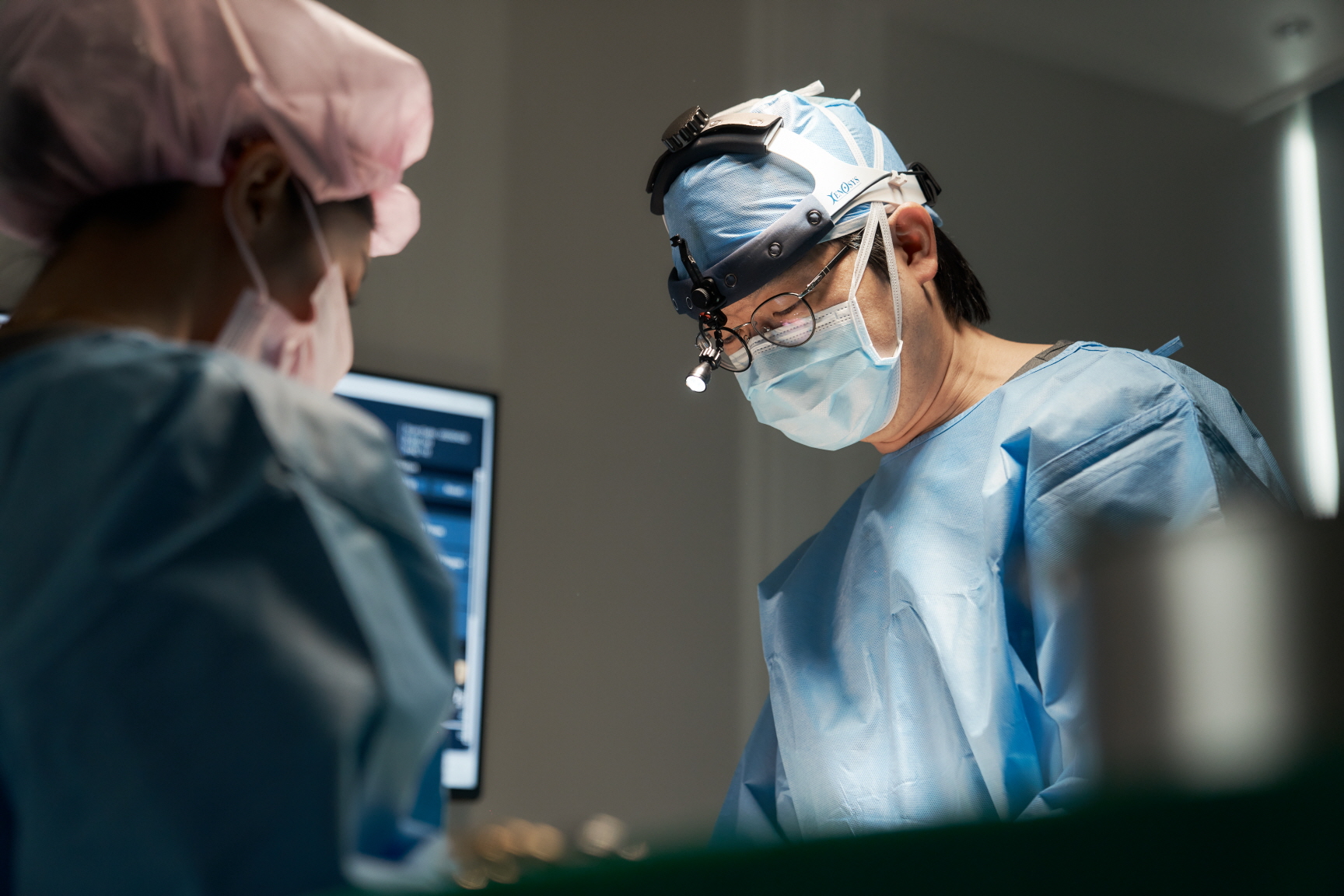
[썸네일]https://contentsbox-images.s3.ap-northeast-2.amazonaws.com/transformed/276ec5b0caa24f9cbc829150e73b7edc.jpg
Direct answer summary
V-line surgery is a cosmetic jaw contouring operation that reshapes the lower face to look slimmer, more tapered, and more refined. In South Korea, it usually combines reduction of the jaw angle with reshaping of the chin bone to create a smoother, V-shaped jawline. It is a bone surgery done under general anesthesia, with a hospital stay and a structured recovery period. Results are permanent, but swelling can take several months to fully settle. It is suitable for adults who feel their jaw is too wide, square, or bulky and want a softer, more balanced facial contour.
This guide explains what to expect if you are considering V-line surgery in Korea, from online consultation and planning to your visit, recovery, and how to choose a clinic.
Treatment overview: what is V-line surgery
V-line surgery, also called V-line jaw contouring, is a facial bone surgery that reshapes the lower jaw and chin. The goal is to create a slimmer and more tapered lower face with a defined V-shaped jawline instead of a wide or square jaw.
The surgery usually focuses on three main areas:
Mandibular angle reduction
This is the back corner of the jaw, near the ears. In some people, this area is very wide or prominent, creating a strong, square, or bulky jawline. During V-line surgery, the surgeon trims or shaves this angle to soften the square shape and make the jawline look smoother and more feminine or delicate.
Chin reshaping
The chin bone can be too wide, too long, too short, or protruding. The surgeon can narrow the chin, shorten it, move it slightly forward or backward, or reshape it to match the rest of the face. This part of the procedure is sometimes called genioplasty when the chin bone is moved and fixed in a new position.
Additional contouring
To improve balance, V-line surgery may be combined with other procedures such as:
[이미지복붙]https://contentsbox-images.s3.ap-northeast-2.amazonaws.com/transformed/284219c266df4060ae69c4044de5d94d.jpg
Facial liposuction along the jawline or under the chin to remove excess fat and better define the bone contour
Cheek fat reduction for a more sculpted look
Rhinoplasty or other facial surgeries to harmonize overall proportions
All bone work is usually done through incisions inside the mouth, so there are no visible scars on the skin. Because it is bone surgery, it is performed under general anesthesia in an operating room, and patients typically stay in the hospital or clinic for at least one night for monitoring.
Aesthetic goals of V-line surgery
V-line surgery is designed to address several common concerns about the lower face:
A wide or square jawline that looks strong or masculine
A bulky jaw angle that makes the face look heavy from the front or side
A broad, flat, or protruding chin that does not match the nose, cheeks, or forehead
A lower face that feels too wide compared with the upper face
The aesthetic goals usually include:
Creating a slimmer, more tapered lower face
Softening a strong or boxy jawline
Achieving a gentle V or heart-shaped contour when looking from the front
Balancing the chin and jaw with the nose, lips, cheeks, and forehead
Improving facial harmony rather than chasing an extreme or overly narrow jaw
Who may consider V-line surgery
V-line surgery is generally considered for adults whose facial bones have fully developed. It may be suitable if you:
Feel your lower face looks too wide, square, or bulky
Want a softer, more delicate, or heart-shaped facial contour
Think your jawline appears too masculine and you prefer a more refined look
Have a chin that is too wide, long, short, or protruding for your face
Feel your jawline does not match the rest of your features, such as your nose or cheeks
Have realistic expectations and understand the risks and recovery involved in bone surgery
It may not be suitable if you have serious medical conditions that make surgery risky, unrealistic expectations about the outcome, or if your concerns could be solved better with non-surgical treatments.
A thorough consultation is essential. In Korea, clinics often use facial analysis, photographs, 3D imaging, and X-rays to understand your bone structure. This helps the surgeon decide whether V-line surgery is appropriate or whether less invasive options, such as masseter botulinum toxin injections or fillers, might be enough.
How the surgery is done in simple terms
While each clinic has its own techniques, the basic steps of V-line surgery usually include:
[이미지복붙]https://contentsbox-images.s3.ap-northeast-2.amazonaws.com/transformed/562d59862e0146bbb5b3499f4c4e8f3a.jpg
1. Anesthesia
You are put under general anesthesia so you sleep through the entire operation and feel no pain.
2. Incisions inside the mouth
The surgeon makes small incisions inside the mouth along the lower gums. This allows access to the jawbone and chin bone without leaving visible scars on the face.
3. Jaw angle reduction
Using special instruments, the surgeon trims or shaves the outer part of the jaw angle. This removes the bulky corner that creates a square jaw and makes the jawline smoother and slimmer when viewed from the front and side.
4. Chin reshaping or genioplasty
The surgeon reshapes the chin bone to match your facial plan. This may involve:
Narrowing a wide chin
Shortening a long chin
Advancing or setting back a chin that sticks out or recedes
Smoothing irregularities
If genioplasty is performed, the chin bone may be cut, moved, and fixed in a new position with small plates or screws.
5. Additional contouring
If planned, the surgeon may perform facial liposuction to remove excess fat under the chin or along the jawline, or combine other procedures that improve facial balance.
6. Closing the incisions
The incisions inside the mouth are closed with dissolvable stitches. External bandaging or compression may be applied to support the new jawline and reduce swelling.
The operation time varies but often takes several hours, depending on the complexity and whether other procedures are combined.
Online consultation and pre-visit preparation
For international patients, the process usually starts online before you book your flight.
[이미지복붙]https://contentsbox-images.s3.ap-northeast-2.amazonaws.com/transformed/5318ab4779844f8a9dcb501eebf2fed0.jpg
Online consultation
You will typically be asked to provide:
Clear front, side, and three-quarter facial photos without heavy makeup or filters
Information about your age, medical history, and any previous facial surgeries
Your main concerns and what kind of result you hope to achieve
Many Korean clinics offer video consultations or detailed email consultations. During this stage, you can ask about:
Whether you are a likely candidate for V-line surgery
What kind of changes are realistic for your face
Estimated surgery plan and combination procedures, if any
Approximate cost range and length of stay in Korea
Medical and travel preparation
Before traveling, you should:
Have a basic health check in your home country if recommended
Discuss medications, allergies, and any chronic conditions with the clinic
Stop smoking and limit alcohol for several weeks before surgery if possible
Avoid certain medications or supplements that increase bleeding, as advised by the clinic
Plan enough time in Korea for surgery, early recovery, and follow-up visits
Arrange accommodation near the clinic and consider bringing a companion for support
Expected treatment process in Korea
While details vary, a typical visit for V-line surgery in Korea may follow this kind of timeline.
Day 1 to 2: In-person consultation and tests
Face-to-face consultation with the surgeon
3D imaging, facial photographs, and X-rays to analyze bone structure
Discussion of your goals and detailed surgical plan
Medical examinations and blood tests to confirm you are fit for general anesthesia
Explanation of risks, benefits, and consent forms
Scheduling of the surgery date
Day 2 to 4: Surgery day
You arrive at the clinic or hospital with an empty stomach, following fasting instructions
Pre-operative preparation and meeting with the anesthesiologist
V-line surgery under general anesthesia
Waking up in the recovery room under monitoring
One or more nights of hospital or clinic stay for observation, IV fluids, and pain control
First week after surgery
You may experience:
Significant swelling, especially in the lower face
Bruising along the jawline and neck
Tightness, stiffness, and mild to moderate pain, controlled with medication
Temporary numbness around the chin and lower lip
Difficulty chewing and a soft or liquid diet
The clinic will guide you on:
Mouth rinsing and oral hygiene to keep the incisions clean
Sleeping position, often with your head elevated
Cold or warm compresses, depending on the stage of recovery
Medication schedule and any follow-up appointments
Most patients stay in Korea for at least 10 to 14 days after surgery to allow for early recovery and check-ups.
[이미지복붙]https://contentsbox-images.s3.ap-northeast-2.amazonaws.com/transformed/096ed4a41e594ef69feb566143636dca.jpg
Recovery timeline and results
Recovery from V-line surgery happens in stages.
First 1 to 2 weeks
Swelling and bruising are most noticeable
You may feel pressure, stiffness, and numbness
You will likely be on a soft or liquid diet and may speak more slowly
Stitches inside the mouth begin to dissolve
Weeks 3 to 6
Swelling gradually improves
You can usually return to light daily activities and office work after about 2 to 3 weeks, depending on how you feel and your job
Chewing becomes more comfortable, and you can slowly return to a more normal diet
Numbness may still be present but often starts to improve
Months 3 to 6 and beyond
Most visible swelling subsides by around 3 months
The jawline looks more defined and closer to the final result
Subtle changes and minor swelling can continue to improve up to 6 to 12 months
Because the bone is permanently reshaped, the structural change is long lasting. However, the final contour only becomes clear once the soft tissues and swelling have fully settled.
Safety, risks, and how they are managed
V-line surgery is a major cosmetic procedure, and like any surgery, it carries risks. Common and potential issues include:
Swelling and bruising
These are expected and usually temporary but can be quite noticeable in the first weeks.
Infection
Because the incisions are inside the mouth, strict oral hygiene and antibiotics are important to reduce this risk.
Asymmetry or irregular contour
Perfect symmetry is not possible, and some minor asymmetry is normal. In some cases, revision surgery may be needed if the difference is significant.
Nerve injury and altered sensation
The nerves that provide feeling to the lower lip and chin run through the jawbone. They are carefully protected, but there is a risk of temporary or, rarely, permanent changes in sensation.
[이미지복붙]https://contentsbox-images.s3.ap-northeast-2.amazonaws.com/transformed/75ad965a9320414494237d6fec3661b1.jpg
Over- or under-correction
The jaw may be made too narrow or not narrow enough compared to your expectations. Detailed planning and clear communication help reduce this risk.
General anesthesia risks
These are managed by pre-operative health checks and monitoring during surgery.
To improve safety, reputable Korean clinics focus on:
Pre-operative health checks and imaging
Careful surgical planning using 3D scans and X-rays
Sterile operating rooms and strict infection control
Experienced facial bone surgeons familiar with nerve anatomy and bone structure
Close post-operative follow-up and clear aftercare instructions
Expected results and longevity
V-line surgery changes the actual shape of your jawbone and chin, so the results are considered permanent. The bone does not grow back to its original shape, although normal aging and soft tissue changes will still occur over time.
Important points about results:
The initial swelling can hide the new jawline for several weeks
Most patients see a clear change by 1 to 3 months
Final refinement and subtle changes can continue up to 6 to 12 months
The best outcomes focus on overall facial harmony, not an extremely narrow or unnatural jaw
It is important to have realistic expectations. V-line surgery can significantly slim and refine the lower face, but it cannot turn you into someone else or perfectly copy a celebrity’s face. Your unique bone structure and soft tissues will always influence the final look.
V-line surgery vs non-surgical options
Not everyone who wants a slimmer jaw needs bone surgery. In some cases, less invasive treatments may be enough.
Botulinum toxin injections for masseter reduction
If your jaw looks wide mainly because of enlarged chewing muscles rather than bone, injections into the masseter muscles can help slim the lower face. This treatment:
Is non-surgical and done in a clinic setting
Requires no general anesthesia
Shows results gradually over several weeks
Needs to be repeated every few months to maintain the effect
Dermal fillers
Fillers can be used to:
Refine the chin shape slightly
Improve facial balance by enhancing the cheeks or chin
Smooth small irregularities
[이미지복붙]https://contentsbox-images.s3.ap-northeast-2.amazonaws.com/transformed/3e6e4ccabb7c4f9f9f996db2cb9f52b4.jpg
They do not reduce bone width but can create the illusion of better proportions.
Thread lifting and other skin-tightening treatments
These can slightly lift and tighten the lower face, improving jawline definition in people with mild sagging. They do not change the bone but can complement other treatments.
When bone surgery is necessary
V-line surgery is usually recommended when:
The jawbone itself is wide or square
The chin bone is too broad, long, or protruding
Non-surgical options cannot create the desired change in bone structure
A detailed consultation and imaging in Korea will help determine whether your concern is mostly bone, muscle, fat, or skin related, and which approach is most suitable.
Cost factors in South Korea
Prices for V-line surgery in South Korea vary widely and are usually given as a range during consultation. Factors that influence cost include:
Surgeon’s experience and focus on facial bone contouring
Clinic or hospital facilities and safety systems
Complexity of the case and amount of bone work required
Use of 3D imaging and customized surgical guides
Whether additional procedures are combined, such as facial liposuction, cheek fat removal, rhinoplasty, or genioplasty
Length of hospital stay and level of post-operative care
When comparing prices, it is important not to focus only on the lowest cost. Safety, experience, and clear communication are crucial for a complex surgery like this.
Aftercare and returning home
After V-line surgery, proper aftercare helps support healing and results.
In Korea
You will usually have:
Regular check-ups in the first days and weeks
Dressing changes or compression band adjustments if used
Guidance on mouth rinsing and cleaning
Pain control and, if necessary, antibiotics
Diet instructions, usually starting with liquids and soft foods
Before you fly home, your surgeon or clinic will typically:
Confirm that your healing is stable enough for travel
Provide medical documents or a summary of your surgery
Explain what to do if you notice unusual symptoms after returning home
[이미지복붙]https://contentsbox-images.s3.ap-northeast-2.amazonaws.com/transformed/e76f158e331e4d238f4fc365eda2a73e.jpg
At home
You should:
Continue good oral hygiene and any mouth rinses recommended
Follow food restrictions until chewing feels comfortable
Avoid intense exercise and contact sports for a period advised by your surgeon
Monitor for signs of infection, such as fever, increasing pain, or unusual discharge, and contact the clinic if you are concerned
Because you live abroad, it is helpful to stay in touch with the clinic via email, messaging, or video calls for follow-up questions and to share progress photos.
Frequently asked questions
How long do I need to stay in Korea for V-line surgery
Most international patients stay about 10 to 14 days. This allows time for consultation, surgery, early recovery, and at least one or two follow-up visits. More complex cases or combined surgeries may require a longer stay.
Is V-line surgery very painful
Pain levels vary, but many patients describe more discomfort and tightness than sharp pain. Pain is usually well controlled with medication. Swelling and stiffness are often more bothersome than pain itself.
Will there be visible scars
In most cases, incisions are made inside the mouth, so there are no visible scars on the skin. Occasionally, small external incisions may be used for additional procedures, but these are usually placed in discreet areas.
When can I go back to work
For office or desk jobs, many patients return to work in about 2 to 3 weeks, depending on swelling and how comfortable they feel being seen by others. For physically demanding jobs, a longer break may be needed.
Can I eat normally after surgery
At first, you will be on a liquid or very soft diet. Over the next few weeks, you can slowly return to more normal foods as chewing becomes comfortable. Hard or very chewy foods should be avoided until your surgeon says it is safe.
Will my face look natural
The goal of V-line surgery is to create a more balanced and refined lower face that suits your features. When planned carefully, the results should look natural rather than extreme. Choosing a surgeon who focuses on harmony rather than just maximum reduction is important.
How to choose a V-line surgery clinic in South Korea
For international patients, choosing the right clinic and surgeon is the most important step. Consider the following points.
Surgeon credentials and focus
Check the surgeon’s training, experience, and specific focus on facial bone contouring and jaw surgery. Ask how many V-line procedures they perform and how long they have been doing this type of surgery.
[이미지복붙]https://contentsbox-images.s3.ap-northeast-2.amazonaws.com/transformed/f9681dd6b89f48a3b1c6f20ef8fca246.jpg
Before-and-after photos
Review a range of before-and-after photos of patients with similar concerns to yours. Look for consistency, natural results, and improvement in facial harmony rather than just a very narrow jaw.
Imaging and planning systems
Ask whether the clinic uses 3D imaging, X-rays, and digital planning. These tools help the surgeon understand your bone structure and plan safe, precise changes.
Safety systems and facilities
Find out where the surgery is performed, what kind of anesthesia team is involved, and what emergency systems are in place. Ask about pre-operative health checks and post-operative monitoring.
Communication and support for overseas patients
Choose a clinic that communicates clearly in English or your preferred language, explains the plan in detail, and provides written instructions. It is also helpful if they offer online follow-up after you return home.
Soft call to action
If you are considering V-line surgery in South Korea, start with a detailed online consultation. Prepare clear photos, describe your concerns honestly, and ask about both surgical and non-surgical options. Taking time to understand the procedure, recovery, and realistic results will help you make a confident, informed decision about whether V-line jaw contouring is right for you.
[이미지복붙][이미지링크=https://glamps.co.kr/outline_x.php?utm_source=naver&utm_medium=blog&utm_campaign=blog_organic]https://contentsbox-images.s3.ap-northeast-2.amazonaws.com/transformed/55432227a29a40a193d99975d9082ad5.jpg
[이미지복붙][이미지링크=https://tinyurl.com/u6ey2vsc]https://contentsbox-images.s3.ap-northeast-2.amazonaws.com/transformed/e5b946084a5349a2972ba9fc1dba307f.jpg
[이미지복붙][이미지링크=tel:02-543-0309]https://contentsbox-images.s3.ap-northeast-2.amazonaws.com/transformed/bdb03a7f309c4953859fdcb9b2ff02ed.jpg
[이미지복붙][이미지링크=https://tinyurl.com/4ef9d3em]https://contentsbox-images.s3.ap-northeast-2.amazonaws.com/transformed/8379a885d8a24b83b07c00721fe946f5.jpg






댓글
댓글 쓰기